Building more than infrastructure
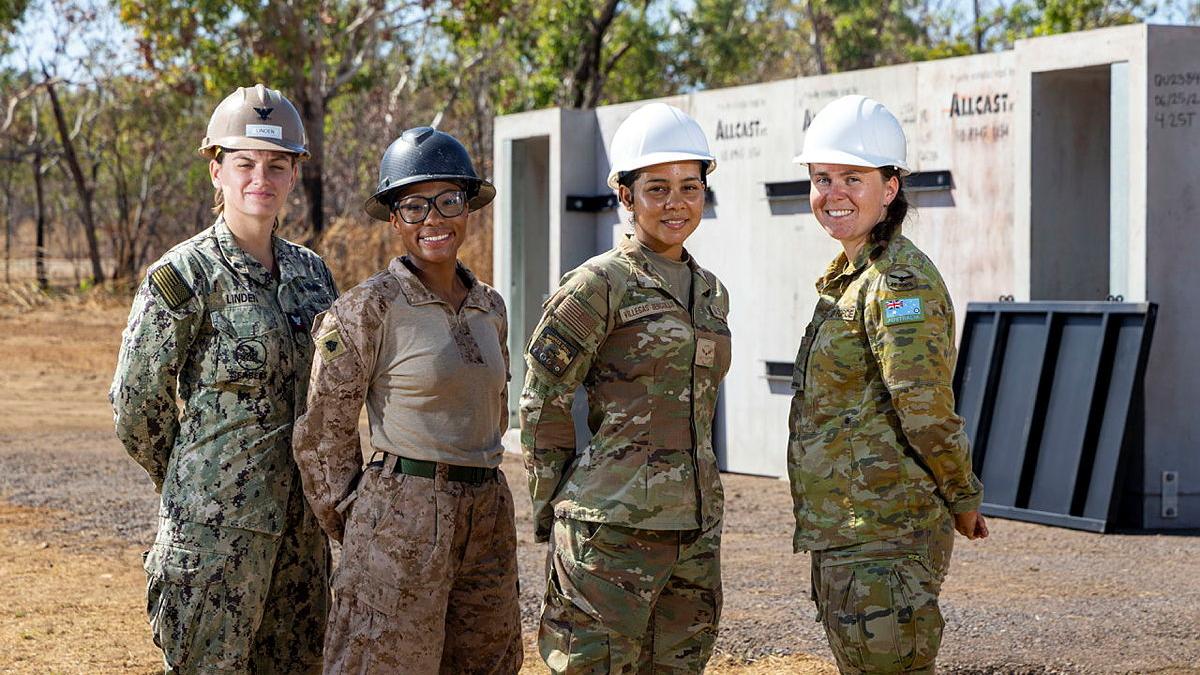
From personnel protective shelters and dome shelters to world-first aircraft engineering trials, Exercise Bronze Croc 26 (BC26) demonstrated the vital role military engineers play in generating air power and strengthening northern airbase resilience.
For the first time, BC26 brought together personnel from RAAF, the United States Air Force (USAF), the United States Navy (USN) and the United States Marine Corps (USMC), showcasing innovation, agility and interoperability.
The major infrastructure effort at RAAF Base Tindal delivered six personnel protective shelters, an aircraft dome shelter and an expedient aircraft movement capability enhancing integrated air and missile defence.
Deputy Director of Airbase Resilience and Exercise Director for BC26 WGCDR Rhys Belnap said the effort strengthened the resilience of northern airbase operations.
“We’re delivering infrastructure at a rapid rate that wouldn’t be able to be done through general contractor means,” WGCDR Belnap said.
“With the threats within our region and potential issues happening, we're delivering some of that key infrastructure to make sure that we're keeping our people in the fight, so that we can continue to operate and support air power operations within our region."
WGCDR Belnap said the teams included personnel from both nations interacting together and remaining interchangeable in the positions they ran.

'Australians can be confident that these investments are focused on protecting our people, safeguarding national interests and contributing to a secure and stable Indo-Pacific region.'
A defining feature of BC26 was the integrated teams of Australian and US personnel constructing the personnel protective shelters.
One of the sites was led by First Lieutenant Brandon Duffy, a USAF officer who brought together personnel from all four participating services, combining different experiences and engineering practices to achieve a shared outcome.
“The best part of Exercise Bronze Croc 26 has been the people. Working alongside Air Force, Navy, Marine Corps and international partners has allowed us to learn from each other's skills and experiences,” First Lieutenant Duffy said.
“The result was not only a significant infrastructure capability, but also stronger partnerships and greater interoperability between allied forces.”
CO of 17SQN WGCDR Alex Smith said the infrastructure delivered during Bronze Croc would play an important role in strengthening the resilience of Defence capabilities across Australia's north.
“By improving protection and survivability, these facilities help ensure that the ADF can continue to deter threats, respond to crises and support regional stability when called upon,” WGCDR Smith said.
The exercise demonstrated that resilient infrastructure is as critical to air power as the aircraft and personnel it supports, providing the foundation for sustained operations.
“Preparedness is most effective when it is built well before it is needed, and modern defence infrastructure is a vital component of Australia's national resilience,” WGCDR Smith said.
“Australians can be confident that these investments are focused on protecting our people, safeguarding national interests and contributing to a secure and stable Indo-Pacific region.”
As BC26 concludes, the infrastructure stands as a lasting reminder of what can be achieved through innovation and shared purpose.
Related stories


