More than 'Yes, corporal'
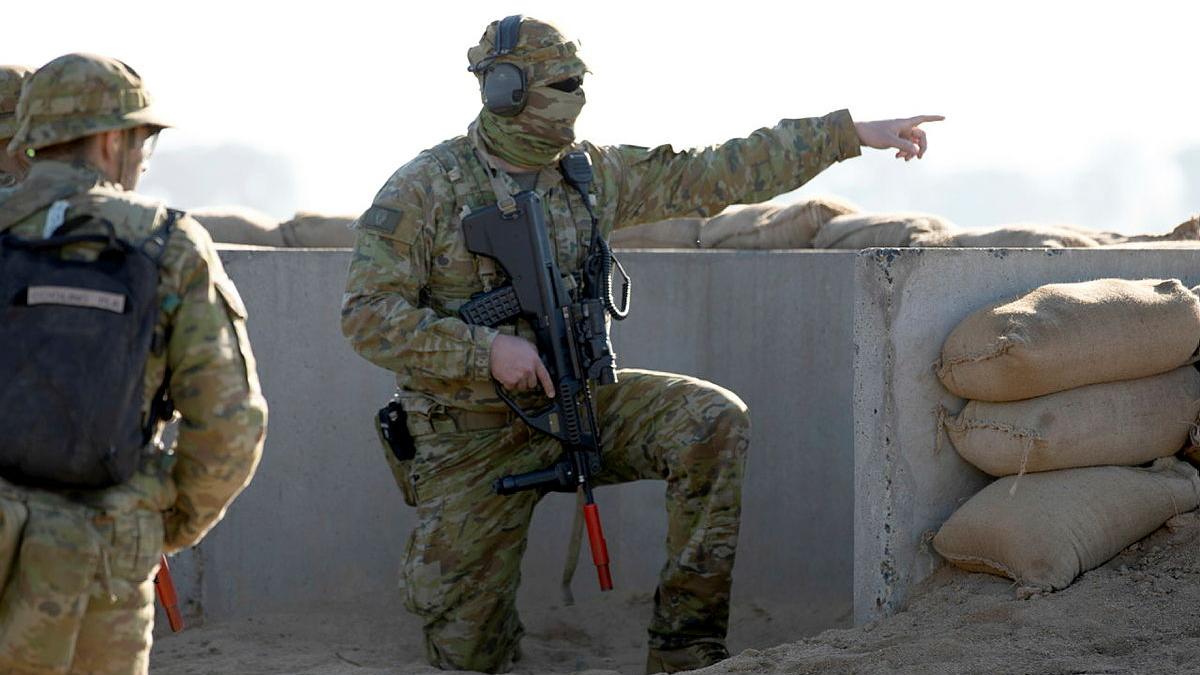
For CPL George Cool, a successful Exercise Rabaul means hearing more than “Yes, corporal” from recruits.
He looks for understanding; recruits who can apply their lessons rather than simply repeat what they have been told.
“They actually understand what you’re trying to deliver, and they buy into the training,” he said.
At RAAF Base Wagga, the five-day exercise brought together ground defence training towards the end of the recruits’ 10-week initial course at 1RTU.
It developed foundational skills for contributing to airbase defence – a responsibility CPL Cool said extends across Air Force, regardless of recruits’ eventual roles.
“We’re out here to learn how to live in the field, how to survive in the field, how to fight in the field,” he said.
Exercise Rabaul’s SNCO, CPL Fraser Smith, said recruits began with practical lessons in field living, communications and tactical care, before occupying their defensive position.
They built the position’s defences throughout the week, filling sandbags and applying camouflage between scenarios. This was also where they slept, fitting rest around sentry duties and the work needed to keep it functioning.
CPL William van Bruggen said those responsibilities replaced the predictable hours of barracks life as recruits managed their rest while keeping up with their tasks.
Alongside the physical demands came the need to exercise judgement.

Ground Defence Flight CDR FLTLT Scott Marshall said scenarios ranged from staged protests at the entry control point to attacks on the position, presenting different threats and ethical decisions.
“During the scenarios, they needed to make decisions on their feet,” he said.
“Recruits [had to] assess each encounter and respond appropriately within the laws of armed conflict, rather than treat every challenge in the same way.”
By the exercise’s final morning, their learning came together in an extraction activity. After defending against a simulated attack, they patrolled to recover equipment left by other Australian forces and returned it before withdrawing, responding to further mock attacks along the way.
“The extraction phase [was] the end result of a lot of learning, a lot of hard work,” CPL Smith said.
Corporals accompanied each section throughout the field phase, assessing recruits individually and identifying where additional training is needed.
They also observed changes that become clearer with practice, such as more capable radio use and growing confidence.
“[By the end] they were more confident in their own abilities, especially knowing how much they can actually do,” CPL van Bruggen said.
Drawing on his own experience in airfield defence, CPL van Bruggen encouraged recruits to keep seeking opportunities to train in the field throughout their careers.
“When you’ve got people pushing you, you can do a lot more than you think you can,” he said.
“You know, your body gives up before your mind does. As you do more in the field, you learn a lot about yourself and build stronger bonds with the people around you.
“That’s what will help you if you are ever in this situation in real life,” he said.

Read more on Exercise Rabaul here.
Related stories


