Forged in flames
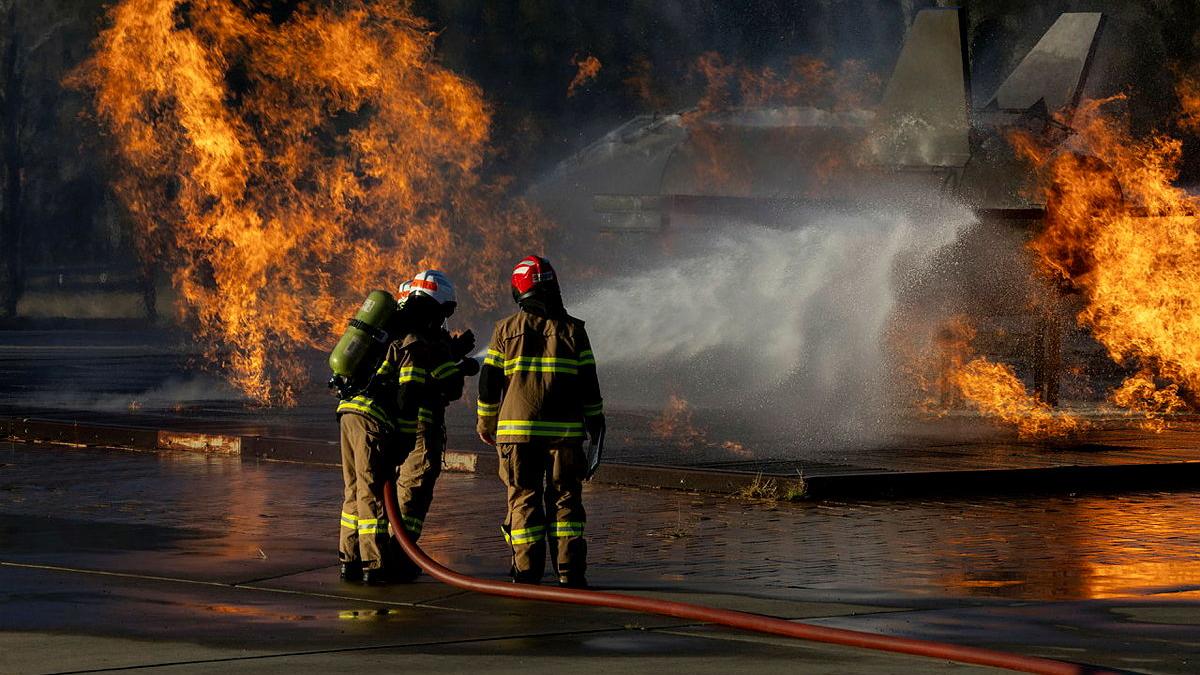
Red fireballs erupting above RAAF Base Amberley are enough to make passing motorists take a second look.
Fortunately, the dramatic scenes were all part of live-fire training at the Royal Australian Air Force Security and Fire School (RAAFSFS), where Air Force firefighters and Australian Army combat rescue operators were preparing for the emergencies they may one day face protecting aircraft, facilities and personnel.
Following a major refurbishment, the school’s live-fire training ground has reopened with enhanced facilities. Across three separate training pads, instructors can recreate a broader range of realistic emergencies, from aircraft wheel and engine fires to fuel spills and structural blazes.
Course Director FSGT Neil Gill said exposing trainees to real fire was critical to developing firefighters who could perform under pressure.
“When a graduate is faced with an actual fire, it’s important that they can fall back on their training,” he said.
“Utilising actual fire during training gives our trainees confidence because they actually understand how to use the equipment and techniques to suppress fires.”
Initial employment trainees spend 20 weeks learning aviation and structural firefighting, road crash rescue, hazardous materials response and emergency vehicle operations before joining Air Force and Army units across Australia.
But technical skills are only part of the training.
Rather than directing every action, instructors gradually step back, requiring crews to assess changing conditions, communicate effectively and make decisions together in an environment that closely mirrors an operational emergency.
“We walk them through how to fight the fire initially before stepping back and letting them develop the confidence and mindset to utilise the tactics,” FSGT Gill said.
“Confidence in your teammates and equipment is vastly important to make sure that you can function in an emergency situation.
“That includes good communication between the fire controller and the crew personnel.”
As Air Force’s only firefighting school, RAAFSFS has trained thousands of firefighters since relocating to Amberley, preparing them to respond to emergencies on air bases and in deployed operations.
Every training exercise ends with the flames extinguished. The real test comes months or years later, when those same firefighters arrive at an aircraft emergency knowing they have already faced the closest thing training can provide.

See more photos here.
Related stories


