From shield to spear
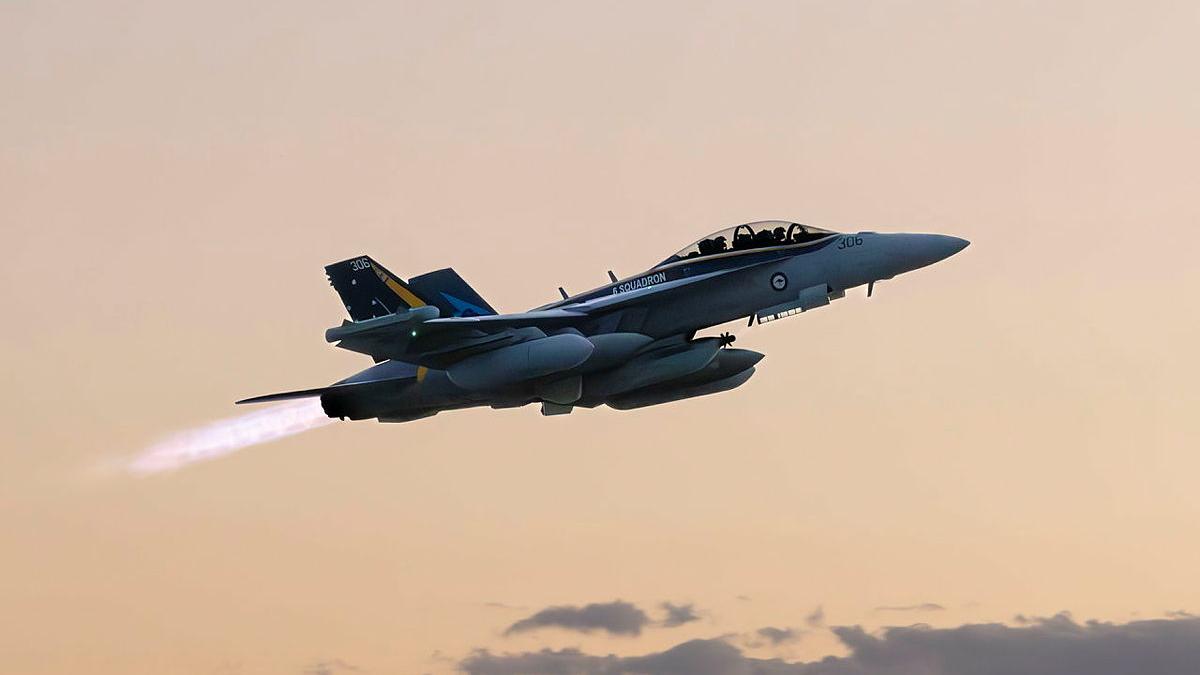
The next generation of air warfare instructors were pushed to their limits during Exercise Diamond Spear, building on Exercise Diamond Shield to integrate airpower for long-range maritime strike.
Conducted over several weeks from RAAF Bases Amberley, Williamtown, Tindal, Edinburgh and HQJOC, the exercise is the third major milestone in the demanding six-month Air Warfare Instructor Course (AWIC).
Long-range maritime strike was a key focus of Diamond Spear.
The complexity of the exercise demanded a high level of integration across numerous air domain capabilities to deliver mission success.
This included air combat assets, air battle managers, air mobility and intelligence, surveillance and reconnaissance capabilities across dispersed locations.

Exercise Director GPCAPT Andrew Hagstrom said the exercise placed candidates in a highly demanding and realistic battlespace.
“Candidates were presented with a realistic operational environment, including complex threats, the challenge of distance and the requirement to integrate multi-domain capabilities,” GPCAPT Hagstrom said.
The activity sharpened integration skills and prepared candidates to operate as effective warfighting professionals in challenging, multidomain environments.
Scenarios developed the integrated force’s ability to locate, track and hold maritime targets at risk, contributing to the ADF’s Strategy of Denial.
“Exercise Diamond Spear emphasised the challenges of coordinating and delivering lethal and survivable long-range maritime strike,” he said.
“This continued to develop the candidates’ [ability] to coordinate a wide variety of integrated force capabilities, demonstrating the ADF’s ability to hold adversaries at risk, at range.”

Diamond Spear reinforced that mission success cannot happen in isolation; it depends on trust, teamwork and integration. Clear communication and mutual support to enable teams to operate cohesively and adapt effectively to dynamic and challenging environments.
“Through a professional exercise control workforce, as well as the inclusion of a broad range of integrated force capabilities, Diamond Spear scenarios comprised contemporary threats and a realistic operating environment to provide challenging tactical problems for the candidates,” he said.
“[Candidates] were required to develop solutions both in mission planning and in response to changing conditions during execution. This demonstrated the ability of our tactical leaders to manage risk and deliver lethal and survivable long-range maritime strike.”
As AWIC enters its third and final phase, candidates will undertake one last high-intensity assessment across Australia’s northern approaches: Exercise Diamond Storm.
Drawing on the full breadth of experience and lessons gained throughout the course, candidates will be pushed to operate at the highest level before the exercise culminates in a ‘Dawn Strike’ over RAAF Base Williamtown in late June.
It’s a demanding finale, one that marks not just the end of the course, but the moment these aviators prove they are ready to take their place at the cutting edge of air combat.

Related stories


