Sharpening allied edge
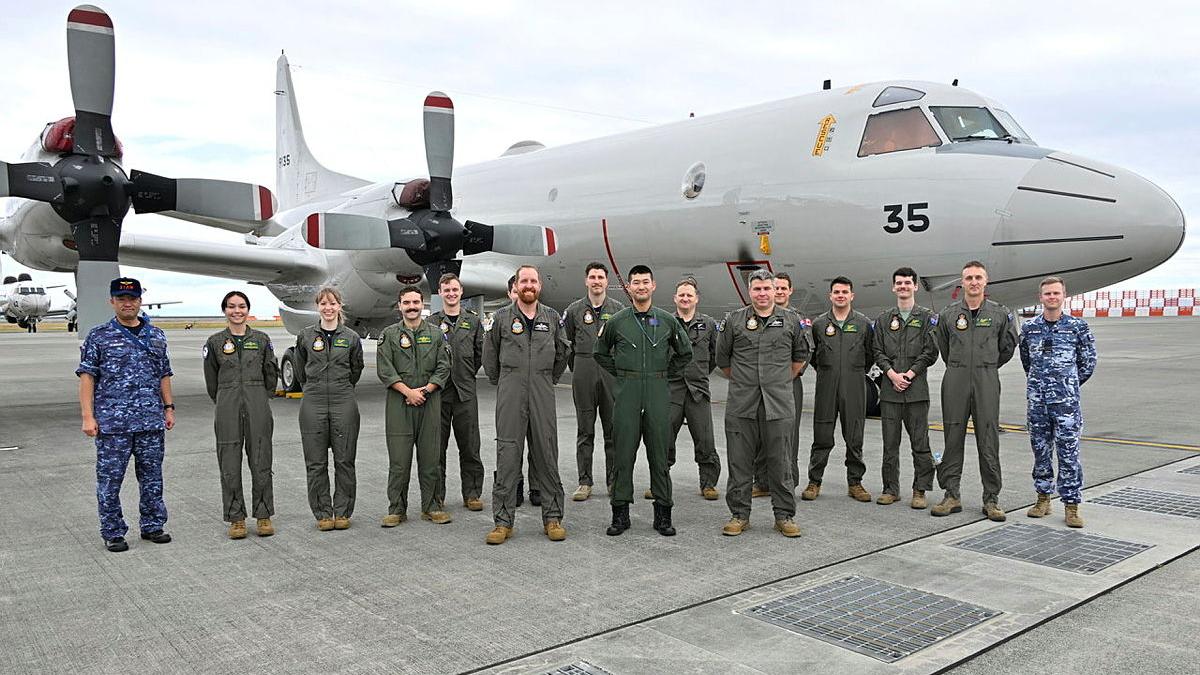
Deployed to an air base in Japan with historic RAAF connections, 11SQN aviators built relationships that will support future collaboration.
Last month, a pair of RAAF P-8A Poseidons deployed to Japan Maritime Self-Defense Force (JMSDF) Iwakuni Air Base located 30km south-west of Hiroshima on the island of Honshu.
The air base is jointly operated by Japan and the US, and its historic ties to RAAF link back to when 77SQN Mustang fighter-bombers flew combat missions from Iwakuni during the Korean War.
WGCDR Andrew Fisher, Australian Air Force attaché to Japan, said the recent RAAF P-8A deployment to Iwakuni allowed RAAF aviators to engage with local personnel from JMSDF 31st Fleet Air Wing.
Specifically, RAAF aviators met with the search-and-rescue (SAR) crew – who fly the US-2 amphibious aircraft – and intelligence, surveillance and reconnaissance (ISR) crews for unique variants of the P-3C Orion.
“This is about developing people-to-people links between our SAR and ISR communities,” WGCDR Fisher said.
“We’re able to capitalise on this deployment as an opportunity to work together and share information about capabilities, which deepens our understanding of each other’s platforms and increases interoperability.”
'It’s very generous for our hosts at Iwakuni to show us through [a US-2] and explain how it is that they operate.'
In recent years, RAAF P-8A crews have built working relationships with the JMSDF through activities in Japan, Australia and across the wider Indo-Pacific.
With JMSDF’s unique SAR and ISR capabilities, like the US-2 and its P-3Cs, opportunities for RAAF aviators to engage with these squadrons first-hand can be rare.
During Exercise Cope North in 2024, select RAAF aviators met with JMSDF US-2 crews in Guam, and since then, RAAF has sent observers to bilateral SAR exercises between Japan and the US.
“While we have conducted trilateral ISR crew exchanges with the JMSDF and United States across Japan for a number of years now, this is our first opportunity in Iwakuni since March 2023,” WGCDR Fisher said.
The amphibious US-2 can fly from runways or on water, and is powered by four Rolls-Royce turboprop engines – the same used on the C-130J Hercules.
The US-2 also has a dedicated turboshaft engine that creates extra airflow over the aircraft’s wings and flying surfaces, allowing it to make extremely short takeoffs and landings.

Each US-2 can carry passengers or stretcher patients, along with specialist divers and aeromedical evacuation crew, during SAR missions.
RAAF P-8A aviators have extensive experience in SAR missions, and can coordinate search patterns and use their sensors to find people and vessels on the water.
If necessary, the P-8A can also airdrop survival kits to the water, containing radios, flotation equipment and supplies.
RAAF P-8A Detachment Commander SQNLDR Josh Wyatt said SAR missions were often short notice and dynamic, so having an established relationship with JMSDF on a mission was of significant benefit.
“The US-2 is a capability that is unique to the JMSDF and not something we’re normally exposed to, so it’s very generous for our hosts at Iwakuni to show us through an aircraft and explain how it is that they operate,” SQNLDR Wyatt said.
“Likewise, many RAAF aviators have experience with operating the P-3C Orion, but the opportunity to visit the JMSDF Orion squadron was welcomed because these are variants we’re otherwise not familiar with.”
Related stories


