A lifeline and supply line at sea
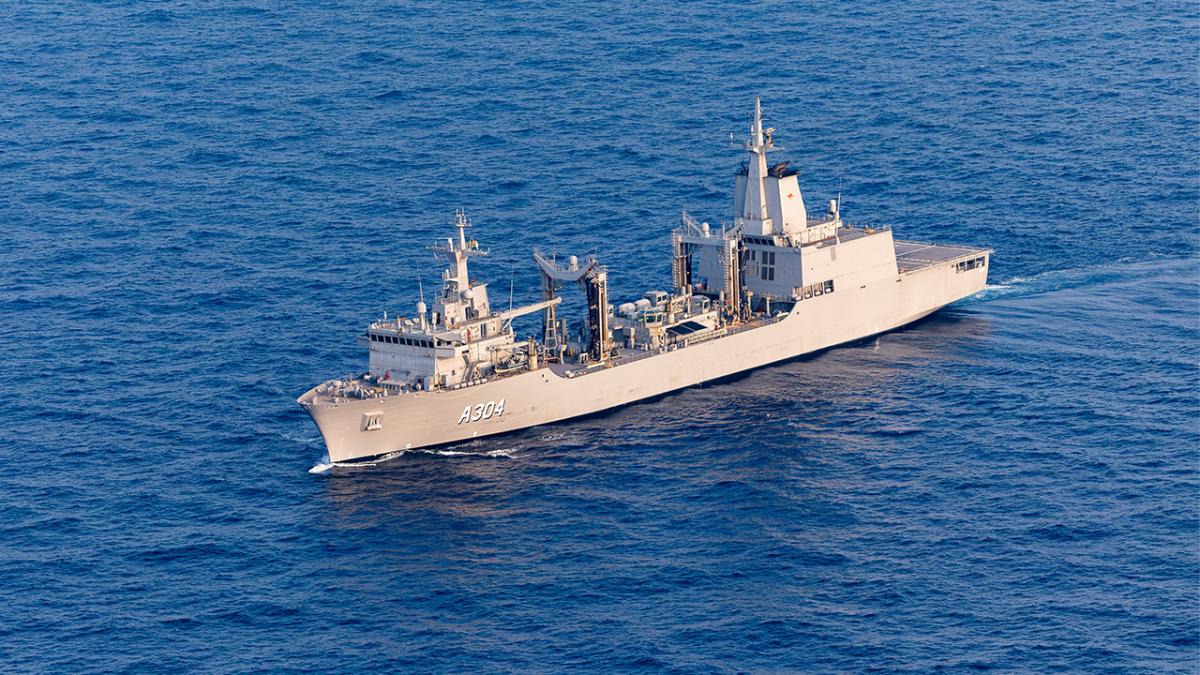
Navy’s ability to operate at sea relies on many interconnected capabilities, each contributing to the readiness, resilience and sustainability of its personnel and platforms.
Among these, naval medical personnel and replenishment ships share a particularly important connection, providing essential support that enables Navy and allies to remain operational far from port.
ABMED Emily Fleay provides a vital service to HMAS Stalwart and Navy by safeguarding the health and wellbeing of its most valuable asset – its people.
“We are here to help those who are sick, injured or in need of someone to talk to. We aim to keep the crew as fit as possible so they can continue to deliver the ship's mission,” AB Fleay said.
Just as AB Fleay helps preserve the fighting strength of a ship’s company, similarly, Stalwart extends the endurance of other ships at sea and enables them to continue their missions without returning to port by supplying fuel, provisions, ammunition and other essential stores.
“I have always endeavoured to help people whenever and wherever possible. This role places me in the best position to do so,” AB Fleay said.
Whether providing medical assistance to a fellow sailor or delivering critical supplies to a warship, both roles demonstrate that naval operations are built upon mutual resilience.

AB Fleay also highlighted the pride she carries in her family’s history of service, sharing that her grandfather served in the Royal Air Force during World War II, flying under 24SQN.
He also escorted Sir Winston Churchill and the British legal team to the Nuremberg trials in 1945 and was subsequently awarded the Distinguished Flying Cross for his service.
AB Fleay shared how her grandfather was “more than proud” of her decision to enlist, following in his footsteps as someone selfless who places the needs of others above her own.
Ultimately, the fleet cannot remain effective through combat power alone. It requires the continuous provision of care, resources and support. Naval medics and replenishment ships embody this principle by ensuring that sailors, ships and allies can continue to serve wherever their duty takes them.
“Deploying to the Indo-Pacific is not only an opportunity for the RAN to further strengthen our bonds with other countries, it is also an opportunity for the crew to strengthen their bonds with one another and experience places they may not otherwise have the chance to visit,” AB Fleay said.
Related stories


