Drones expand surveillance and logistics options
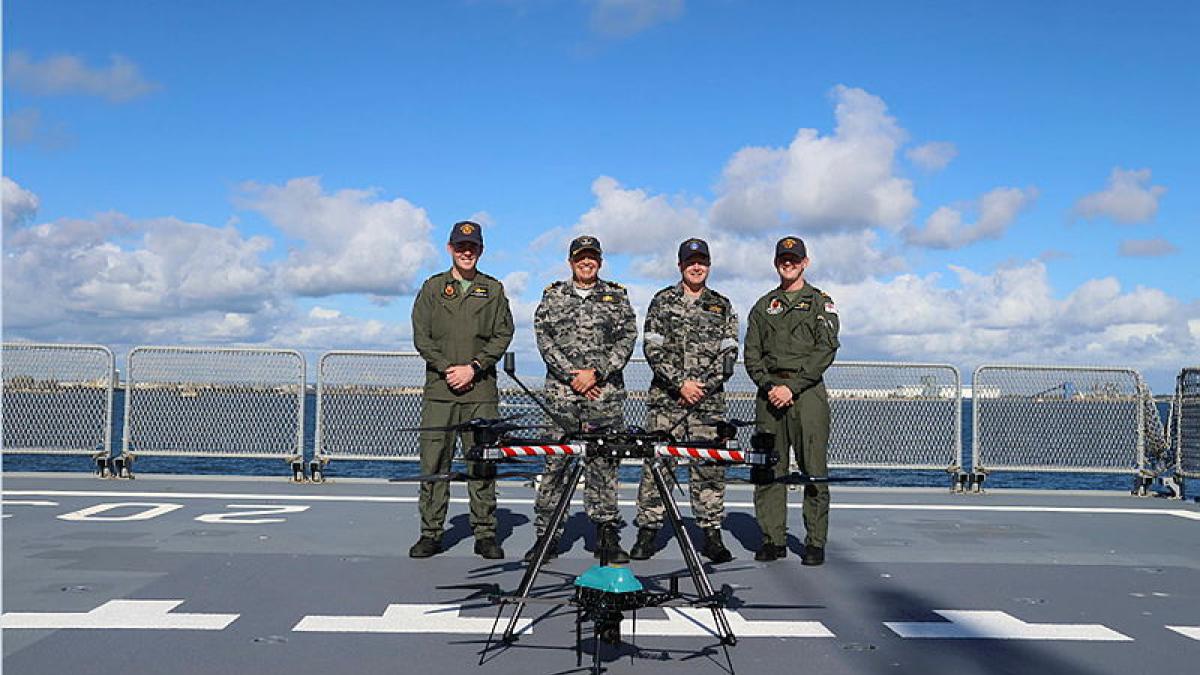
HMAS Arafura completed a series of remotely piloted aircraft system trials in Cockburn Sound, Western Australia, testing uncrewed surveillance and logistics support from an offshore patrol vessel.
The trial, from August 17 to 21, assessed two Australian-developed systems.
The uncrewed, maritime logistics-focused Callisto 50 trial demonstrated autonomous launch and recovery from a moving ship.
The Arace Angel trialled airborne surveillance and night operations.
Director Navy Logistics Readiness CAPT David Turner noted the activity marked an important step in Navy's assessment of autonomous systems for future maritime operations.
“Uncrewed systems have the potential to extend the reach of our ships, strengthen situational awareness and provide new options for logistics support at sea,” CAPT Turner said.
“This trial has given Navy valuable operational data and practical experience that will inform how autonomous capabilities are developed, integrated and employed across the fleet.”

During the activity, personnel from the Directorate of Navy Logistics Readiness and Arafura completed 23 flights, accumulating about six hours of flying time in a range of operating conditions, including night operations.
Remote Pilot Warfare Officer SBLT Dylan Wick explained the program tested how the aircraft operated in a realistic maritime environment.
“We launched and recovered aircraft from a moving vessel and demonstrated the transfer of stores using an underslung load between the ship and its rapid insertion craft,” SBLT Wick said.
“For operators, the trial showed how uncrewed aircraft can provide an additional set of eyes beyond the ship, while reducing the need to place people in higher-risk tasks and areas.”
The Callisto 50 demonstrated its logistics utility through a series of stores delivery activities using a beacon mounted on Arafura to maintain its position relative to the vessel.
The Arace Angel carried electro-optical and infrared sensors and operated in a ship-referenced flight mode as part of the trials.
The trial also included electromagnetic interference and compatibility testing, along with the collection of operational data to support future development of autonomous systems within Navy.
The logistics activities built on Callisto 50's growing operational employment within Navy following its embarked operational assessment on board HMAS Adelaide earlier this year.
Related stories

