From sensor to strike
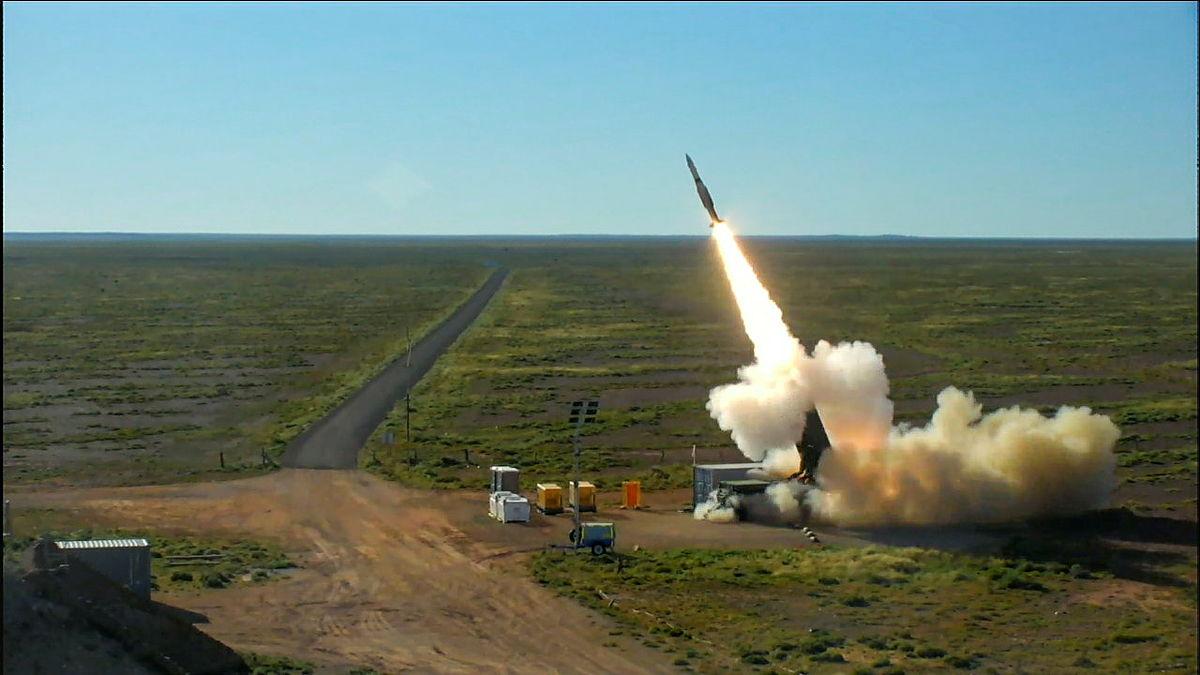
The successful integration and live-fire of a prototype ground-based missile defence system during Exercise Taipan Strike has levelled up ADF’s missile defence capability.
Held at the Woomera Test Range in SA, the trial employed an Australian Standard Missile-2 (SM-2) against a BQM-74E airborne target, demonstrating the integration of radar, command and control, and missile effects into a single operational capability.
Conducted alongside US partners, the activity highlighted the importance of interoperability in developing modern missile defence systems.
The trial marked a key milestone in the development of Australia’s Medium Range Ground-Based Missile Defence capability and directly supported the 2024 and 2026 National Defence Strategies.
Australia’s approach to air and missile defence has evolved in response to a rapidly changing strategic environment. Modern missile threats are becoming increasingly mobile, survivable, precise and longer range, while emerging technologies such as hypersonic weapons and advanced cruise missiles continue to reshape the security landscape across the Indo-Pacific.
To address these challenges, Defence is developing an integrated air and missile defence (IAMD) system that links sensors, command and control, and weapons into a coordinated network.
During Taipan Strike, Australian radar sensors, an Australian SM-2 missile and US weapons control and launcher systems were integrated to support this capability.
'It was inspiring to witness firsthand what trusted partnerships can accomplish.'
Jim Jones from the US Strategic Capability Office said the dedicated efforts and collaboration between the US and Australia provided critical insights into game-changing opportunities.
“It was inspiring to witness firsthand what trusted partnerships can accomplish. This trial reinforced that our greatest advantage isn’t just our technology, it’s the people, relationships and shared commitment across government and industry to weave our capabilities together to solve complex problems,” Mr Jones said.
At the centre of this approach is Project AIR6500, which is delivering the command and control backbone for Australia’s integrated air and missile defence network. Army will develop a complementary deployable ground-based missile defence capability to protect deployed forces, air bases and critical infrastructure against advanced missile threats. Future capabilities, including SEA 5000 Hunter Class Frigate program, will further strengthen Australia’s layered and integrated missile defence architecture.
Although the live missile firing was the most visible element of the activity, the broader objective was to validate the integration of multiple systems operating together in a realistic environment.
The activity was delivered through a joint effort from the ADF: Navy provided the SM-2 missile, BQM-74E drone targets and target support team, while the Air Warfare Centre and RAAF Woomera supported systems integration, planning and execution. Army personnel provided force protection throughout the trial.
Taipan Strike Project Manager SQNLDR Phil Collis said there was a significant amount of planning, testing and refinement that went on behind the scenes.
“Executing a trial of this complexity involves partnerships, integration of advanced systems and innovation supporting rapid delivery of capability. It’s a true whole-of-enterprise effort, bringing together Defence, Industry and International Partners to achieve a single outcome,” SQNLDR Collis said.
Australian Industry also played a critical role, with CEA Technologies’ radar capability forming a key component of the integrated system. The Woomera Test Range provided the scale, isolation and instrumentation required to safely conduct complex missile testing and validate capability in conditions that closely reflect real-world operations.

Related stories


