Teamwork above the waves
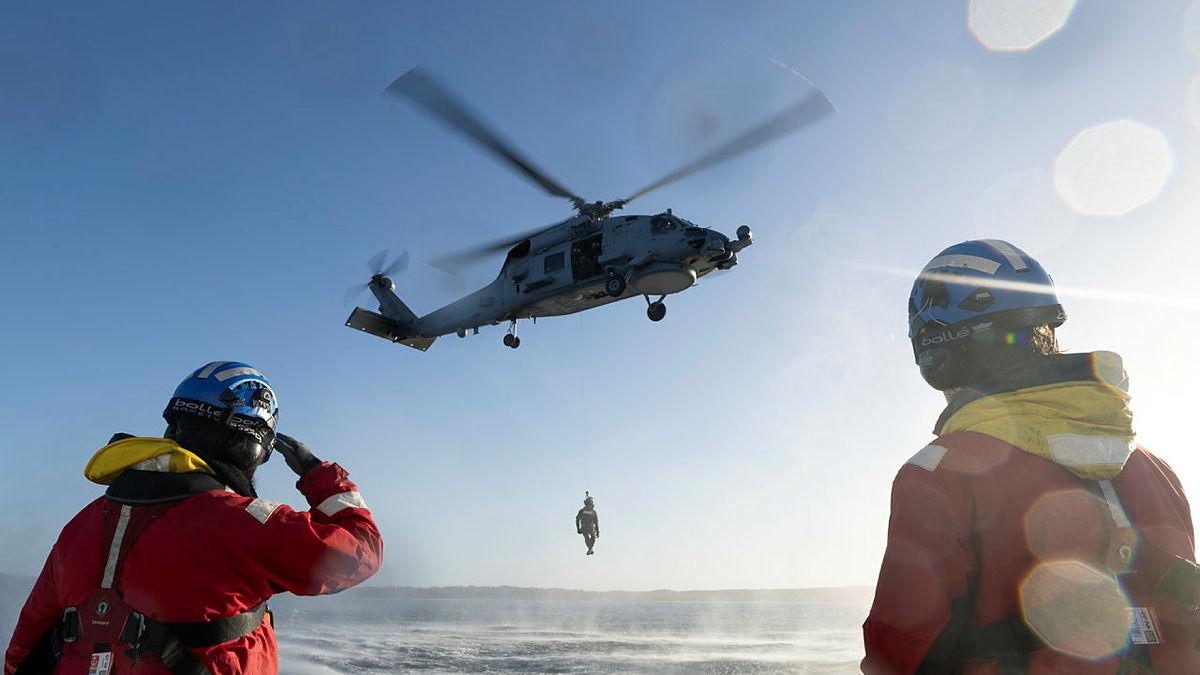
When every second counts in a maritime emergency, teamwork can mean the difference between life and death.
Personnel from 725SQN recently put those critical skills to the test during overwater hoist training in Jervis Bay.
The squadron worked alongside support personnel, including members from OPSTAR, to enhance maritime recovery capabilities and strengthen cooperation between aviation and surface teams.
The training provided aircrew and members from OPSTAR with an opportunity to rehearse hoisting procedures in a realistic maritime environment, building the skills and coordination required to safely conduct personnel and equipment recovery operations.
LSA Jarrad Jones said it was vital preparation for real-world missions.
“Conducting live winching training is as close as it gets to preparing us for potential search-and-rescue tasks we may have to undertake,” LS Jones said.
Throughout the serials, an MH-60R Romeo Seahawk conducted a series of approaches over the vessel while crews practised the delivery and recovery of equipment and personnel hoisting exercises.
The training required close coordination between the aircraft crew and surface team to safely execute each evolution.
Operating over water presents unique challenges, with the aircraft maintaining a stable hover above the vessel while managing changing environmental conditions and ensuring clear communication.

The training also allowed personnel from different organisations to work alongside one another, improving understanding of each team’s role in supporting aviation operations.
James Shewan, from OPSTAR, said the joint exercise strengthened professional relationships.
“Working alongside 725SQN provides valuable opportunities to understand each other’s operating environment and procedures,” Mr Shewan said.
“Activities like this strengthen teamwork and ensure all personnel can work together effectively during complex maritime operations.”
Regular training activities such as these ensure personnel remain proficient in hoisting operations while maintaining a critical capability that supports ADF maritime operations.
LS Jones said by rehearsing complex procedures in realistic conditions, crews are better prepared to respond when called upon to conduct recovery operations at sea.
“Only recently, the RAN has conducted a number of rescues requiring rescue swimmers and hoist operators to apply their training in real-world situations,” LS Jones said.
The activity highlighted the importance of teamwork and trust across all elements of the operation.
Pilots, aircrew and surface personnel worked together to ensure each evolution was conducted safely and efficiently, reinforcing procedures that may be required during critical and lifesaving situations.
See more images from the overwater hoist training here.
Related stories


