Boarding teams ready to pounce
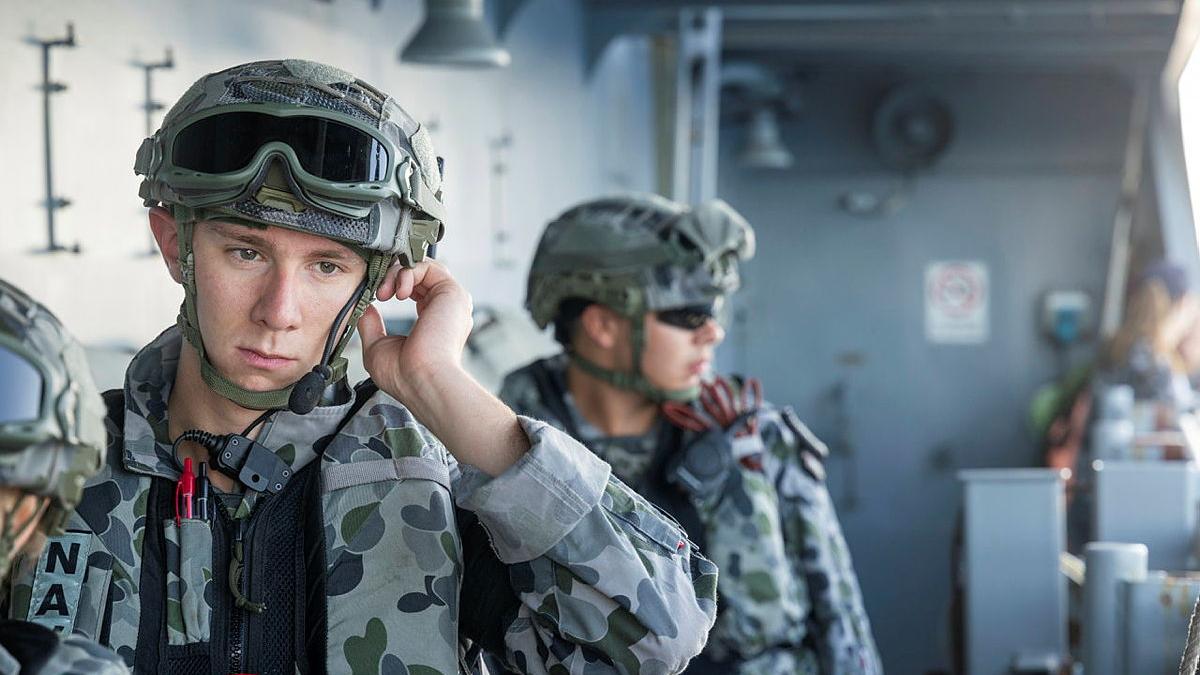
Operating far from home in a complex maritime environment demands sharp skills, disciplined teamwork and absolute trust between partners.
For RAN and RCN boarding teams operating in the South China Sea, maintaining readiness was achieved through realistic training and close cooperation with likeminded navies.
As part of a cooperative maritime activity after Exercise Balikatan, HMAS Toowoomba and HMCS Charlottetown conducted simulated boardings at sea.
The ships alternated roles as merchant vessels suspected of illegal maritime activity, allowing Australian and Canadian boarding parties to cross deck, breach unfamiliar spaces and conduct searches for simulated contraband.
Sailing in company for several days, the two warships used the opportunity to rehearse boarding procedures, communications and safety drills.
The activity built on an intensive period of multinational engagement that included Exercise Kakadu, the International Fleet Review and Balikatan.
'Knowing that your role directly supports the safety of the team makes the job extremely rewarding.'
AB Michael Cunningham, a communications operator and boarding party member on board Toowoomba, said the activity provided valuable operational learning beyond routine training.
“Both navies operate in very different environments,” AB Cunningham said.
“For us, heat management, fatigue and sun safety are daily considerations. Our Canadian counterparts are used to operating in extreme cold.
“Sharing those lessons strengthens how we prepare and look after our people.”
AB Cunningham highlighted the responsibility placed on junior sailors during boarding operations, particularly in maintaining constant communications between the team on deck and the ship.
“It’s a level of responsibility you wouldn’t see in civilian life at this age,” he said.
“Knowing that your role directly supports the safety of the team makes the job extremely rewarding.”
For S1 Jody Ann Lafrenière, from Charlottetown, boarding a foreign warship offered challenges that closely mirrored real-world operations.
“You know every corner of your own ship,” S1 Lafrenière said.
“On a partner vessel, you don’t know the blind spots, the layouts or the flow. Training in that environment forces you to adapt quickly.”
Charlottetown, deployed to the Indo-Pacific on Operation Horizon, has worked closely with the RAN throughout the deployment, conducting cooperative maritime activities that enhance mutual understanding and operational effectiveness.
Related stories


