Nations sharpen sub-hunting skills
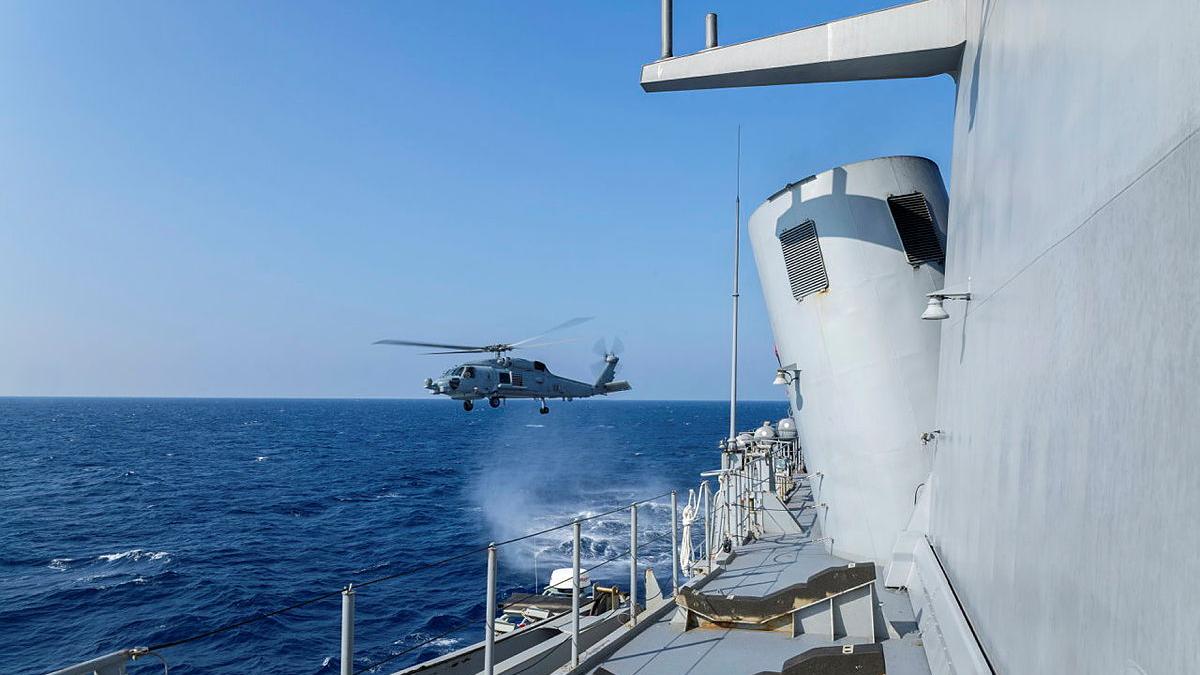
When seeking out an unseen enemy, it’s always better to hunt in a pack.
Which is why the 41st iteration of Exercise Balikatan included the largest multinational anti-submarine warfare exercise ever hosted by the Philippines.
For two days during the maritime component, ships from the RAN, Philippine Navy, United States Navy, Royal Canadian Navy and Japan Maritime Self-Defense Force worked seamlessly as one united fleet, sharpening their hunting skills below the surface.
HMAS Toowoomba operations officer LCDR Matthew Driml said working alongside partners strengthened Australia’s multilayered anti-submarine warfare strategy.
“The exercise has affirmed the capability of the RAN to join a large Philippine Navy-led international task group of warships from multiple regional partners, united to achieve a common mission,” LCDR Driml said.
He added that while sailing as “one fleet”, their differences led to the exercise’s success.
“Each participating navy’s ships have very different capabilities that, when combined, proved to create a robust force multiplier effect,” LCDR Driml said.
“Working as one team, we were able to create a highly capable and comprehensive anti-submarine force.”

For ABCSO William Gates, it was his first time working with regional partners.
“It’s nice to know we have so many partners out here with us all working together,” AB Gates said.
“Having so many different components from different navies working together really complements each other to achieve the same goal.”
More than 17,000 personnel from the Philippines, United States, Australia, Canada, France, Japan and New Zealand participated in Balikatan, the largest annual bilateral military activity conducted between the Armed Forces of the Philippines and the United States military.
For LSCSO Cameron Seyfang, while it was not his first time working with regional partners, it was the largest international exercise he had participated in.
“We train so much at home you can tend to forget about how many regional partners we have to work with,” LS Seyfang said.
“It’s refreshing to gain this experience of working so closely with our partners and learning their capabilities as well.”
He added while there were contrasts in how navies work, the benefit was also in learning how much they have in common.
“During the planning phase and working together in the moment, we have been operating closely and have successfully overcome all challenges together thrown at us during the exercise,” LS Seyfang said.
Australia’s contribution to Exercise Balikatan included land forces, medical teams, tactical air and maritime components, and a range of command and support personnel.
Participating ADF elements trained alongside partners in key mission sets, including maritime security, targeting, air and missile defence, offensive strike operations, cyber defence and information warfare.

Related stories


