Junior leaders show their mettle on Op Tyrfing
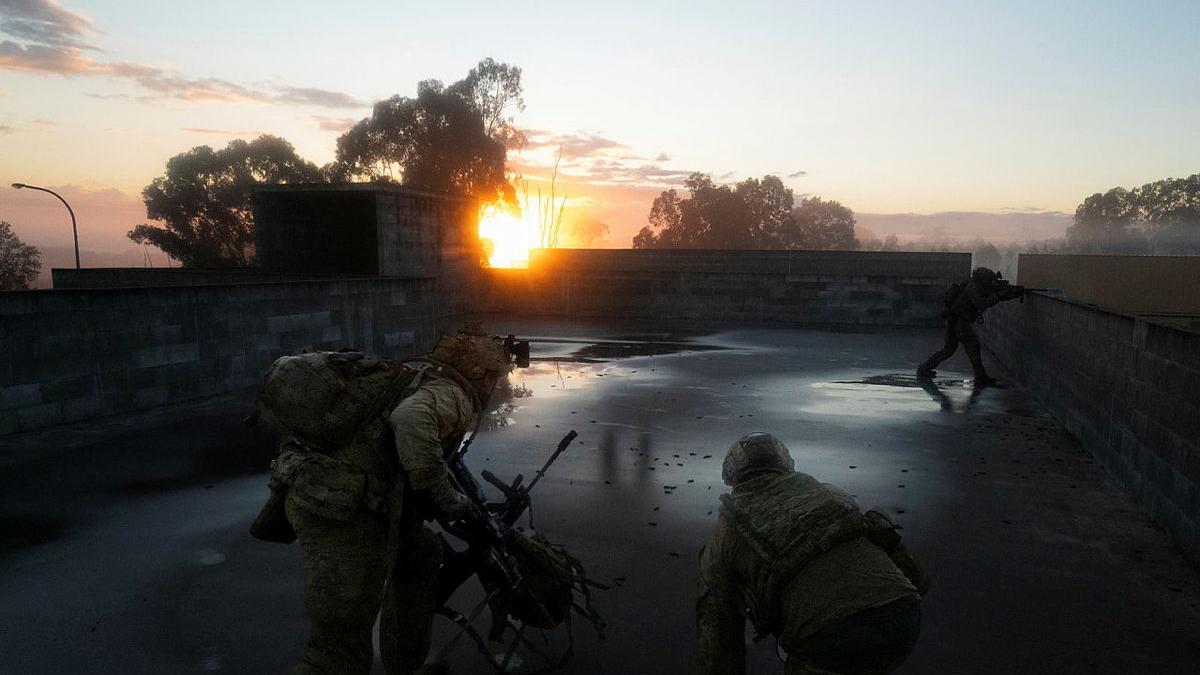
In the early morning darkness in the woods outside the School of Infantry at Lone Pine Barracks, the temperature was close to freezing.
The junior officers and aspiring SNCOs had been out field for weeks. Just days before, food poisoning had debilitated a third of the platoon.
Exhausted, freezing and wet from a storm, it would be easy to assume that lesser men might be hanging by a thread.
Instead, the soldiers and officers holding in the form-up point outside Objective Nautilus were focused and calm, silently checking weapons and going over the plan in their heads. Move up in sections. Support by fire. Clear building by building.
Their breath, visible in the frigid dark, was steady.
The platoon commander stood and the first call sign stepped off.

The assault on the Urban Operations Training Facility was the final activity of Operation Tyrfing, the culminating field training exercise of the infantry regimental officers’ basic course and Subject 2 sergeants’ course.
The purpose of both was to train, assess and qualify participants in the skills, knowledge and attributes of RA Inf platoon commanders and platoon sergeants. The final activity of the tactical application phase is named in honour of Tyrfing, the Norse god of war’s mythical sword.
CAPT Christian Verney is the school’s Officer Instructor Platoon Team.
“When conducted alongside the Subject 2 sergeant infantry course, the infantry regimental officer basic course builds teamwork, cohesion and effective platoon command teams by training platoon commanders and platoon sergeants together in realistic tactical environments,” CAPT Verney said.
“Shared planning, field exercises and mission execution develop mutual understanding of roles and responsibilities, while fostering trust, communication and professional respect.
“This integrated training strengthens the platoon commander-platoon sergeant relationship and prepares both leaders to operate effectively as a cohesive team in combat.”
Through realistic field exercises and physically demanding conditions, officers and NCOs learn to lead platoons and make effective decisions under pressure.
CAPT Verney was proud of the performance of the candidates as they debriefed after the village assault.
“This particular cohort have demonstrated a strong willingness to learn, a genuine professional curiosity, and are well prepared to command within the integrated force,” he said.

Related stories


