Army adapts as drones transform modern warfare
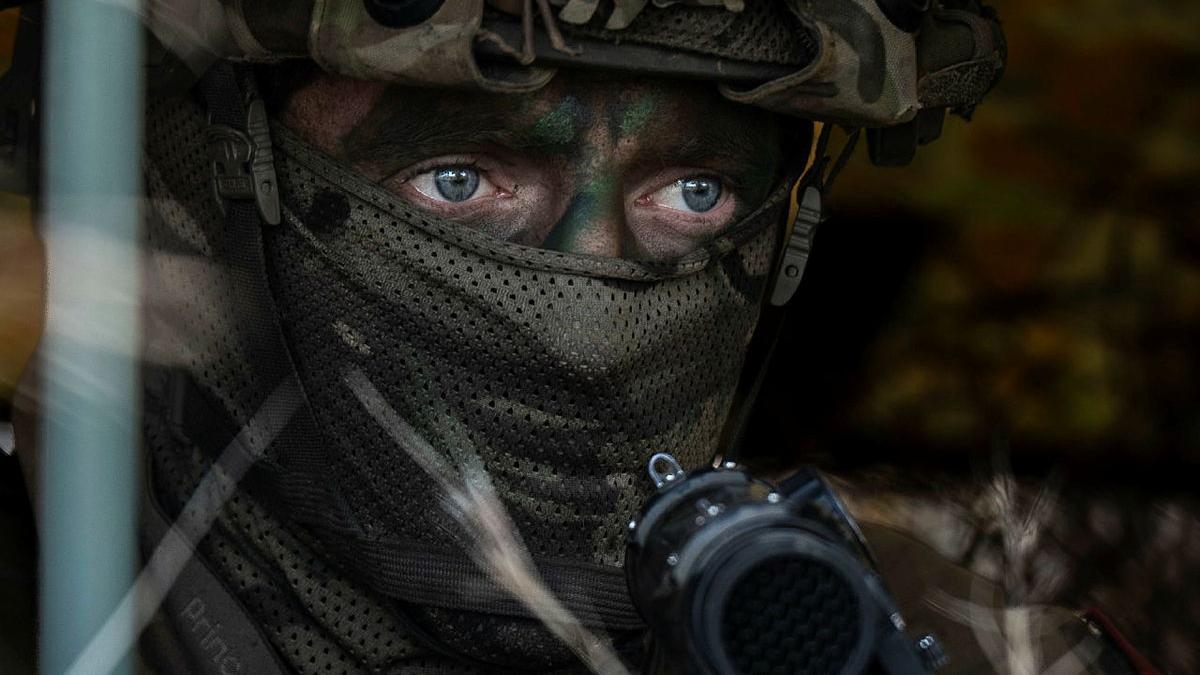
As 6RAR Delta Coy troops moved stealthily through the night to the form-up position outside the enemy’s stronghold, a successful assault was at hand.
The troops had made it to the tree line undetected and H-hour was just 30 minutes away.
Then came that distinctive buzzing sound. The troops looked up and it all changed.
“I’ve been in Army for 15 years and I have never had an exercise where drones were used like this, and it was a shock for many,” Delta Coy’s OC Capt George Ward said after a drone prompted a harried attack during Exercise Pozieres Run.
“It changes everything and we now know we have to deal with this in real life, and we’ll have to establish new standard operating procedures to combat it.
“No longer do we have ‘night-time fight overmatch’. It’s now a case of ‘daytime is our friend’ again, because under thermal, we blend more with the surroundings and sun, and it’s a lot harder to be spotted during the day than it is at night.”
More drones were used in Exercise Pozieres Run than in any other Australian Army activity to date, with exercise planners making the serial as realistic as possible.
Part of their stepped-up drone use stemmed from a mobile drone factory, or battlefield engineering assembly module (BEAM), which was deployed operationally in the field for the first time.
'It’s another tool in our war chest with drones, which are now so pervasive in the modern operating environment it’s become an all-corps skill.'
From a truck-mounted lab, dozens of 7- and 10-inch carbon-fibre drones were rapidly assembled using 3D printers, then rushed to fighting units for immediate use. The drones were being made for surveillance and simulated loitering munitions missions.
Cmdr 1st (Australian) Div Maj-Gen Ash Collingburn said drones were a reality of war now.
“One of the battalion commanders told me earlier in the week that the most frightened he had been at any point during training in his career had been when he was attacked by two drones, one sensing and one striking, dropping [simulated] ordnance on his armoured vehicle,” he said.
“But drones are a double-edged sword and can be used as an effective capability, particularly now that we can literally make them in the field through BEAM.”
This has already led to changes across frontline Army units. CO 2 CAV Lt-Col Josh Higgins said their role of reconnaissance, security, scouting and guarding hadn’t changed, but their light armoured vehicles were now armed with drones.
“It’s another tool in our war chest with drones, which are now so pervasive in the modern operating environment it’s become an all-corps skill,” he said.
“In yesteryear, a 2 CAV surveillance troop used to be an ASLAV with a mast and camera. Today we have evolved it to be this – a vehicle and a combination of drones with different payloads. It’s part of the ongoing modernisation of cavalry.”
Related stories


