Medics put the bite on jungle mites
When people think of military medicine, an image that often springs to mind is of a heavily laden combat medic rushing across a battlefield to deliver lifesaving first aid to a stricken soldier.
While trauma care will always be a key part of the medic’s skill set, Army’s 2 Health Bn – part of 2 Health Bde – has been looking ahead to a different set of challenges that could prove just as important.
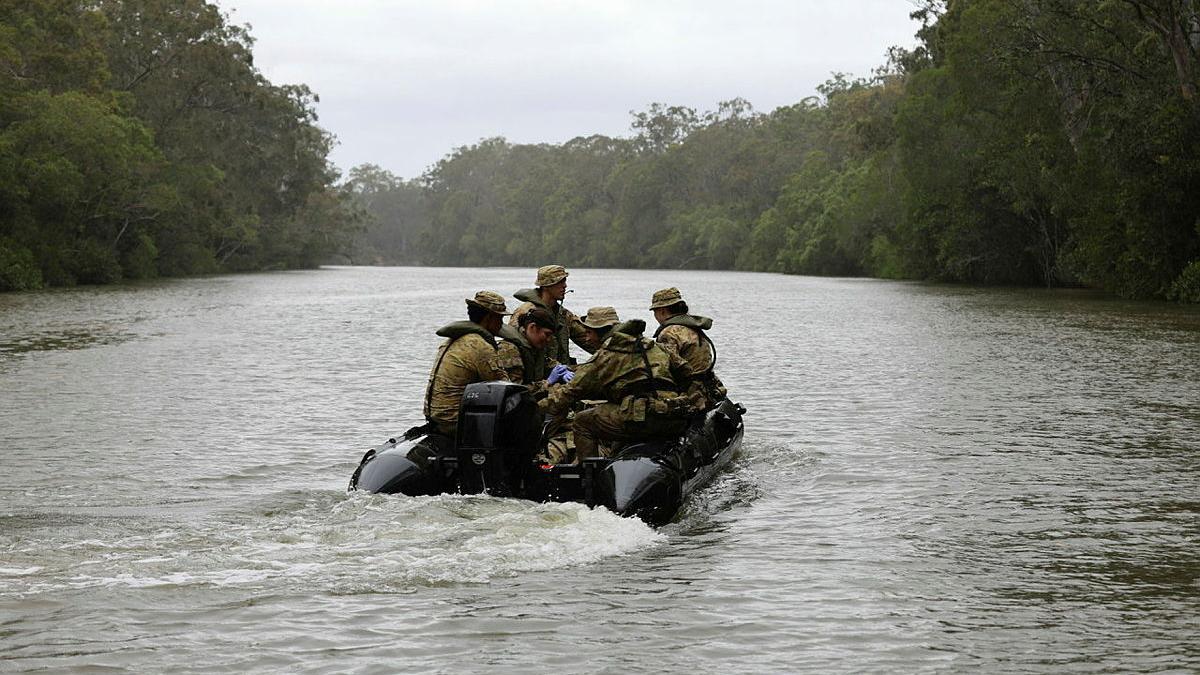
During Exercise Viper Guardian, 2 Health Bn troops from a range of medical backgrounds, regular and reserve, were tested in an environment challenging and unfamiliar to most – namely, the winding, densely vegetated waterways of Coochin Creek in south-east Queensland.
According to LTCOL James Savage, the battalion’s senior medical officer, the thinking behind the exercise was to give the best possible preparation for future operations.
“This is very applicable to what we’re training for – large-scale combat operations. We know our army is focusing on training in the littorals. We need to practise in that kind of environment,” LTCOL Savage said.
“We tend to focus on the trauma, which is important. Statistically, however, we know that DNBI [disease and non-battle injuries] will be the main threat in these places. It's not something we tend to focus on during our training though, so I don't think we're particularly good at it.
“We’re looking at diseases that historically the Australian Army has faced in the Pacific – malaria, dengue, scrub typhus.
“We've also broadened that exposure to include other rarer diseases that you may see, such as rabies. We've looked at the skin conditions that you might find in the jungle, and we've included components of the marine environment as well – stings, bites and coral cuts – and how we would manage those.”
Alongside this catalogue of misfortunes are the practical dangers associated with waterborne operations.
While the Zodiac RIBs used for the exercise are sturdy, stable and manoeuvrable, risks include capsize or man overboard situations. This could mean troops loaded down with kit and equipment struggling to keep their heads above the surface, even with the aid of a life jacket.

In the Indo-Pacific region, the list of deadly marine life could include saltwater crocodiles, stonefish and venomous jellyfish.
For MAJ James Smith, a reservist working as a public health physician at the Royal Brisbane and Women's Hospital in his civilian life, the demands on soldiers make them vulnerable to natural hazards.
“Soldiers are a unique occupational group in that their environmental exposures differ from the vast majority of other jobs out there,” MAJ Smith said.
“They may, for example, be sleeping rough, exposed for prolonged periods to things like long grass, which can hold mites and potentially spread infection.
“If you went camping in your family tent, you’re almost certainly not going to get scrub typhus. But if you're on a military exercise and you're spending significant amounts of time crawling through long grass and sleeping under a hoochie, then you're much more likely to get exposed to the mites that carry that particular disease.”
CPL Lauren Sankey, a health technician in Alpha Coy (surgical), said the real value of the training was its tactical realism.
“I think it's been really beneficial for us because it's realistic training that reflects what we're likely to do in conflicts in the near future,” CPL Sankey said.
“Up to 90 per cent of the patients have been DNBI cases, rather than trauma, so for us it's been the best of both worlds to be able to combine these two things.
“They may be low acuity [severity] patients, but they’re new conditions that we haven't really looked at before in a tactical setting, especially infectious diseases. And we haven't worked in a littoral environment before, so being able to treat these conditions is just good reps, really.”
LTCOL Savage said building a solid understanding of tropical medicine would pay generous dividends when it counted.
“We may not become experts in it, but certainly making our medics and our clinicians aware of the conditions out there and what options we have to treat them – as well as what we're lacking and what we need further experience and training in – is extremely valuable,” LTCOL Savage said.

Related stories


