Ex Pozieres Run a rehearsal for war
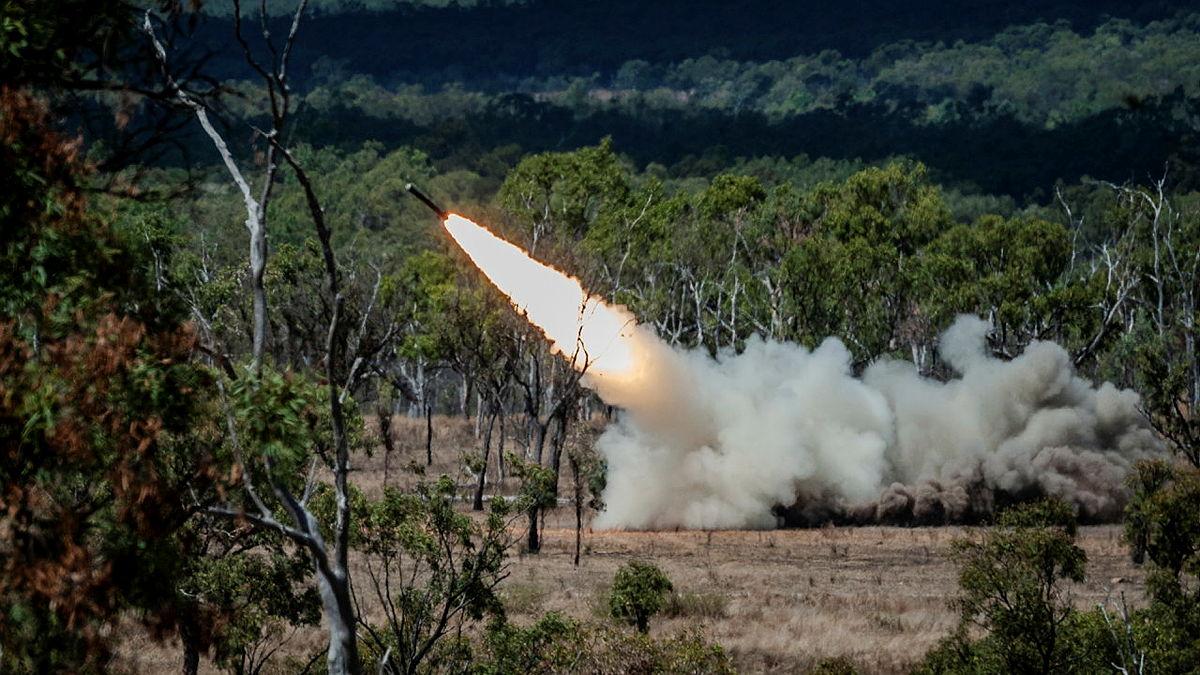
Army rehearsed one of the most realistic contemporary battlefield scenarios to date during Exercise Pozieres Run, achieving a series of significant firsts, from manufacturing drones in the field to deploying an AS9 Huntsman self-propelled howitzer and airlifting a high mobility artillery rocket system (HIMARS) into the battlespace.
The success of the 1st (Australian) Div’s premier warfighting field exercise is expected to drive the validation and rewriting of key combat doctrine as Army continues its transformation to a contemporary, integrated and adaptive fighting force.
Cmdr 3 Bde (Armoured) Brig Ben McLennan said the exercise demonstrated Army’s commitment to learning from modern conflicts and rapidly integrating emerging technologies.
“I think there is a perception among some that we are ignoring what is happening on battlefields around the world and the emergence of new technologies,” Brig McLennan said.
“I can assure people that what we have seen during this exercise is a division, and an Army, leaning very far forward in integrating traditional warfighting capabilities, including armour, artillery, engineers, infantry and logistics, with the latest technologies to create a unique and powerful learning opportunity.”

Brig McLennan said his brigade had changed the way it fights by 60 to 70 per cent over the past 12 months, with those changes reflected in its standard operating procedures.
“This exercise has validated our SOPs and we will refine them further following the exercise,” he said.
“The brigade is responsible for rewriting formation tactics, battle group tactics and the Combat Team Handbook this year. We are working closely with Battlelab, the training establishments and other formations, and what we learn during Exercise Pozieres Run will directly inform the rewrite of that doctrine.”
Throughout August, about 8000 personnel from across Australia deployed as opposing forces across central Queensland, including the Shoalwater Bay and Townsville training areas, to rehearse multiple warfighting scenarios.
The exercise achieved several notable milestones. For the first time, Army successfully demonstrated the deployment of a HIMARS into the area of operations aboard a C-130 Hercules. The new AS9 Huntsman self-propelled howitzer was also employed during a field exercise for the first time.
Other capabilities trialled included unmanned ground sensors, unmanned ground vehicles and a world-class deployable trauma hospital featuring a CT scanner, which was also used in the field for the first time.
'We are not preparing for a specific war; we are preparing for any war or contingency.'
One of the most significant developments for both forces was the mass employment of drones for reconnaissance, surveillance and strike simulation missions. Many of the systems were produced in a deployable field manufacturing facility before being rapidly distributed to units for operational use.
Cmdr 1st (Australian) Div Maj-Gen Ash Collingburn said he had stopped counting the number of firsts achieved during the exercise.
Rather than focusing on milestones, he said Army’s priority was adaptation, studying lessons from current conflicts in Ukraine and the Middle East, testing emerging capabilities and understanding their limitations.
Maj-Gen Collingburn said Pozieres Run was a rehearsal for war and a demonstration of Army’s progress in delivering the Government’s priorities outlined in the National Defence Strategy.
“We are our nation’s Army and preparing for war is our job,” Maj-Gen Collingburn said.
“We are not preparing for a specific war; we are preparing for any war or contingency. When the Government requires us to deploy, we must be ready.
“War is challenging and nobody wants it, but we must be prepared. That is why we seek to replicate real-world combat conditions as closely as possible.”

Related stories


