Tasman ties keep Spitfire in the skies
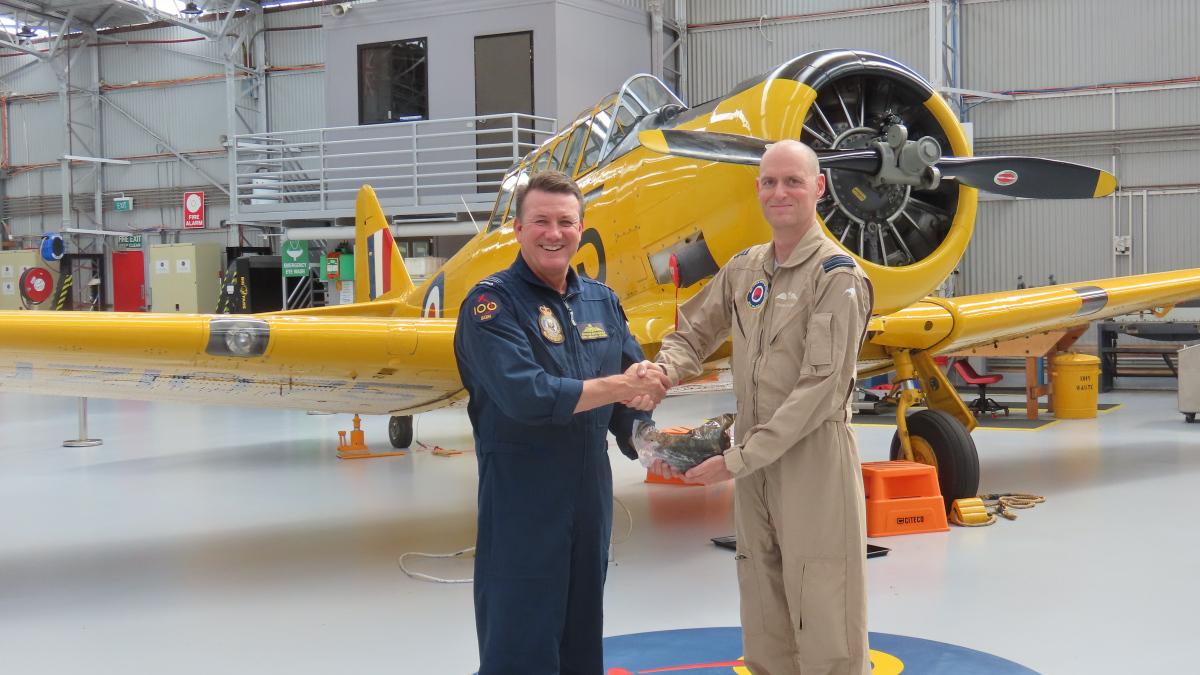
Collaboration between RAAF’s 100SQN and their New Zealand counterparts is helping to keep a Spitfire in the air.
Flight Commander of the Royal New Zealand Air Force Heritage Flight SQNLDR Michael Williams visited RAAF Base Point Cook on October 23 to speak about emergency handling and human performance in historic aircraft.
During preparations for the visit, coincidentally, the New Zealand team discovered its Spitfire’s Constant Speed Unit (CSU) required overhaul in the UK. This work and associated lead times would keep the aircraft grounded for months, precluding required pilot conversion and display flying.
The CSU is a rare hydro-mechanical component that governs propeller pitch and maintains selected engine speed.
100SQN, which operates heritage aircraft from Point Cook in Victoria and Temora in NSW, identified a serviceable CSU in stock and worked through the arrangements to make the part available to assist the conversion of the next pilot and display schedule in New Zealand.
CO 100SQN WGCDR Richard Brougham said the loan reflected the close relationship between the two air forces and the practical mateship of the warbird community.
“Parts for the almost 90-year-old aircraft are rare, so we are pleased and proud that we have been able to facilitate this and help make sure they can keep flying,” WGCDR Brougham said.
SQNLDR Williams said the loan was “getting us out of quite a hole” and would avoid months of delay while the New Zealand unit was overhauled in the UK.
“Flying heritage aircraft makes history tangible because people can see, hear and experience the machines, while learning about shared sacrifice, service values and today’s Air Force,” SQNLDR Williams said.
“For serving personnel, they are reminders that the same core values demanded in wartime remain relevant now.”
'Parts for the almost 90-year-old aircraft are rare, so we are pleased and proud that we have been able to facilitate this and help make sure [the NZ Spitfire] can keep flying.'
SQNLDR Williams’ presentation drew on a forced landing he made in a Harvard near RNZAF Base Ohakea in 2018. The aircraft suffered an engine failure, four miles from the airfield, the engine oil covered the windscreen, severe vibration shook off the main ignition switch and the instruments became unreadable.
With a passenger on board, he assessed whether the aircraft could glide back before committing to a belly-landing in a farm paddock, managing minimal airframe damage and keeping both occupants safe.
SQNLDR Williams described the deteriorating situation and decisions that helped bring the aircraft down safely, prompting questions and shared lessons among squadron personnel and local warbird aviators.
He said the incident reinforced how startle can affect human performance and why aviators must draw on training and experience when events unfold differently from expectations.
The visit completed a personal circle for SQNLDR Williams: the boy captivated by his grandfather’s Spitfire stories who became a Tiger Moth pilot at Point Cook during leave from the RNZAF in 2010–11. He then returned to Australia as a PC-9 qualified flying instructor at 2 Flying Training School and, in that room, was presenting at Point Cook as Flight Commander of the RNZAF Heritage Flight.
“I can’t remember wanting to do anything else. My grandfather told me about Spitfires flying overhead while he served in Italy during the Second World War. Those stories stayed with me,” SQNLDR Williams said.
A former RNZAF Harvard now operated by 100SQN added a lighter note. On seeing the yellow aircraft, SQNLDR Williams joked that he might take it home as well – returning to New Zealand with both the Spitfire CSU and a Harvard.
For both air forces, the connection reaches beyond shared history. New Zealanders and Australians flew and served together during World War II. Today, their heritage communities continue that relationship by sharing expertise, aircraft knowledge and scarce components across the Tasman.
The visit turned Trans-Tasman mateship into practical support with hard-won safety lessons being shared across the room, while a scarce component is shared across the Tasman to help keep a Spitfire – and the history it carries – flying.
Related stories


