Cleanup from deadly Pacific campaign
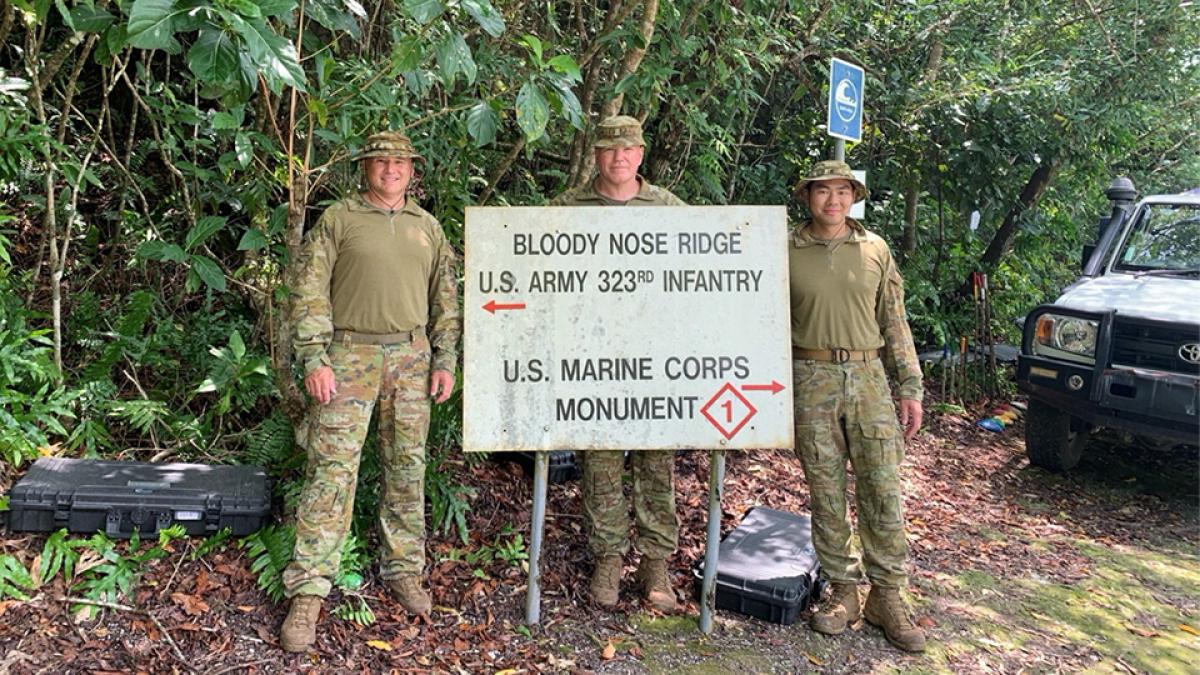
Three EOD specialists from 65ABRS deployed to the island of Peleliu, Palau, to assist in the clearance of explosive remnants of war (ERW) from one of the Pacific’s most significant WWII battlefields.
The three armament technicians deployed from September 18 to October 18 as part of a multinational clearance operation at the invitation of the US Pacific Air Forces. Working alongside US Air Force and US Marine Corps EOD teams, the RAAF members helped locate, identify and recover unexploded ordnance from the 1944 Battle of Peleliu.
The battle, fought between US and Japanese forces from September 15 to November 27, 1944, was one of the most intense campaigns of the Pacific War. There were some 11,000 deaths on the Japanese side with 200 to 300 captured as POWs and almost 10,000 Americans killed or wounded.
More than 2800 tonnes of munitions were fired or dropped on the 13-kilometre-squared island, leaving a legacy of hazardous explosive remnants that continue to threaten local communities.
SGT Martyn Woodgate said that, during the conflict, the island was bombarded by US naval ships to the point where the whole jungle was levelled.
“Subsequently, they went across with flame throwers and burned a lot of it,” SGT Woodgate said.
“The pictures from the war show the island laid bare.”

In the eight decades since, the jungle has regrown. Combined with the jagged coral landscape, this created a challenging terrain that the RAAF team traversed in assisting with the recovery of more than 150 items of ERW.
“There is 80 years’ worth of leaf litter, so finding ERW is difficult,” SGT Woodgate said.
“I’m sure we walked over twice as much as we found, but it’s so buried underneath that you wouldn’t know.”
Each item was examined using portable x-ray equipment to determine its explosive fill and assess the safest method of removal from the jungle. Many of the recovered munitions contained either high explosive or white phosphorus fillings.
Recovered ordnance was safely transported and stored before being transferred to Norwegian People's Aid, a non-government organisation, for final demilitarisation and disposal.
One of the most significant findings of the mission was a Japanese Type 4 20cm rocket that weighed more than 90kg.
“Most of the remnants on the island are relatively small,” SGT Woodgate said.
“Aircraft dropped 100lb bombs generally – around 45kg. To find this rocket was really big, and it took a lot more man power to recover and take through the terrain.”
WOFF Robert Frampton said the deployment was a unique opportunity to contribute to an important operational mission while strengthening relationships with partner nations.
“The enduring presence of wartime ordnance on Peleliu highlights the ongoing impact of conflict long after the fighting has ceased,” WOFF Frampton said.
CPL Victor Leong added: “Working alongside our US counterparts to remove these hazards was both professionally rewarding and an important contribution to the safety of the local community.”
65ABRS consists of airfield engineering and armament personnel who provide a deployable air base recovery capability for ADF operations.
Related stories


