Each deployment builds on the last
In the waters surrounding the Philippines, thousands of vessels move through some of the Indo-Pacific’s most important sea lanes every day.
Commercial shipping, fishing vessels and military units all form part of a constantly changing maritime picture – one Australia and its regional partners are working to better understand.
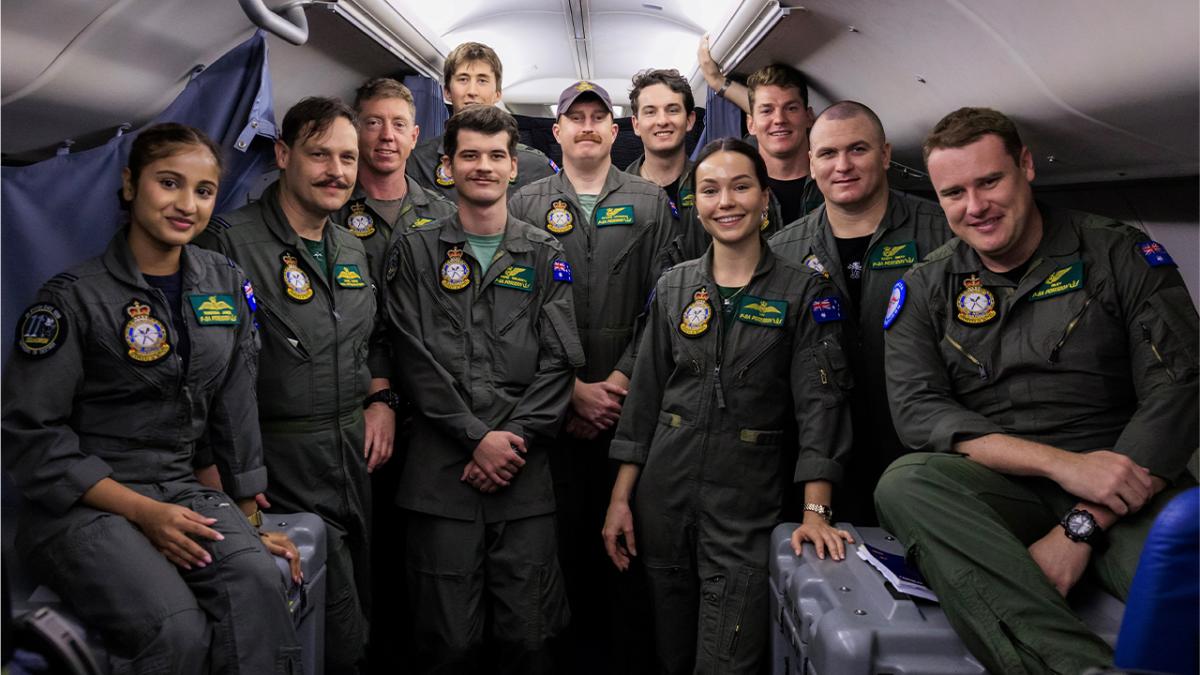
On deployments to Clark Air Base in the Philippines, RAAF P-8A Poseidon crews regularly take to the air on maritime domain awareness missions, helping build a clearer picture of activity across the region.
The flights allow crews to observe large areas of ocean, collect and analyse information, and contribute to a broader understanding of what is happening at sea.
As an island nation heavily reliant on maritime trade, Australia has a strong interest in understanding what is happening across the region’s waterways.
Safe and accessible sea lanes support the movement of food, fuel, raw materials and manufactured goods between countries, while a better understanding of maritime activity can help nations operate safely, respond to emerging situations and make informed decisions.
“We’re flying to the east and west of where we are at the moment, and we’re gaining an understanding of the maritime disposition of the ships, aircraft and other movements across the ocean,” Detachment Commander SQNLDR Bryce Martin said.
“Maritime domain awareness allows us to develop and inform the intelligence outlook, which helps us with our understanding of the region in the Indo-Pacific.”

Australia has a longstanding practice of operating across the Indo-Pacific, with activities conducted in accordance with international law, particularly the United Nations Convention on the Law of the Sea.
The deployments are conducted in cooperation of regional governments and militaries.
SQNLDR Martin said the regular flights were also about maintaining a consistent presence and supporting freedom of navigation in the region.
“It’s important that we do the maritime domain awareness flights here to have a consistent and persistent presence in the region and maintain and develop the connections that we have with our allies and partners,” he said.
Those connections are evident at Clark Air Base, where the RAAF works closely with the Armed Forces of the Philippines and local contractors to support the deployment.
“This detachment wouldn’t be possible without the close connections we have with the Armed Forces of the Philippines, and also the local contractors that we’ve engaged,” SQNLDR Martin said.
Members of the Armed Forces of the Philippines were invited to fly aboard the Australian P-8A to see how its crew conduct maritime domain awareness missions.
“It was such a great experience to have them on board [and] for them to actually see what we’re doing in the tactical environment,” SQNLDR Martin said.

Operating from the Philippines also asks something different of the Australian aircrew, who must prepare for unfamiliar procedures, locations and conditions.
FLGOFF Olivia Downey said that preparation could begin weeks before the aircraft arrived.
“There’s a lot more preparation that goes into operating from a different country,” FLGOFF Downey said.
“It definitely enhances our interoperability with other nations.
“Seeing how other nations do things and sharing that knowledge with them is something that’s really beneficial to us as well, and learning from different experiences.”
FLGOFF Downey also noted the many different aspects that feed into maritime domain awareness.
“A lot of intelligence briefings come into it before we step and fly the mission,” she said.
“Then, once we actually are airborne for the mission, a lot of organic sensor usage from our back-end team, where they’ll collect all the data and analyse that.”
With each deployment, crews add to that experience, becoming more familiar with the region, strengthening relationships with partners and returning home with lessons from operating in a different and sometimes complex environment.
“This detachment is going to arrive back in Australia more capable than when they left,” SQNLDR Martin said.
“Throughout this deployment, we’ve trained our crews … and we’ve had the crews operate in a complex and often dynamic environment, which has made them better in all aspects of their job, from flying to collecting that intelligence picture.”

Related stories


