Clark Air Base's international air riders
There is history everywhere at Clark Air Base in the Philippines, from the retired aircraft hosted at the base museum, to barrack blocks, hangars and flightlines that tell a century-long history.
Located a few hours north of Manila on the island of Luzon, Clark Air Base is home to the Philippines Air Force’s Air Defense Command headquarters.
The base can trace its roots to the early 1900s when the United States established Fort Stotsenburg on the present site, part of which became Clark Field in 1919.
Clark Field grew to become Clark Air Base, and supported missions by the United States during the Second World War and Vietnam War.
In 1979, sovereign control of the base transitioned from the United States to the Philippines, and in 1991 it was handed over completely to the Philippines.
Today, Clark Air Base remains a key base for supporting regional security, through the work of the Armed Forces of the Philippines and contributions by like-minded countries including Australia.
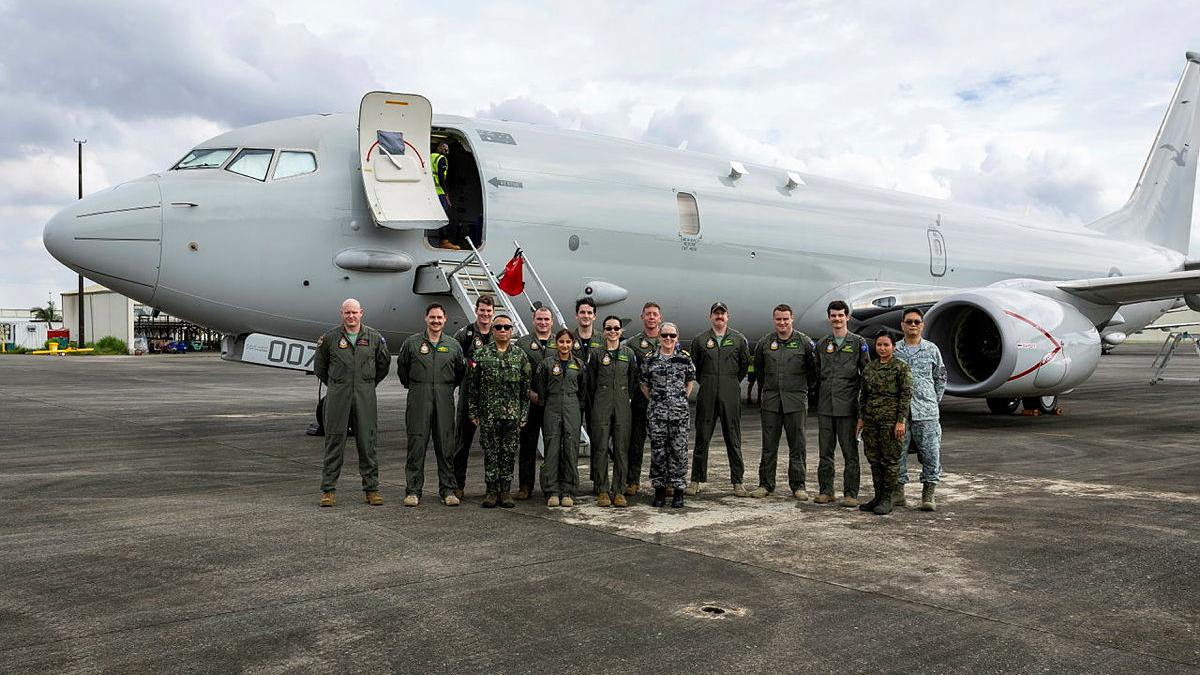
In mid-September, Philippines personnel were invited to join RAAF aviators on a P-8A Poseidon mission from Clark Air Base, working side by side as the aircraft conducted a maritime domain awareness mission across the region.
P-8A missions from Clark Air Base allow crews to operate across the South China Sea and West Philippine Sea, using the aircraft’s sensors to locate and track activity and build a broader picture of what is happening across the maritime environment.
For the Philippine personnel aboard, the flight is more than just a ‘ride along’.
It provides an opportunity to see how an Australian maritime patrol crew works together in the air, how information is shared, and how a picture of the maritime environment is built over hours of flying.

Deputy Defence Attaché for the Australian Embassy in Manila LTCOL Noel Young said the feedback from the Armed Forces of the Philippines on these engagements was uniformly positive.
“Maritime domain awareness is of great importance to the AFP [Armed Forces of the Philippines], which uses a variety of different ships, aircraft and other systems in this role,” LTCOL Young said.
“The AFP appreciate the opportunity to understand how the P-8A conducts maritime surveillance missions, as it brings a unique combination of speed, endurance, advanced sensors and a communications suite.
“Engagements like these contribute to the ADF and AFP’s broader program of cooperation and relationship building, and reinforces Australia’s reputation as a transparent and trustworthy security partner in the region.”
FLGOFF Daniel Purvis, a tactical coordinator aboard the P-8A Poseidon, said bringing Philippine personnel onto the aircraft allowed Australian crews to demonstrate how those capabilities were used in practice.
“We provide them with a brief of our capabilities and some of the safety procedures we have aboard the aircraft,” FLGOFF Purvis said.
“We introduce them to all of the varying roles aboard the aircraft, and provide them an example of what capabilities we have.”
That includes sensors such as radar, electro-optical systems and Automatic Identification System information, which crews use to help build a picture of activity across the maritime environment.
'A mission like today is an incredible opportunity to not just share information, but to develop closer connections with our friends and neighbours within the region.'
As the aircraft moves through the region, FLGOFF Purvis said the Air Riders are able to see “how we conduct our tasking and how we can provide them with information”.
For FLGOFF Purvis, that exchange is also part of what makes operating from Clark Air Base valuable.
“We both mutually get something from the arrangement,” he said.
“A mission like today is an incredible opportunity to not just share information, but to develop closer connections with our friends and neighbours within the region.”
FLGOFF Purvis said interoperability helped strengthen those relationships while also giving crews opportunities to operate from locations such as Clark, and work more closely with regional partners.
More than 100 years later, Clark Air Base remains a place where those relationships are built.
See more images here.
Related stories


