Honouring the Aussies among The Few
Eighty-six years ago, a prolonged aerial campaign over Britain changed the course of World War II.
From July 10 to October 31, 1940, the Royal Air Force defended Britain against a larger and more experienced German Luftwaffe during what became known as the Battle of Britain.
More than 30 Australians flew combat operations during the campaign, including eight who became aces by shooting down five or more enemy aircraft.
Of the 1497 Allied aircrew who lost their lives, 24 were Australian.
RAAF Association Tasmania President retired WGCDR Jenny Robertson said the battle was decisive and demonstrated how ordinary people could rise to extraordinary circumstances.
“The pilots were ordinary men who did extraordinary things,” Ms Robertson said.
“The Royal Air Force was vastly outnumbered, but with Spitfires, Hurricanes, radar and strategy, it prevailed.”
Ms Robertson emphasised how important commemorations are in keeping alive the legacies and memories of those who fought before us.
“Now that all the members of the Fighter Command have passed, we must continue telling their stories so their courage, bravery and sacrifice do not quietly fade into history,” she said.
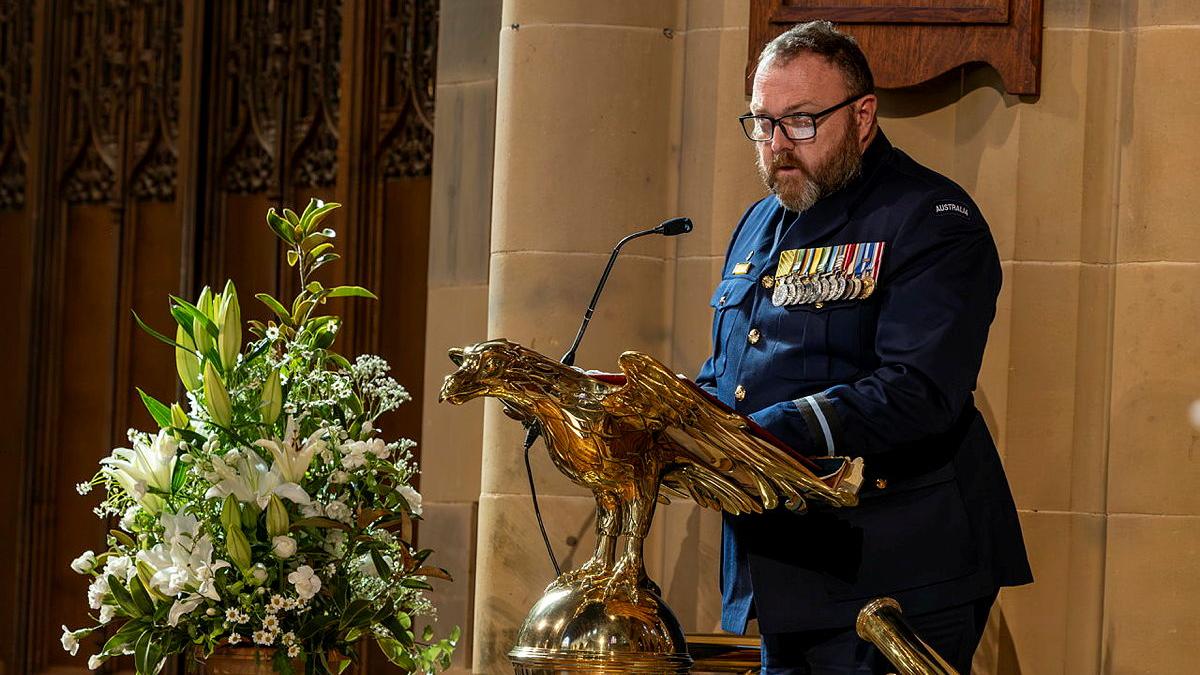
In a speech at a formal commemorative dinner, CDR Combat Support Group AIRCDRE Andrew McHugh said Britain’s success demonstrated the importance of integrating people, technology and effective command.

'The pilots were ordinary men who did extraordinary things.'
“The Battle of Britain was not won through courage alone,” AIRCDRE McHugh said.
“As we navigate an increasingly complex strategic environment, the lessons of 1940 remain highly relevant. Technological advantage must be integrated with skilled people, effective command and control, operational agility and determined leadership.”
Tasmania’s connection to the battle includes Hobart-born FLTLT Stuart Crosby Walch, the state’s sole representative among the Australians recognised as ‘The Few’.
The courage and sacrifice of ‘The Few’ were honoured in Hobart with a remembrance service at St David’s Cathedral on September 12, followed by a cenotaph service and wreath laying at Hobart Domain on September 13, supported by RAAF and organised by RAAF Association Tasmania.
29SQN, 10SQN and 3SQN, the Australian Air Force Band and Australian Air Force Cadets provided support throughout the commemorations.
Two PC-21 aircraft from the Roulettes also conducted a synchronised aerial display and flypast over Sunday’s service.
Ms Robertson hoped the commemorations would create lasting memories for younger Australians.
“I hope they remember the Roulettes in the skies above the Derwent and the cenotaph,” she said.
“I hope they return to future commemorations and carry the legacy forward.”
For AIRCDRE McHugh, the commemorations also provided an important connection between past and present.
“As long as we continue to remember them, their example will endure,” he said.

Related stories


