The campaign that shaped a generation
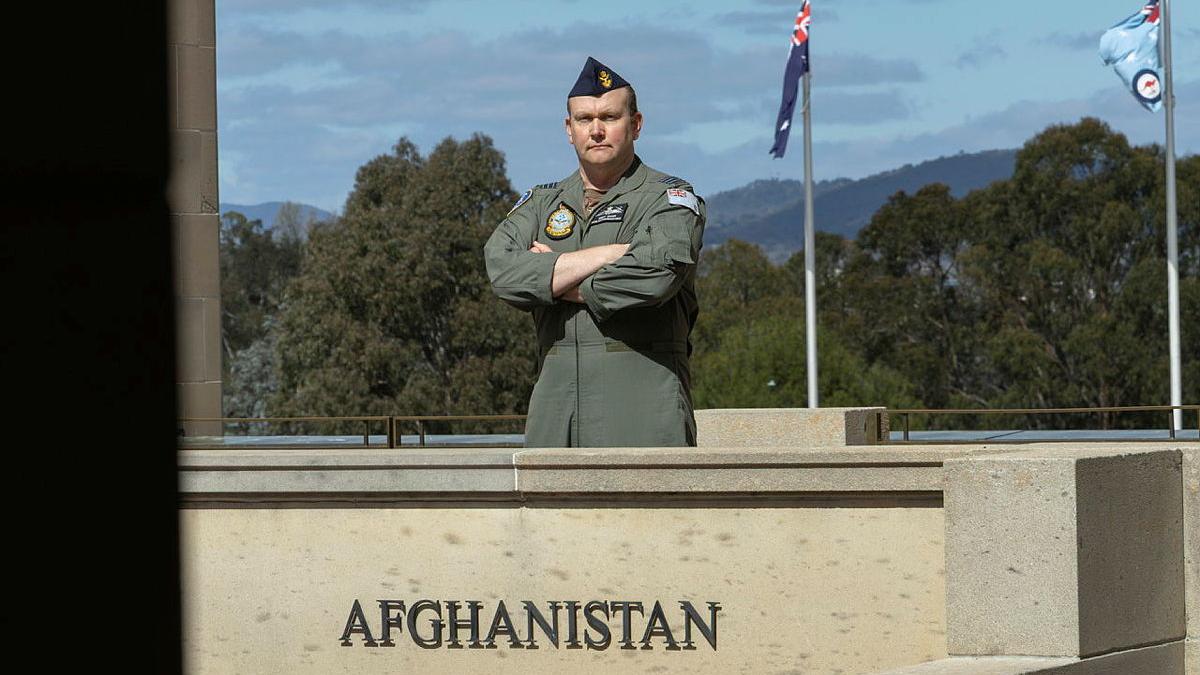
Twenty-five years after RAAF personnel first deployed to Afghanistan, Air Force reflects on a campaign that tested its people, sharpened its warfighting capabilities and shaped a generation of aviators.
From the opening stages of Operation Slipper in 2001 to the conclusion of Australia's involvement two decades later, Air Force personnel continuously served in the longest campaign in Australian military history.
Operation Slipper was where a generation of aviators learned their trade, developed as leaders and experienced the realities of sustained combat operations.
Over two decades, Air Force personnel provided critical effects across every stage of the campaign.
Thousands of Air Force personnel deployed across Afghanistan and the broader Middle East area of operations, generating air power across a vast battlespace.
Whether transporting troops and equipment, gathering intelligence, conducting aeromedical evacuations, sustaining aircraft in extreme conditions or providing commanders with real-time information, they delivered critical capabilities and effects that enabled coalition operations and contributed directly to mission success.
The conflict demanded constant adaptation. Threats evolved, missions changed and operational priorities shifted rapidly, requiring Air Force personnel to operate with professionalism, resilience and agility in a complex environment.
For FLGOFF Leonie Midgley, an air surveillance operator, the pace of operations highlighted the immense coordination required to maintain control of Afghanistan's crowded and constantly evolving airspace.
“Watching the team in the surveillance cabin manage Afghanistan's airspace made you realise that a wartime environment demands a level of responsiveness and coordination that's difficult to recreate anywhere else,” FLGOFF Midgley said.

The need for composure and adaptability extended across the theatre. Operating in a warzone required calm decision-making under pressure as crews moved personnel, equipment and supplies across vast distances, often under tight timelines and challenging conditions to sustain coalition operations.
WGCDR Brett Aaker, a C-17A Globemaster III pilot, reflected on the demands and recalled a night departure from Kabul where multiple aircraft warnings occurred simultaneously, testing the crew's training and discipline.
“Everything went wrong. We had an engine warning, lost pressurisation and received a missile warning almost simultaneously,” WGCDR Aaker said.
“The cockpit lit up like a Christmas tree, but we worked through each problem as it arose and got the crew safely out.”
WGCDR Aaker said the campaign also exposed personnel to levels of uncertainty that could never be fully replicated in training.
“The training prepared you, but it still felt different – I vividly remember crossing from Pakistan into Afghanistan and thinking ‘we're now in the war’,” he said.
“After a few minutes, it became another day in the office. The airfields were just in Afghanistan instead of Australia.”
Two decades of continuous operations accelerated the development of Air Force capabilities and produced a generation of leaders accustomed to making decisions in complex and fast-moving environments.
Many of the lessons learned in Afghanistan remain embedded across Air Force today, influencing training, capability development and preparedness.
'Afghanistan showed the resilience of our people. It showed what it means to be part of something bigger than yourself.'
The operations reinforced the importance of integrated air power, adaptability and the ability to operate effectively in demanding joint and coalition environments.
“We're a much stronger Air Force because of it. We learned how to operate through uncertainty, sustain persistent operations and achieve outcomes alongside international partners with limited resources,” WGCDR Aaker said
For many veterans, the significance of the anniversary is measured less by capabilities developed or missions completed than by the people who served alongside them.
It is reflected in the crews who launched before dawn, the maintainers who worked through the night, the intelligence analysts tracking evolving threats and the support personnel who kept operations running day after day.
“Afghanistan showed the resilience of our people. It showed what it means to be part of something bigger than yourself,” FLGOFF Midgley said.
“Many of us serve because we're driven by a sense of purpose, and when lives are on the line, it brings a completely different perspective to the job we do and the way we serve.”

Related stories


