2SQN, then and now
110 years of service has amounted to a remarkable legacy.
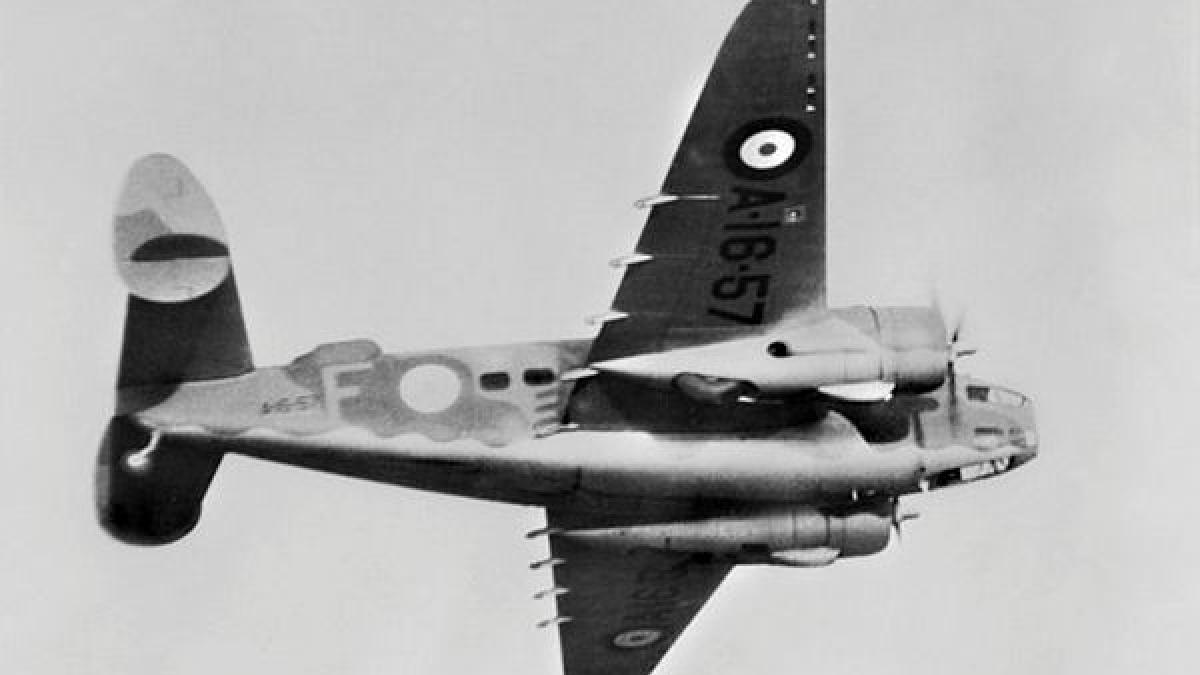
2SQN was formed in Egypt in 1916 as an Australian Flying Corps squadron and became one of Australia’s most distinguished aviation units.
After training in Britain, it deployed to France in September 1917, flying reconnaissance, artillery cooperation, bombing and ground-attack missions on the Western Front.
It fought at Cambrai and other major operations, suffering heavy losses while earning numerous individual awards. Disbanded after WWI, the squadron was re-formed at Laverton in 1937 as a general reconnaissance unit.
During WWII, 2SQN conducted maritime patrols and reconnaissance along Australia’s eastern coast before deploying to Darwin as Japanese forces advanced into the region.
From 1941 to 1945 it operated against Japanese forces across the Timor, Arafura and Banda Seas, attacking shipping, airfields and ground installations, conducting reconnaissance, anti-submarine patrols, supply drops and special operations.
The squadron suffered significant losses but was recognised with a United States Presidential Unit Citation for its outstanding performance during 1942.

Re-formed in 1948 as a bomber squadron, 2SQN flew Lincolns before converting to Canberra bombers. It deployed to Malaya in 1958 and remained at Butterworth during the Indonesian Confrontation.
In 1967, 2SQN moved to Phan Rang, South Vietnam, becoming Australia’s principal Canberra bombing unit in the Vietnam War.
Flying almost 12,000 sorties and dropping more than 76,000 bombs, the squadron conducted low-level bombing and reconnaissance missions until returning to Australia in 1971. Its Vietnam service earned further United States and Republic of Vietnam unit citations.
The squadron was disbanded in 1982 but re-formed at Williamtown in 2000 to operate the E-7A Wedgetail. Since then, it has supported major Australian and coalition exercises and operations, including Operation Okra, providing airborne battle management and commandand-control.
Today, 2SQN remains a vital RAAF operational unit. Its century of service reflects its enduring motto: Consilio Et Manu – ‘To Advise and to Strike.’

Former WOFF John (Remo) Riemann (Jan ‘63 to Jul ’88)
Final role: Warrant Officer in charge of 486SQN electrical workshops, RAAF Base Richmond
“I was a leading aircraftman electrical fitter in 2SQN, arriving in Mar ’68 and leaving in May ’69 – so staying 14 months. I volunteered to stay longer to allow a married guy to go home early. From Vietnam, instead of going back to Australia on completion of tour, I got a ride down to Singapore and got a ride on a British aircraft to the UK. I had a month's leave in Britain and Europe on completion, got a ride back to Singapore and then a ride on a C-130 Herc back to Richmond, Australia.”

Former LEUT (Navy) Peter (Nards) Hassall (25 Jul ’88 to 16 Feb ’23)
Final role: Fighter Controller, Mission Commander (E-7A)
“All of my deployments with 2SQN were memorable, but Op Okra, flying over Iraq as the Mission Commander in the back of the E-7A Wedgetail was probably my favourite and significant in my career.”

Former FSGT Rodney (Curly) Pearce (14 Jan ’64 to 20 Mar ’84)
Final role: mechanical transport fitter
“At Phan Rang [Vietnam], I was a leading aircraftman maintenance fitter. Nothing could prepare you for the initial effect the loss of Magpie 91 would have. The noise, hustle and bustle, manly attitude all gone, [replaced by] deep, deep silence. A life-defining moment.”
Related stories


