Gathering intelligence against all odds
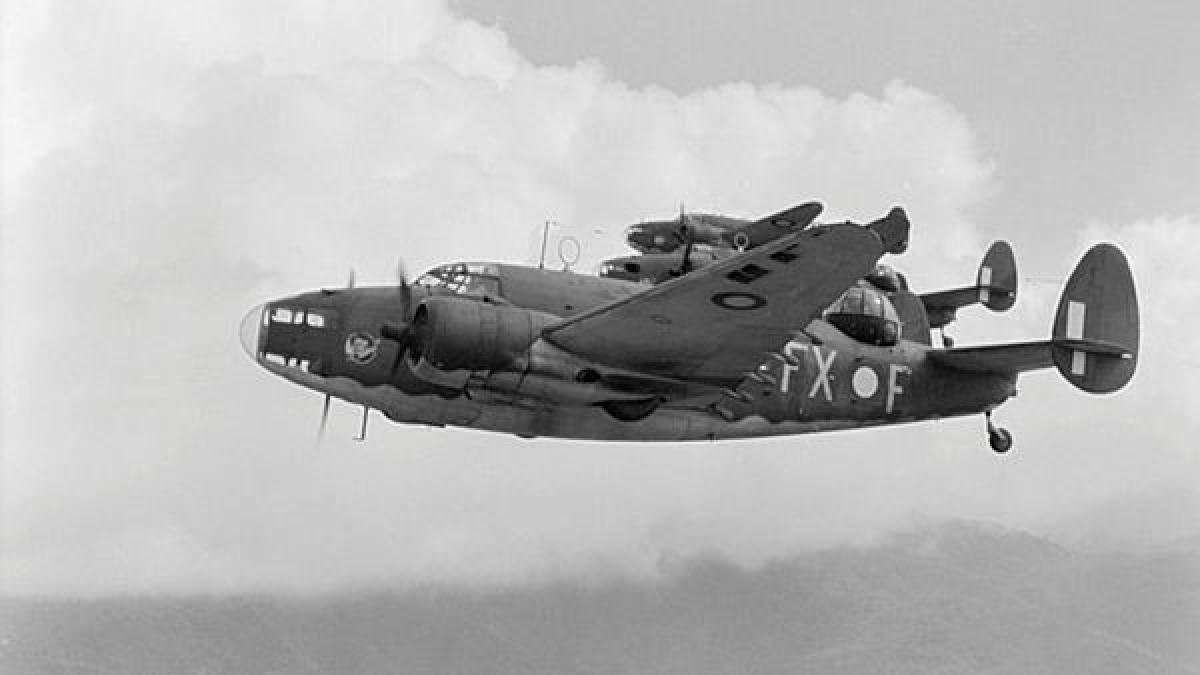
On January 9, 1942, a lone Hudson bomber from 6SQN undertook one of the most audacious missions ever undertaken by the RAAF during World War II.
Nine hours after departing, the aircraft had successfully completed the longest over-water reconnaissance mission by a RAAF land-based aircraft in WWII – making the crew trailblazers in long-range reconnaissance.
The operation was aimed at gathering vital intelligence about Japan’s naval dispositions and intentions in the Pacific at a time when the Allies were reeling from the shock of Japan’s attacks across a wide front in the Asia-Pacific region during late 1941 and early 1942, at the start of the war in the Pacific.
The crew’s target: Truk Lagoon.
Truk (now called Chuuk in the Federated States of Micronesia), in the Caroline Islands north of New Guinea, was Japan’s main base in proximity to the South West Pacific, from which it could threaten Rabaul – a strategic location on New Britain.
As such, it was critical that Allied forces in the Pacific obtained intelligence on enemy forces at Truk to help ascertain their intent.
The crew for this vital mission were FLTLT Robert Yeowart, FLGOFF Patrick McDonnell, SGT Frank Marriner and SGT Murray Ellis.
A second aircraft slated for the mission had to abort due to mechanical reasons, leaving FLTLT Yeowart and his crew with sole responsibility for success.
And they didn’t disappoint.
Departing from Kavieng in New Guinea and heavily loaded with fuel and special cameras, the aircraft pushed through heavy squalls for Truk Lagoon – some 1200 kilometres away.
“Upon reaching the target, the crew calmly went about their business of observing and photographing Japanese dispositions,” head of History and Heritage – Air Force’s Living History Program WGCDR Rich MacNeil said.
“They observed heavy gun emplacements, flying boats, a large number of warships – including a possible aircraft carrier – and, on one of the islands, a large number of Japanese bombers.
“Clearly, the Japanese were massing for a major operation.”
Halfway through their first photographic run, anti-aircraft fire began targeting them and enemy aircraft were observed scrambling to intercept them.

'We cannot repay those who came before, but we remember them and keep their legacy alive.'
Showing unwavering dedication to ensuring the success of the mission, FLTLT Yeowart turned the aircraft around for a second pass over the enemy positions – completing the task originally allotted to two aircraft.
Evasive action and finding cover in a storm allowed the aircraft to escape and they returned to base at Kavieng after a total flight time of almost nine hours.
The intelligence gathered from their mission was exceptional and greatly influenced the strategic response by the Allies.
Tragically, three of the four aviators who took part in the mission did not survive the war. FLGOFF McDonnell, SGT Ellis and SGT Marriner were all killed in action in 1942 – forever young, but not forgotten.
On August 28, aviators from 6SQN and History and Heritage – Air Force, as well as family members, gathered at RAAF Base Amberley to remember the exploits of those four 6SQN WWII aviators.
CO of 6SQN WGCDR Sal Knox presented the family members of two of the fallen aviators involved in the mission with their service medals, which had not been issued at the close of the war.
The families of SGT Marriner and FLTLT McDonnell gratefully received the medals to keep safe for future generations. The family of SGT Ellis was unable to attend, but was warmly acknowledged on the day.
A RAAF publication issued in 2011, The Air Force Approach to Intelligence Surveillance and Reconnaissance (ISR), includes nine vignettes on the use of ISR by Australian military aviation since World War I, and the reconnaissance mission to Truk by the crew of A16-106 is one of them. The vignette ends with the point that “Yeowart’s mission demonstrated how the air power characteristic of reach could be exploited to satisfy ISR requirements”.
The unique ability of the Air Force to use its reach to project air power continues to hold true today.
WGCDR Knox spoke about the importance of current 6SQN aviators remembering the audacious mission.
“Despite these events happening more than 80 years ago, our responsibilities today remain fundamentally the same," she said.
“We cannot repay those who came before, but we remember them and keep their legacy alive.”


Related stories


