Why good enough is not enough
Heavily outnumbered and with ammunition running critically low, Delta Company, 6RAR, fought for more than three hours in the Battle of Long Tan.
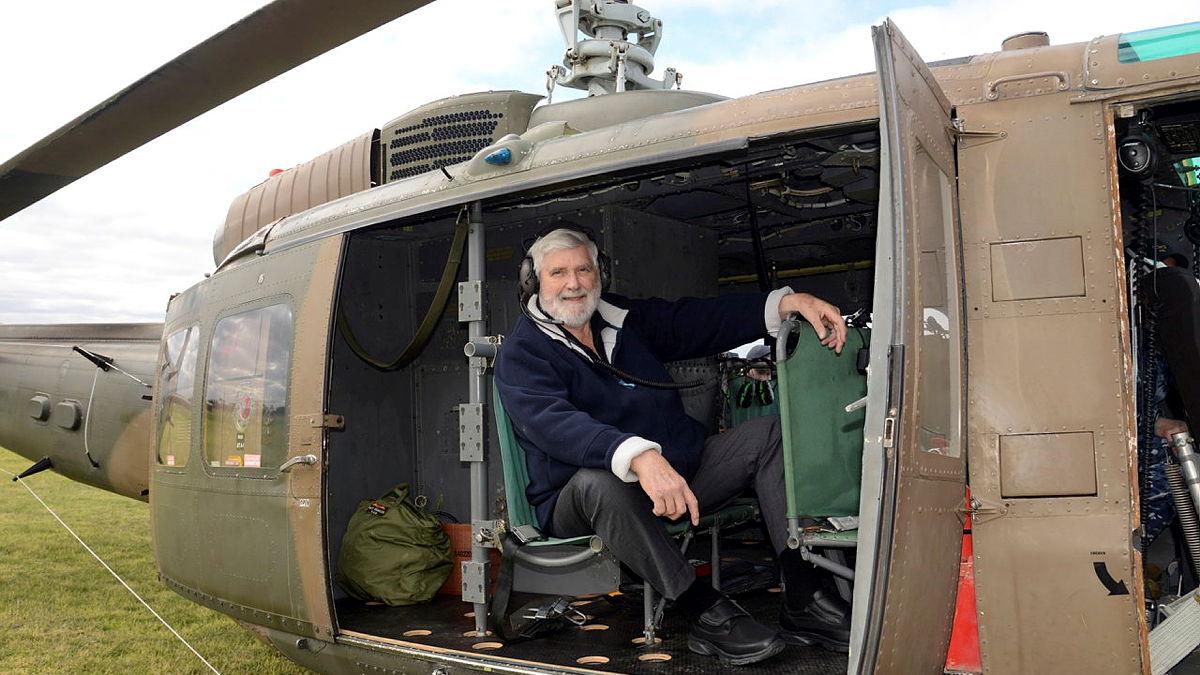
Almost 60 years later, at the RAAF Museum Point Cook, former 2LT Dave Sabben stood before one of the aircraft that resupplied his soldiers that day.
The former 12 Platoon Commander highlighted a lesson on the ethos that prepared Delta Company for one of Australia’s fiercest engagements of the Vietnam War – one that still resonates with Air Force today.
“For Delta Company, preparedness began with a simple belief: that good enough simply wasn’t,” Mr Sabben said.
That belief echoes CAF’s focus on people, purpose and preparedness, and is one that Delta Company had only months to put into practice before deploying to Vietnam in 1966.
Under Delta Company Commander MAJ Harry Smith, meeting the standard became the starting point rather than the finish.
When soldiers could strip and reassemble a rifle within the required timeframe, they repeated the task in the rain. Then in the mud. Then in darkness.
They learnt to use every weapon in the platoon and how to carry out the responsibilities of the rank above them.
On pack marches, platoon commanders would lead their soldiers to the finish, only to continue marching.
“We instilled in the men that battle wasn’t over just because they thought they had reached the end,” Mr Sabben said.
“We learnt to always expect the next thing coming.”
On August 18, 1966, that training was put to the test.
Less than an hour after entering the rubber plantation at Long Tan, the first shots were exchanged.
'If Delta Company had just been good enough that day, we would have held an advantage for the first hour, at most.'
“The world as we knew it turned upside down,” Mr Sabben said.
“We had prepared for counter-revolutionary warfare – contact with fleeing enemy lasting for seconds at most. Instead, the enemy came searching for us.
“At Long Tan, we fought for three-and-a-half hours and expended two frontline supplies of ammunition. The sheer volume, the noise, the proximity – everything was off the board.”
With casualties mounting, Delta Company drew on months of training.
“Every man was efficient in everything we had trained for. We were adaptable. We handled all the unexpected,” Mr Sabben said.
Soldiers knew to conserve ammunition and how to step into the roles of those killed or wounded.
“Even when one in three of us became a casualty, we continued fighting,” Mr Sabben said.
“We were resilient. We were strong, fit and up to the task.
“We were a team.”
Eventually, two RAAF 9SQN UH-1B Iroquois helicopters flew through dangerous conditions to resupply Delta Company, keeping them in the fight.
Australian and New Zealand artillery continued their support, while Australian reinforcements moved forward as daylight faded. By nightfall, the enemy had withdrawn.
Just three-and-a-half hours after the battle began, 18 Australians had been killed and 24 wounded.
Nearly 60 years later, Mr Sabben stood before an Iroquois A2-1020 at the RAAF Museum and reflected on the lessons carried from the battlefield.
Delta Company could not have anticipated what was coming that day. Soldiers had simply prepared themselves for the unexpected.
“Good enough is not bloody good enough,” Mr Sabben said.
“If Delta Company had just been good enough that day, we would have held an advantage for the first hour, at most.”
For Mr Sabben, it is a lesson he asked the next generation to carry forward.
“You owe it to yourself and your team to be the very best you can be. To be that little bit better,” he said.
“And then you owe it to the next generation to pass on what you’ve learnt.
“Because good enough simply isn’t.”
Australia will commemorate the 60th anniversary of the Battle of Long Tan on Vietnam Veterans’ Day, August 18, remembering all those who served in the Vietnam War.

Related stories


