In memory of mateship and the ultimate sacrifice
Chief of Air Force AIRMSHL Stephen Chappell shares a piece of history on Anzac Day.
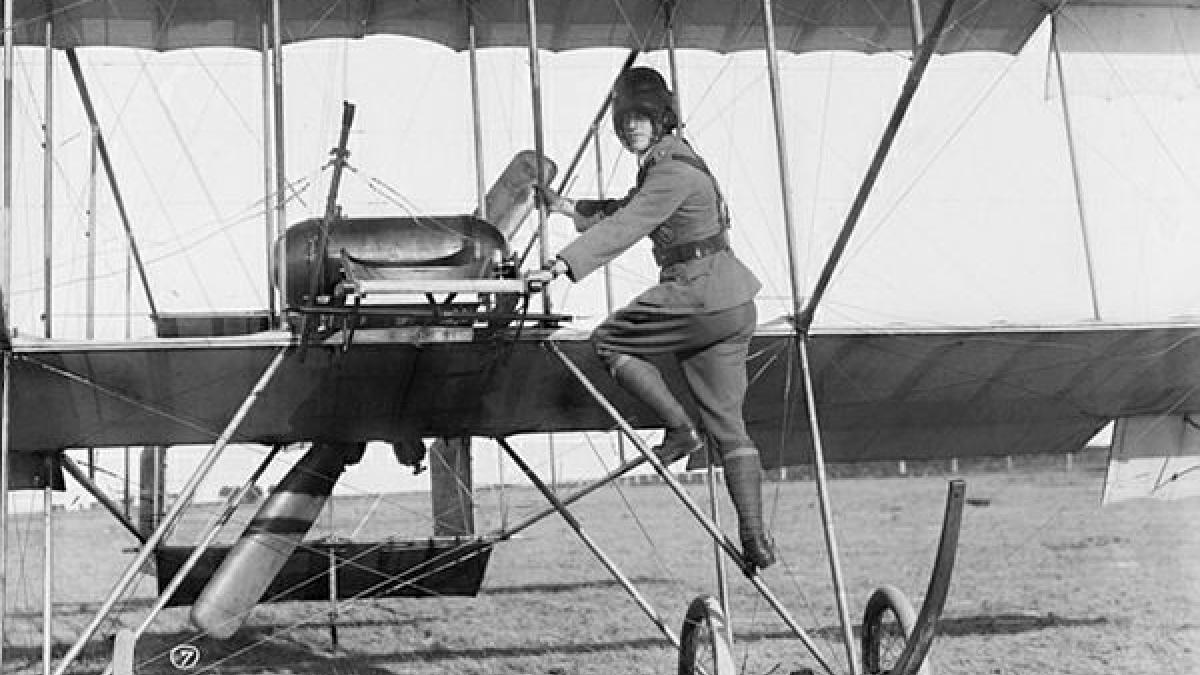
In July 1915, following a forced landing, Australia and New Zealand lost two of their earliest military aviators on active service.
LT George Merz and Australian-born New Zealander LT William Burn were heading home to Basra in the skies above Mesopotamia, now modern-day Iraq.
Their aircraft, a Caudron G. III biplane, struggled in the conditions. It regularly overheated in the fierce daytime temperatures, carried no fixed armament, and offered minimal protection.
The only way bombs could be dropped was through a hole cut in the cockpit floor. The Caudron’s top air speed of 114km/h was pedestrian enough to leave the crew vulnerable to ground-attack.
LT Merz wrote to his father that he’d been involved in some ‘tidy little scraps’.
Forced to land just 30 kilometres short of a refuelling safe haven, they were attacked by a large group of Bedouin tribesmen.
Unable to defend their aircraft, and armed only with revolvers, the two men attempted an escape.
A running gunfight over eight kilometres followed, before the pursuit was brought to a tragic end.
'Our Royal Australian Air Force history is rich with the memories of unselfish sacrifice. Rich with stories of mateship, of loyalty and of courage.'
As death drew close, in an act of remarkable courage, one of the downed aviators refused to leave his seriously wounded mate. He continued to fight by his mate’s side, knowing the inevitable consequence of that decision.
The two were never seen again. Which aviator stayed to protect the other remains unknown, and their final resting place a mystery. Eyewitness accounts are all that remain to tell the tale of the Anzac spirit on show that day: putting others before oneself, and never leaving a mate behind.
Our Royal Australian Air Force history is rich with the memories of unselfish sacrifice. Rich with stories of mateship, of loyalty and of courage.
Those we remember were ordinary people doing extraordinary things in extremely challenging conditions.
In the case of LT Merz and LT Burn, that included enduring the intense heat of 43 degree days, surrounded by a sea of mud from the drying floodwaters of Mesopotamia.
Anzac Day is an opportunity for us all to remember individuals such as Merz and Burn, and the contribution they made in defending our way of life and our country.
LT Merz has a place on the Australian War Memorial’s Roll of Honour for military aviation.
Almost 10,000 Australian aviators have joined him in the 111 years that have followed. More than 103,000 Australians have made the ultimate sacrifice for Australia.
Anzac Day is a time for our Air Force and nation to pay our respects to our fallen and to comfort those for whom the pain of loss remains close at heart.
It’s a time for all Australians to reflect on the contribution made by all of our past and present service personnel who have displayed great courage, discipline and self-sacrifice in choosing a life of service to their country.
We are proud of their legacy, proud of their service, and proud of their Anzac spirit.
Lest we forget.

Related stories


