Harpoon makes its debut
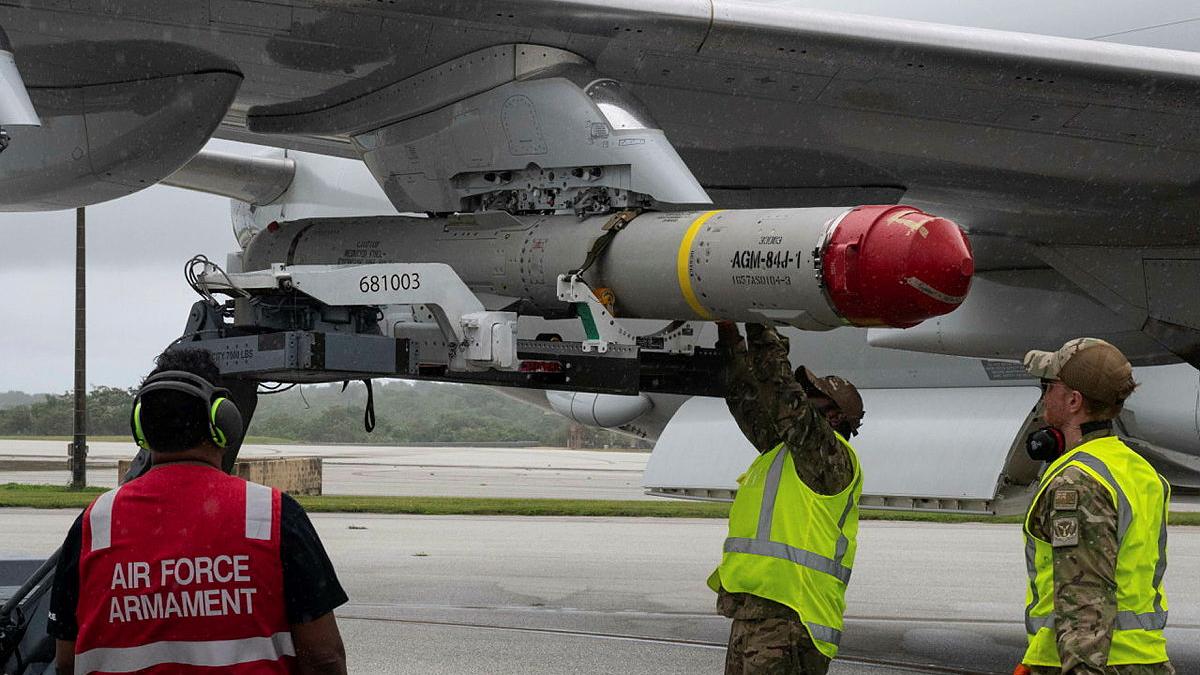
For the first time, RAAF has integrated with a Royal New Zealand Air Force (RNZAF) P-8A Poseidon for a live-fire sink exercise in the west Pacific.
At Exercise Valiant Shield, RAAF armament technicians worked with RNZAF counterparts at Anderson Air Force Base in Guam to load a pair of Australian-supplied AGM-84 Harpoon anti-ship missiles onto an RNZAF P-8A.
The live-fire sink exercise involved aircraft, ships and submarines from NZ, Australia, Canada, Japan and the US.
They coordinated to sink a decommissioned ship using munitions fired from the air, sea vessels and underwater, with the RNZAF P-8A successfully launching both Harpoons against the target.
RNZAF Air Component Commander AIRCDRE Andy Scott said it was the first successful launch of air-to-surface missiles by an RNZAF P-8A.
“These activities are critical to the New Zealand Defence Force’s readiness to be able to meet the challenges of a deteriorating strategic environment,” AIRCDRE Scott said.
“We are incredibly grateful for the support of partners to assist us in regenerating the ability to rapidly strike targets at distance.”
SGT Ivan D’Souza was one of the RAAF armament technicians who helped with the loading in Guam, and said it was a unique experience to be able share his skills and expertise with the NZ 5SQN crews.
“Working alongside the Kiwis as we loaded two Harpoon missiles onto their Poseidon was great. It really made you think about how much we can share our knowledge and skills with each other,” SGT D’Souza said.
“I was also one of the initial staff that provided initial training to the RNZAF technicians, so to come full circle and go through the whole evolution from training, loading and firing was great.
“There are a lot of common procedures, and so the ability to be able to lean in and assist in building their experience in the trade was really satisfying.”

Operating as an integrated team with US Navy P-8As and Japan Maritime Self-Defense Force P-3C Orions, the maritime patrol task group flew various missions in support of the US Navy’s George Washington Carrier Strike Group, which included ships from Canada and Japan operating in the Philippine Sea.
The task group played a critical role in anti-submarine and anti-surface warfare serials for the exercise scenarios and culminated in the firing of the Harpoon missiles to refine tactics, techniques and procedures in anti-surface vessel actions.
SQNLDR Michael Caries, the RNZAF Poseidon captain, said the firing of the Harpoon was a testament to the many hours of tireless work by a team of people to get us to this point.
“The first successful Harpoon firing from a RNZAF P-8A is a testament to our armament, maintenance and logistics personnel,” SQNLDR Caries said.
“Their tireless work in preparing for the activity ensured the weapon loading was conducted both safely and efficiently.”
RAAF also deployed its own P-8A Poseidon to Guam for Valiant Shield, along with 80 ADF personnel to bases across the Indo-Pacific.
This year marks the 11th Valiant Shield, bringing together forces from Australia, Canada, Japan, NZ and the US operating across the air, sea, land, space and cyberspace domains.
The forces will train in a complex and dynamic threat environment to increase interoperability in the face of shared challenges.

Related stories


