Volunteers craft a medical solution
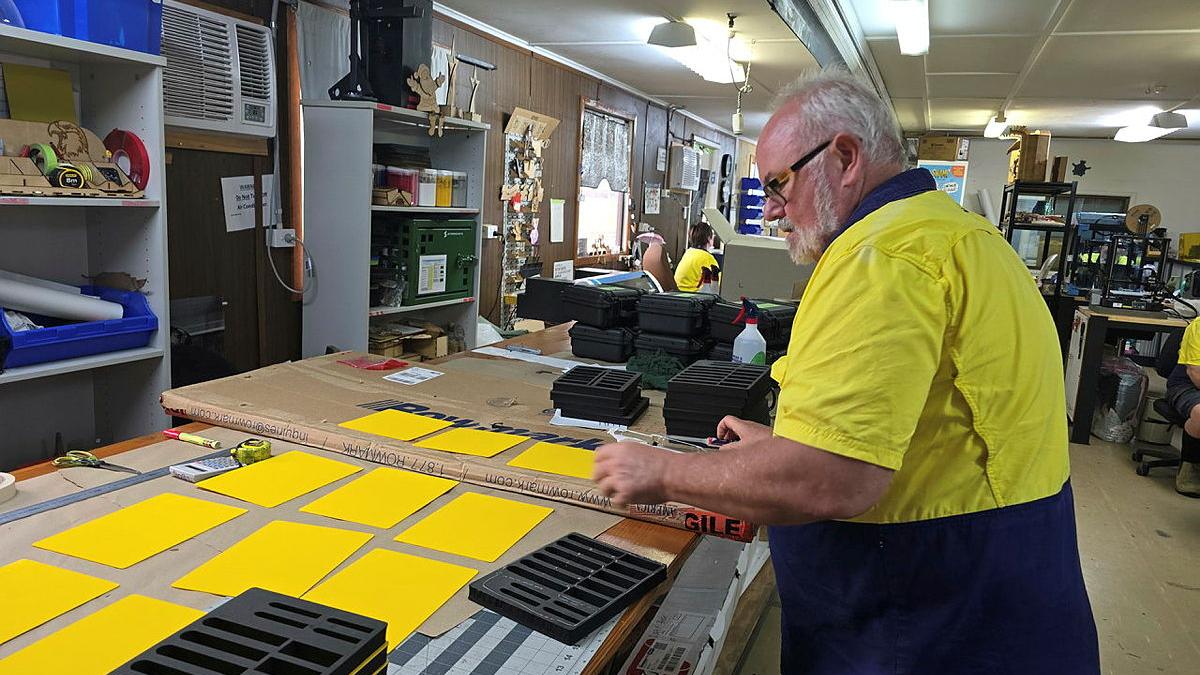
Volunteers from History and Heritage – Air Force have conducted ‘restoration’ work on 94WG’s agile medical packs, enabling aeromedical evacuation and trauma teams access to plentiful, well-protected medicines and emergency equipment.
More than two years in development and production, the new medical packs have been enhanced with protective inserts made by History and Heritage Branch’s Restorations Section.
FLTLT Michelle Turner, of 94WG Health Logistics, said 2 Expeditionary Health Squadron conducted a major review of the packs in 2024.
“That identified a lot of problems with the soft bags we were using,” FLTLT Turner said.
The bags carry restricted medicines such as morphine and fentanyl in ampoules and other delicate containers, but the previous version provided insufficient protection, frequently resulting in breakages and leaks. Haphazard organisation also made it difficult for practitioners to see what medicines were available, whether anything had been tampered with and what needed replacing.
“As a pharmacist, I’m very concerned with the accessibility, quantity and governance of the pharmaceuticals that our medics, nurses and doctors use when they’re out in the field or supporting a flying squadron,” FLTLT Turner said.
She and FSGT Fletcher Jackson started designing new inserts for new Pelican hard cases at the start of the year to more safely store contents. Unable to find a suitable commercial product, they were directed to the Restorations Section.

Restorations volunteer Bob Large, who has been using the section’s laser cutter to create instruments and decals for restored aircraft, said producing the inserts required “a lot of team input, technology, know-how and handiwork” as well as months of research, trial and error.
“It’s very much a bespoke job and a satisfying contribution to Air Force operations,” Mr Large said.
“After Michelle and Fletcher approached Restorations in March, the team measured each medicine and component with a micrometre and tested cardboard, Styrofoam and other materials before settling on a dense, impermeable rubber to protect the contents and contain leaks.”
The multi-layered inserts take more than two hours to cut and assemble and Restorations has so far produced 15 of the 54 inserts ordered by 94WG.
“It’s a high-quality product and Michelle told us it was successfully trialled at Exercise RIMPAC this year and is already being used on deployments in India and the United States,” Mr Large said.
History and Heritage Branch Projects Director GPCAPT Andrew Tatnell said that along with hands-on training for starting structural fitters, the improved medical kits will make a substantial contribution to Air Force’s operational capabilities.
Related stories


