A world first for the F-35A
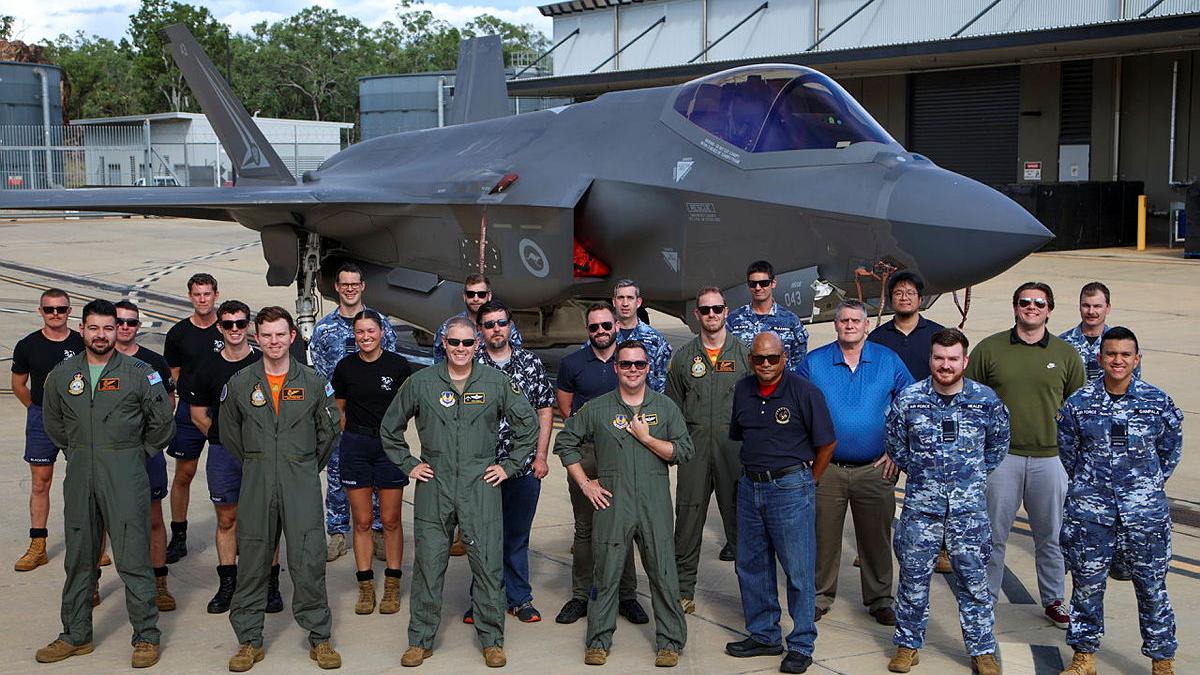
RAAF has taken part in the first joint Weapon Fill Measurement Vehicle (WFMV) flight test on an F-35A Lightning II, alongside the US.
This milestone strengthened both allied lethality with the US and Australia’s growing role as a high-end defence partner.
Conducted in late April by 75SQN, the test marked a significant advancement in Australia’s ability to integrate weapons onto the F-35A Lightning II faster and more efficiently.
The activity involved flying an F-35A Lightning II with a test weapon fitted to collect critical engineering data on how weapons behave in flight.
The data gathered will help accelerate future weapons certification programs, allowing combat capability to reach operational squadrons sooner.
In a rapidly evolving Indo-Pacific security environment, reducing the time needed to integrate weapons onto frontline aircraft is increasingly critical to maintaining combat readiness.
The world-first activity brought together AWE SQN, ARDU, 75SQN, Air Combat Systems Program Office, United States Air Force SEEK EAGLE Office (AFSEO) and United States 96 Range Support Squadron.
The collaboration forms part of the Aircraft Stores Compatibility Project Arrangement (ASC PA), a long-standing agreement between Australia and the US to test aircraft weapons systems, share data and reduce duplication in complex certification activities.
'It’s not that we can’t do this work on our own, but working together lets us do it better, faster and with lasting benefit.'
For CAPT Jae Yu, project manager for ASC PA, the achievement highlighted both Australia’s growing technical expertise and the mutual benefit of international partnerships.
“The key takeaway for me was how valuable the Australia and US alliance is,” CAPT Yu said.
“It’s not that we can’t do this work on our own, but working together lets us do it better, faster and with lasting benefit.”
Beyond the technical success, the activity showcased Australia’s ability to contribute meaningfully to allied innovation on one of the world’s most advanced combat aircraft.
A representative from AFSEO said understanding the flight environment was essential to integrating future weapons capability onto the F-35A Lightning II platform.
“The capability to characterise and understand flight environments is foundational to new weapons certification,” the representative said.
“It gives critical engineering insight into the F-35, and this demonstration further strengthens interoperability between the RAAF and the US Air Force.”
FLTLT Nicholas, who piloted the sortie, said the mission reflected a shared commitment to strengthening allied combat capability.
“It was a great opportunity and privilege to work alongside Australian and US engineers to help improve the survivability and lethality of allied F-35 operators worldwide,” FLTLT Nicholas said.
Related stories


