Connection beneath the surface
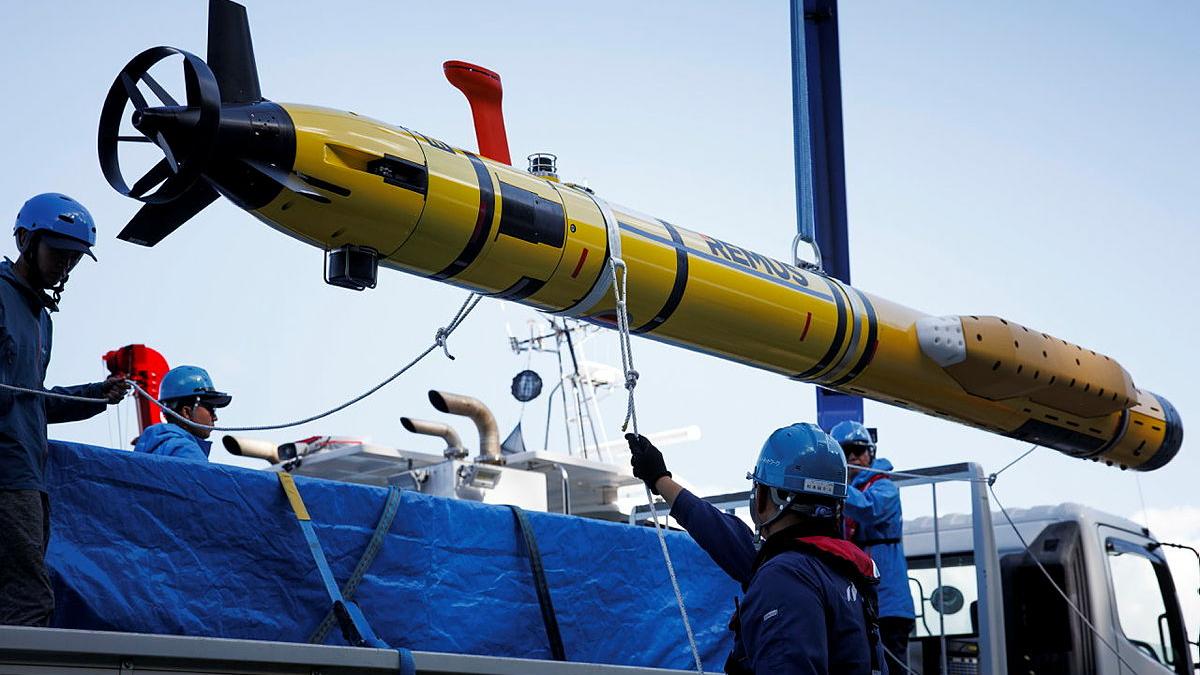
Australian, Japanese and US personnel demonstrated new levels of interoperability between autonomous maritime systems during a first-of-its-kind trilateral experiment at Exercise Keen Sword 27 in Japan.
The activity connected autonomous systems from all three nations through a single underwater communications network.
Australia contributed key elements to the design and delivery of the experiment, which brought together military operators, scientists, engineers and technical specialists to test and refine how the three nations communicated, shared information and operated unmanned maritime systems in realistic operational conditions.
Defence Science and Technology Group's Brice Mitchell said the experiment demonstrated what could be achieved when operational and technical expertise was brought together.
"Through this experiment, we demonstrated new levels of trilateral interoperability in a realistic operational environment, integrating Australian, Japanese and United States technologies," Mr Mitchell said.
During the experiment, positional information from a Japanese REMUS 620 unmanned underwater vehicle was transmitted to Australia's Rock Lobster underwater communication node. This then communicated to a US autonomous surface vessel, which relayed the information to a US ground station.
A command signal was then transmitted back through the network to the unmanned underwater vehicle, completing the communications chain and demonstrating two-way communication across Australian, Japanese and US systems.

The achievement provided valuable evidence of how autonomous and communications technologies could be integrated across partner forces and used to share information between distributed maritime systems.
Japanese Chief of System Integration and Interoperability Section (Joint Staff) CAPT Nakashima Junta said the success of the activity reflected the strength of the trilateral partnership and its shared approach to developing future capability.
“The activity marked the first trilateral warfighting experiment of its kind conducted in Japan and successfully connected autonomous systems from all three nations through a single underwater communications network,” CAPT Nakashima said.
US Pacific Command COL Jeffrey Newcamp said trilateral experimentation helped move advanced technologies from development towards operational application.
"Trilateral experimentation during exercises like Exercise Keen Sword 27 enables us to rapidly transition advanced science and technology concepts from the laboratory to the tactical edge," COL Newcamp said.
"By testing and evaluating these capabilities together, we ensure our joint forces are equipped with the tools and technologies needed to maintain a free and open Pacific region."
The experiment built on several years of growing cooperation between Australia, Japan and the US in maritime experimentation and demonstrated the benefits of testing emerging technologies alongside trusted partners.


Related stories


