Evacuation from Afghanistan: The final mission
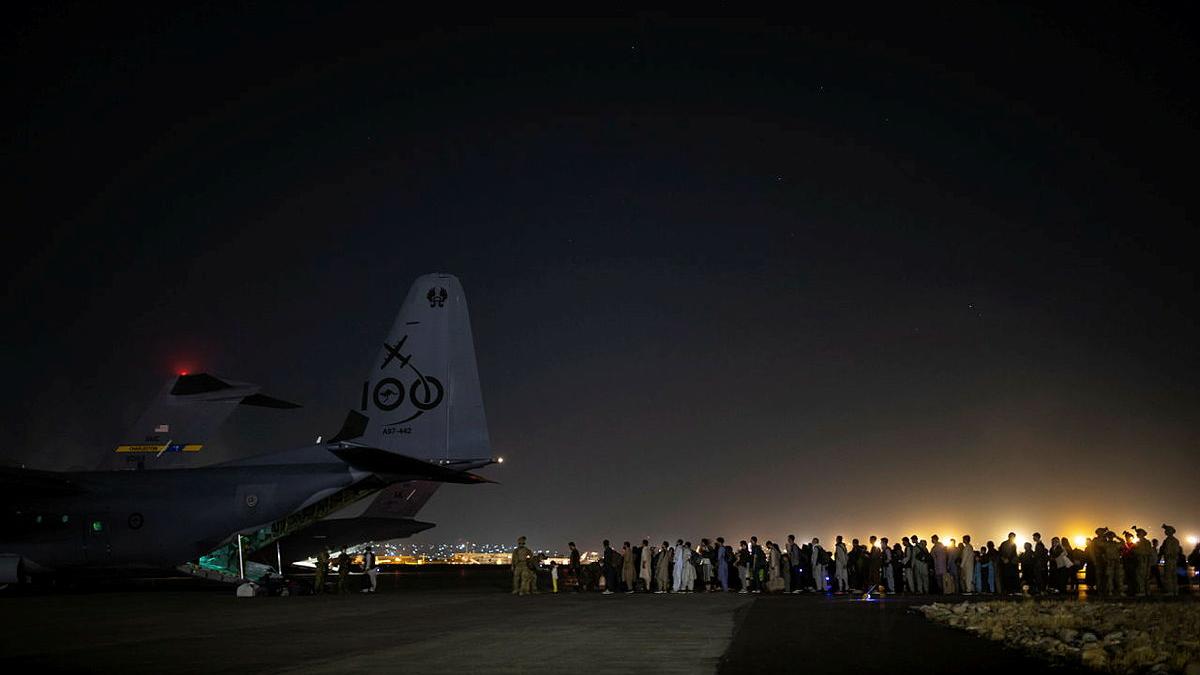
The final chapter of the nation's longest war was not written on a battlefield but on a crowded tarmac at Kabul International Airport.
ADF personnel found themselves at the centre of an increasingly desperate race against time in August 2021 as Afghanistan's government collapsed and the Taliban swept into Kabul. The ADF’s mission was clear: get people out.
What followed was one of the most complex and fast-moving operations in recent Australian military history.
Working alongside Australian Government agencies and coalition partners, ADF personnel evacuated more than 4000 people from Afghanistan. Australians, visa holders and vulnerable Afghans all passed through the gates of Hamid Karzai International Airport, Kabul, in search of safety.
For FLTLT Johnathan Gough, a C-130J combat systems officer, the operation was unlike anything he had experienced before.
“We had less than two weeks to move as many people as possible from Kabul to the UAE for onward repatriation,” FLTLT Gough said.
“The pace, complexity and uncertainty were unlike anything I had experienced in my career, yet the mission gave everyone a clear sense of purpose: getting people to safety.”

He said the scenes at Kabul Airport were confronting. Thousands gathered outside the perimeter hoping for an opportunity to leave as the security situation deteriorated, while Australian personnel worked around the clock processing evacuees, securing movement through the airport and preparing aircraft for departure.
He remembered challenges that extended to every flight into Kabul and operating in an air space with limited air traffic control and significant terrain hazards that required constant vigilance.
“A couple of our missions into Kabul were at night, with no control tower and high terrain surrounding the airport,” FLTLT Gough said.
“We relied on our instruments and night vision goggles to stay clear of other aircraft and the mountains in what was a highly disorienting environment.”
The ADF deployed to Afghanistan under Operation Slipper in October 2001 as part of an international coalition against terrorism in the wake of the September 11 attacks in the United States.
The final days of the operation became even more sobering after a terrorist attack outside Abbey Gate claimed about 170 Afghan civilians and 13 United States service members.
Evacuation flights continued as personnel remained focused on getting as many people to safety as possible despite the heightened threat.
As Australia reflects on 25 years since the start of the Afghanistan conflict, the non-combatant evacuation operation stands as a powerful reminder of how the nation's involvement ended.
Not with a firefight or a final patrol, but with soldiers, aviators and support personnel helping thousands of people board aircraft and leave an uncertain future behind.

Related stories


