Sister schools tap into three decades of cooperation
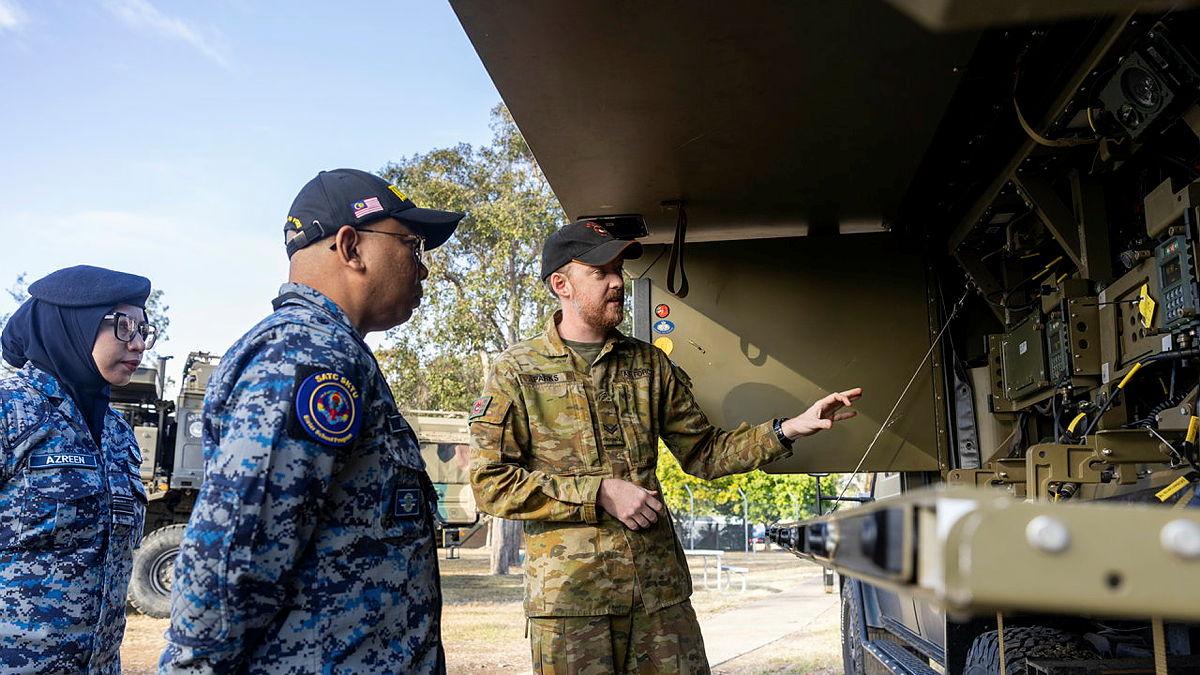
A connection going back more than 30 years was reinforced when the RAAF School of Air Traffic Control (SATC) welcomed members from its Malaysian sister school in August.
The visit from the Royal Malaysian Air Force (RMAF) school, Sekolah Kawalan Trafik Udara (SKTU), provided an opportunity for both organisations to strengthen their longstanding relationship, share knowledge and discuss the evolving requirements of military air traffic control.
While at SATC, the delegation visited 453SQN, East Sale, and took part in meetings with Commander Air Force Training AIRCDRE Brett Williams and GPCAPT Cameron Clark.
Discussions focused on air traffic control training, capability development and opportunities to strengthen cooperation between the two air forces.
The delegation also visited 452SQN’s Deployable Air Traffic Flight at RAAF Base Amberley, gaining an insight into the capability required to establish and operate air traffic control services in remote and austere environments.
FLTLT Harry Hempsall, from 452SQN, said the visit enabled the two schools to build on their professional relationship and gain a better understanding of each other’s capabilities.
“Visits like this allow us to share experiences and learn from each other, while strengthening the relationships that support our wider defence cooperation,” FLTLT Hempsall said.

LTCOL Muhammad Adzreen, from the RMAF, said the visit provided valuable exposure to Australian air traffic control training and operational capabilities.
The exchange also highlighted the similarities and differences in how both air forces prepare their personnel to support operations, including multinational exercises, deployments and humanitarian assistance activities.
The relationship between SATC and SKTU extends back more than three decades, with an RMAF member having been seconded to SATC for more than 30 years.
The enduring connection has helped both organisations maintain professional links and share knowledge across generations of air traffic controllers.
For SATC, the visit reinforced the value of maintaining strong relationships with regional partners and was a chance to share lessons from Australia’s approach to air traffic control training and operations.
The engagement allowed personnel at different stages of their careers to connect, exchange perspectives and develop a better understanding of the challenges faced by their counterparts. These relationships help build trust and professional understanding that can be drawn on during regional engagement and combined activities.
See more images here.
Related stories


