Rain no barrier to the sky
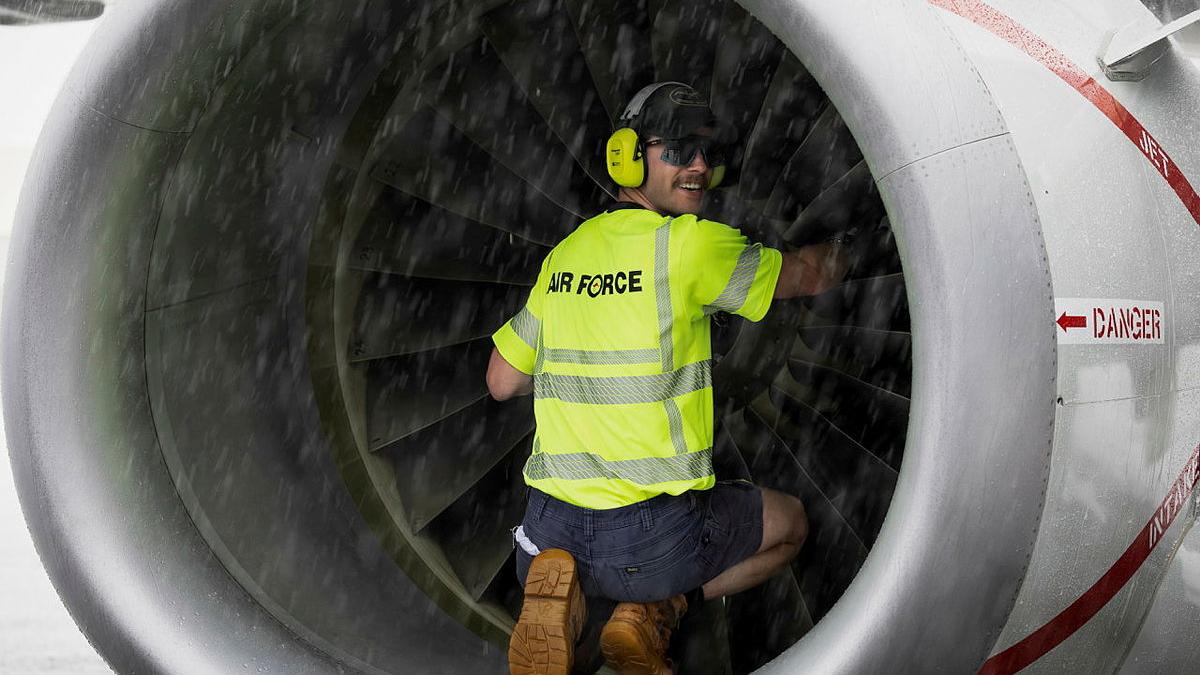
Torrential rain, a small deployed team and the pressure of keeping a complex aircraft flying are all routine for Royal Australian Air Force technicians in the Philippines.
At Clark Air Base on the island of Luzon, tropical downpours can sweep across the flight line with little warning, forcing maintainers to adapt as they ready a P-8A Poseidon for maritime patrol missions.
The Philippines’ wet season runs from July to September, with August typically the rainiest month in the calendar.
This year was no exception, with some parts of Luzon recording nearly three times the average August rainfall.
SGT Jacob Howard, a RAAF avionics technician supporting the P-8A Poseidon deployment, said the conditions demanded flexibility from the small maintenance team.
“With the use of tarps and umbrellas, anything is possible,” SGT Howard said.
“The aircraft are usually watertight. If there’s too much torrential rain, sometimes you can get water through the seals but then you just manage that through waterproofing certain areas and take that off before flight.
“The guys just get used to being wet, unfortunately.”
The weather is only one challenge for the relatively small maintenance team supporting the deployed aircraft.

Unlike at home base, there are fewer people available and maintainers must work closely with local authorities and partner nations while maintaining the same operational tempo.
“There’s not usually a big footprint,” SGT Howard said.
“Everyone puts in, and it’s a good team atmosphere.
“We really love getting in and doing our job, so despite the weather morale is always high.”
That flexibility was tested when a P-8A returned earlier than planned following a smoke and fumes indication inside the cabin.
The maintenance team began preparing before the aircraft landed, organising technical and medical personnel and coordinating access to where the aircraft would park.
Once the aircraft was secure and the aircrew had disembarked, maintainers wearing protective equipment began assessing the aircraft and checking for hazardous fumes.
The response was an extension of the methodical troubleshooting the teams routinely conduct.
'We really love getting in and doing our job, so despite the weather morale is always high.'
When an obvious fault cannot be immediately identified, maintainers follow established procedures, progressively operating the systems and inspecting different sections of the aircraft.
“There’s a step-by-step procedure to follow,” SGT Howard said.
“We power the aircraft up, turn every system on and make sure there aren’t any fumes coming from cabinets or the air-conditioning systems.
“We ran the aircraft engines and inspected every compartment for any sign of smoke and fumes, and ultimately the aircraft was able to be returned to a serviceable state.”
While unexpected faults can increase the pressure on a deployed maintenance team, SGT Howard said the priority remained making sure the aircraft was safe and ready for its next task.
“If the aircraft becomes unserviceable, then you’ve got to work through those issues in a timely manner to be able to get it up for the next operational flight,” SGT Howard said.
“You are required to manage your priorities. What needs to be serviceable to maintain operational capability and what defects can be deferred whilst maintaining aircraft flight safety.”

That work starts well before an aircraft launches. Before each sortie, maintainers conduct inspections across different sections of the P-8A, check its systems and complete final preparations before handing the aircraft over to aircrew.
RAAF P-8A Poseidons routinely deploy from their home base at RAAF Base Edinburgh near Adelaide to bases across the Indo-Pacific for maritime domain awareness operations.
While the environment – and rainfall – may be different, the fundamentals for the maintainers remain consistent.
“Honestly, being away and being back at the unit, there’s not too much difference,” SGT Howard said.
“You’re in a smaller team, a smaller environment, and you’re working with different foreign authorities, but you’re keeping the same sort of tempo that you maintain back at home.
“Just here in the Philippines, that job often comes with torrential rain.”
Related stories


