Pacific priorities guide surveillance from the skies
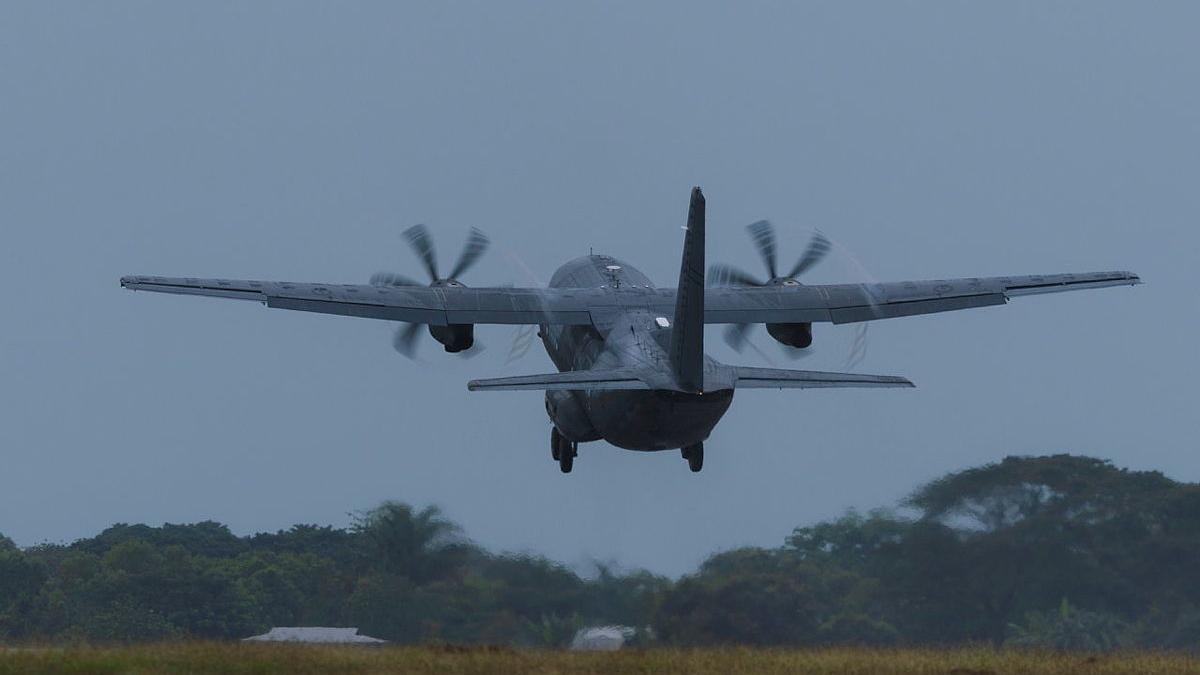
Eyes fixed on the ocean below, loadmasters on board a RAAF C-27J Spartan searched the Solomon Islands’ vast maritime area for vessels requiring closer attention.
During Operation Solania 26-3, the aircraft completed 10 surveillance missions across 320,000 square kilometres and identified 19 vessels of interest.
The C-27J and personnel from 35SQN deployed to Honiara in support of the Pacific Islands Forum Fisheries Agency’s Operation Island Chief.
Conducted from August 3 to 14, the operation brought together Forum Fisheries Agency (FFA) members and supporting partners to monitor potential illegal, unreported and unregulated fishing, and contribute to broader maritime domain awareness across the Pacific.
At the FFA Regional Fisheries Surveillance Centre in Honiara, representatives from participating countries analysed vessel activity and identified areas requiring further surveillance.
Air Liaison Officer SQNLDR Paul Murphy worked with the representatives to match their priorities with the aircraft available to support the operation.
“Surveillance priorities are designated by data analysts from the various countries,” SQNLDR Murphy said.
“I sit down with them to discuss their priorities and determine which aviation assets can reach those areas.”
Solomon Islands Ministry of Fisheries and Marine Resources Air Tasking Officer Allen Bobby Kusilifu coordinated surveillance requests from national agencies during the operation.
“My role during Operation Island Chief was to receive requests from government agencies, including Customs, Immigration, the Police Maritime Division and the Transnational Crime Unit,” Mr Kusilifu said.
“I sent their requests and areas of interest to the FFA so they could be provided to the aircrew to establish the missions.”
Once the C-27J crew received a designated search area, the pilots translated those requirements into a surveillance mission.
C-27J pilot FLTLT Lachlan Gundy said the crew conducted detailed planning before each sortie.
“They give us the search area and the data on anything they want us to look for specifically,” FLTLT Gundy said.
“We take it from there and conduct the normal flight planning for a C-27J.”
Officers from the Solomon Islands Ministry of Fisheries and Marine Resources joined selected flights. Working alongside the loadmasters, they used their local knowledge and fisheries expertise to help the crew understand activity across the Solomon Islands’ maritime area.

'I find it personally rewarding, knowing that what we achieve here directly protects member countries’ exclusive economic zones and fisheries.'
35SQN loadmaster FSGT Samuel Fedderson said the fisheries officers joined the crew at the aircraft’s observation windows.
“We position ourselves at the observation windows with a fisheries officer from Solomon Islands and scan the water for vessels,” FSGT Fedderson said.
“Once we find a vessel of interest, the pilot manoeuvres the aircraft so we can capture imagery of the vessel from the side and the rear.
“We review the images for identifiable markings and pass them on to the Pacific Islands Forum Fisheries Agency.”
The crew also recorded each vessel’s location, course, speed and identifying features.
After each mission, the imagery and supporting information were returned to the FFA for analysis and provided to relevant national authorities.
Mr Kusilifu said the information collected during the flights was important to the Solomon Islands.
“The aircrew take pictures of the fishing vessels, and the information about those vessels is very important to us,” Mr Kusilifu said.
“Monitoring Solomon Islands’ waters is very important because they provide economic benefits and revenue for our country.”
Royal Solomon Islands Police Force Police Constable Joseph Eresi, who normally serves aboard a Guardian-class patrol boat, supported the operation as a watchkeeper and participated in a C-27J surveillance flight.
Police Constable Eresi said aerial surveillance complemented the work conducted by patrol boats at sea.
“Travelling in a patrol boat and conducting boardings is different from aerial surveillance because, from the aircraft, you can see the vessels from above,” he said.
“From the patrol boat, we can then track the vessel and conduct the boarding.”
National authorities remained responsible for determining whether information collected during the operation required further investigation or enforcement action.
Police Constable Eresi said cooperation between Pacific countries and supporting partners helps protect Solomon Islands’ fisheries.
“It is important for our partners from across the Pacific to conduct Operation Island Chief and help prevent illegal fishing in our exclusive economic zone,” Police Constable Eresi said.
Operation Island Chief is one of four major maritime surveillance operations coordinated by the FFA each year.
Australia supported the operation through Operation Solania 26-3, alongside surveillance assets made available by FFA members and partners.
SQNLDR Murphy said the cooperation helped FFA members protect maritime resources important to their economies and communities.
“I find it personally rewarding, knowing that what we achieve here directly protects member countries’ exclusive economic zones and fisheries,” SQNLDR Murphy said.
Related stories


