Switching on and stepping up
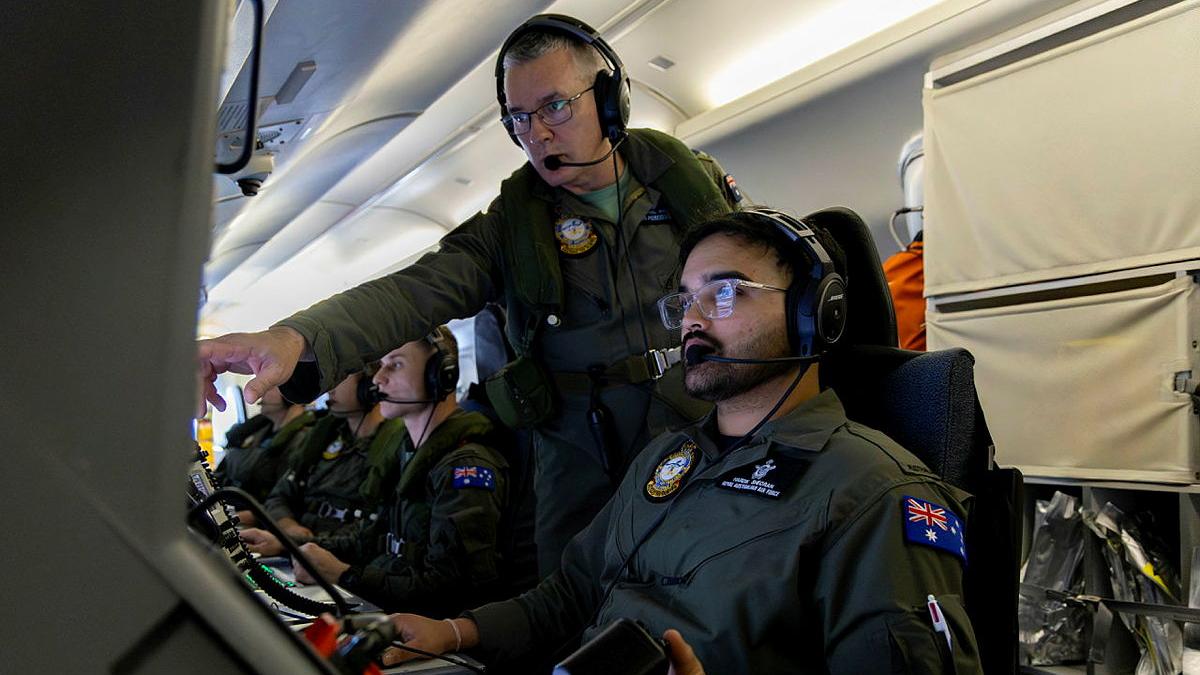
The first time a maritime surveillance student switches on the sensors over the Malacca Strait, the reaction is usually the same.
Thousands of contacts appear across the screen. Merchant ships, fishing vessels and naval traffic crowd one of the world’s busiest maritime corridors, transforming months of simulator work into operational reality.
From the instructor’s seat behind them, SQNLDR Nathan Mula knows exactly what they’re thinking.
“It immediately takes us back to when we were students ourselves,” SQNLDR Mula said.
“You can see their eyes widen when they first turn the sensors on.”
For more than 45 years, Operation Gateway has been a rite of passage for Australian maritime patrol crews. If they succeed, they graduate having already completed their first operational deployment.
Long before the P-8A Poseidon entered service, P-3C Orion crews learnt their trade in the same busy maritime environment.
‘We learnt you’ve got to have each other’s back, no matter what.’
SQNLDR Mula was one of them. As a student, he completed his own operational conversion training on Operation Gateway.
Today, he is back in Malaysia as 292SQN Flight Commander, helping prepare the next generation of pilots, maritime patrol and response officers, and airborne electronics analysts.
“The complexity and sheer volume of contacts up here is something we can’t replicate in Australia or in a simulator,” he said.
“This region is our backyard, and we need crews who can operate confidently in it.”
Months of training prepares students for the deployment, but nothing fully replicates the operational environment waiting for them in Malaysia. Alongside course requirements, they must meet the same deployment standards as operational personnel.
For AC Harrison Eastwood, an airborne electronics analyst completing the course, the experience of turning training into reality was particularly poignant.
“They try to prepare us for it in the simulators, but nothing compares to what it’s actually like when you get on the kit and see it in the real world, especially in an environment as dense as this,” he said.
“It was surreal.
“They tell us about turning on the sensors from day one, but when you actually see it, you understand what they meant. It’s overwhelming.”

By the final sorties, the overwhelmed students who first arrived in Malaysia are operating as cohesive crews.
“We learnt you’ve got to have each other’s back, no matter what,” AC Eastwood said.
For SQNLDR Mula, the shift was more than technical competence.
“You see students arrive having never operated in this environment before,” he said.
“A few weeks later, within a few sorties, they’re flying real-world missions as part of a crew.”
Over 45 years, Operation Gateway has experienced changes in aircraft, technology and generations of aircrew.
What has endured is the passing of experience from one crew to the next.
“Operation Gateway has always been part of our story,” SQNLDR Mula said.
“It was an honour to see our graduates receive their wings at the conclusion of the operation, ready to join the generational legacy.”
Related stories


