Coral Balmoral comp back with a bang
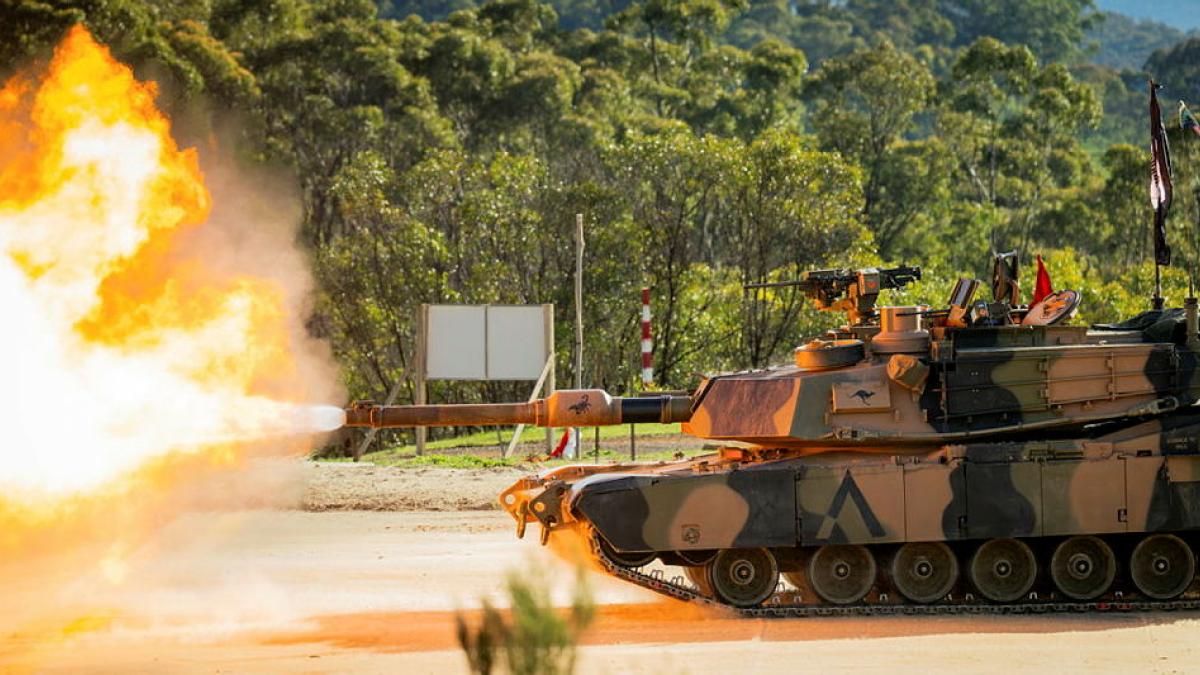
The air in Puckapunyal was thick with tracer rounds, bushmaster chain gunfire and 120mm shells as international light armoured vehicle (LAV) and tank crews competed for the coveted Wood Memorial Cup and the Macarthur Hounslow Trophy at this year’s Coral Balmoral Cup Competition.
Established in 2019 to identify the Australian Army’s best armoured crews, the CBC pays homage to the Vietnam War battles of Fire Support Bases Coral and Balmoral where soldiers of the 1 Armd Regt and 3 Cav Regt demonstrated how decisive the contribution of armour was in a combined-arms fight.
Demonstrating the term “force multiplier”, soldiers showed how skilled crews operating alongside infantry, artillery, engineers and integrated firepower generated combat power far greater than any single capability.
International teams arrived in Australia in early August for the competition, which ran from August 7 to 21 at the School of Armour.
They participated in two weeks of administration, kit issue and familiarisation training on Australian weapons systems before crossing the start line.
From the US Army were the 4th and 2nd Battalions, 70th Armour Regiment (1st Armoured Division and 1st Infantry Division) and 1st Squadron-7th Cavalry regiment (1st Armoured Division).
From the US Marine Corps were the 1st and 4th Light Armoured Reconnaissance Battalions.

For the first time, a Canadian team from the Royal Canadian Armoured Corps School joined the competition.
Tank and LAV crews competed in several categories, including gunnery, tactics, maintenance, small arms and PT.
Officer conducting the competition Capt Calum MacLeod said at its core, Coral Balmoral was about sharpening warfighting skills.
“It challenges crews to perform under pressure, apply sound tactics and work effectively as a team. Recent conflicts have reinforced that armoured forces remain critical to battlefields, but they must be highly trained, adaptable and capable of integrating with combined arms effects,” Capt MacLeod said.
“CBC provides a realistic environment to test tactical decision-making, crew proficiency and combat fundamentals, helping ensure our soldiers are prepared for the demands of modern armoured warfare."
Reflecting the evolving character of armoured warfare and emerging battlefield threats, aerial drones were integrated into the serials.
At a celebratory dinner marking the end of the competition, CO School of Armour Lt-Col Aaron Cimbaljevic drew attention to esprit de corps.

“Beyond testing technical mastery and interoperability, Coral Balmoral strengthens the bonds that unite our armoured community. It reinforces the pride, trust and fighting spirit that inspire crews to strive for excellence alongside their allies,” Lt-Col Cimbaljevic said.
The School of Armour took first place in the tank category and the Royal Canadian Armour Corps School won top spot in the combat reconnaissance vehicle (CRV) category. However, in a rare twist, both teams finished with the same number of points (106), meaning the Coral Balmoral Cup was awarded to both teams.
Commander FORCOMD Maj-Gen Anna Duncan, who took to the turret on an M1A2 SEPV3 to send a hot 120mm round down range, said CBC was an armour soldier’s dream day on the job.
“Canadian, American and Australian armoured teams compete hard, learn fast and build the teamwork we all rely on,” Maj-Gen Duncan said.
“What we deduce for warfighting interoperability between our nations underwrites the Australian Army’s focus on continuous adaptation.”
Next year, the competition will extend invitations to New Zealand and United Kingdom teams, with plans to include the new Boxer infantry fighting vehicle.
Related stories


