Providing hope for people caught in the crossfire
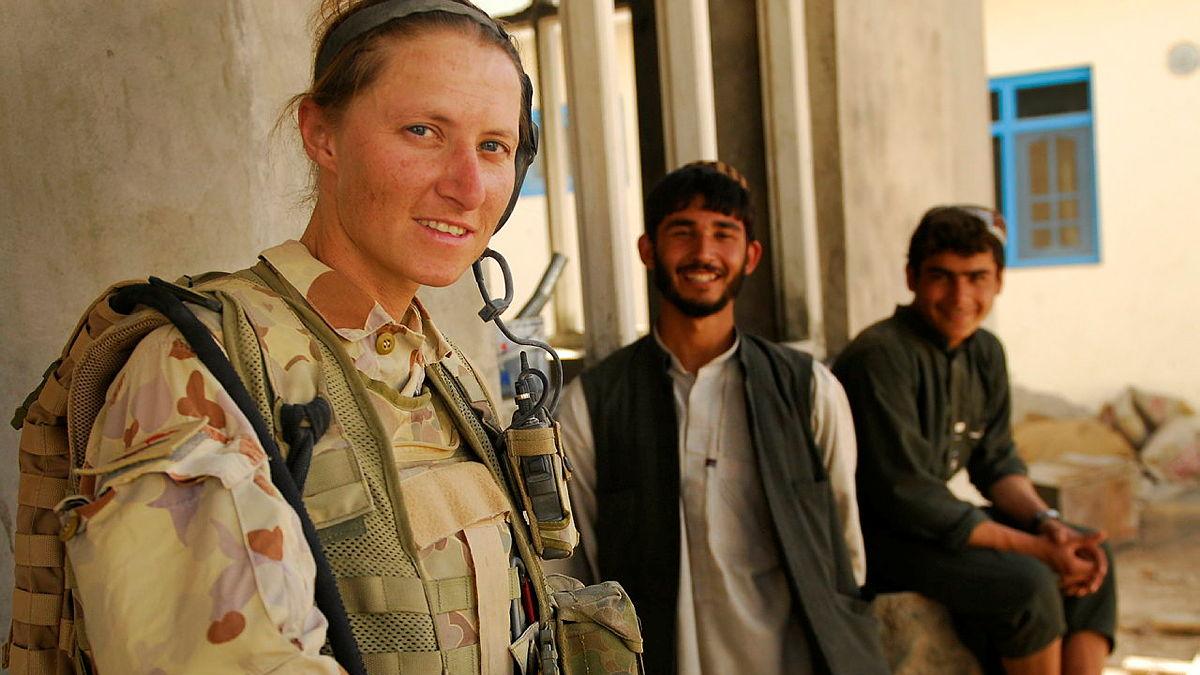
On her first patrol through Tarin Kot in 2006, Lt-Col Clare O’Neill said she was struck most by the silence.
With little electricity, no running water and food supplies stretched by drought and Taliban oppression, the population was in survival mode.
“There was real fear,” Lt-Col O’Neill said.
“Nobody wanted to talk to us because they thought they’d be killed if they spoke to anybody in a coalition uniform. The silence really got me on those first patrols.”
Over a combined 16 months in Afghanistan, she watched the town transform into a bustling population centre, supported by infrastructure delivered through Australia’s Reconstruction Task Forces (RTF).
In October 2006, then-Capt O’Neill deployed as an engineer with RTF-1 and oversaw several priority projects, including upgrades to the local hospital.
Through small initiatives such as infant care packages, she opened dialogue with female nurses and learned what their priorities were, including reliable power and hot water.
Meeting those needs helped build trust with the local population and increased cooperation despite Taliban intimidation.
“It was about offering an alternative to the Taliban,” Lt-Col O’Neill said.
“If we could get the community to trust in the Afghan Government, they could have the choice about which future they wanted.”
Conditions for soldiers were austere, but strong mateship and a shared sense of purpose helped sustain them through the challenges.
A night-time blackout policy inside the forward operating base not only conserved generator fuel but also complicated targeting efforts by an insurgent known as ‘Rocket Man’, who regularly shelled the base.
After one rocket attack, the wait for the all-clear turned into an impromptu competition to see who could wear shorts the longest in the freezing Conex bunkers.
It was these moments of “light-hearted banter and laughter” that helped ease the pressure of operating in a high-stress environment.
“There’s a lot to be said about how proud we can be of the Aussie digger,” Lt-Col O’Neill said.

By the time she left in April 2007, conditions in Tarin Kot remained difficult but were improving.
When she returned for her second deployment with RTF-4 in March 2008, she was struck again, this time not by silence but by activity.
The town’s residential and market areas had expanded, electricity and running water were widespread, and the local government was funding construction projects without Australian assistance.
The hospital employed 40 staff, including a female doctor, and had opened a women’s ward.
While on piquet at night, with lights now visible across both the FOB and the town, Lt-Col O’Neill was amazed at the transformation.
“The difference was a contrast of silence and fear to busyness and a sense of normality; that things were progressing and people had choices,” she said.
“The first thing I had to do was convince my mates on their first deployments into Afghanistan that this was an improvement.”
With reconstruction in Tarin Kot largely in government hands, the task force moved further afield to deliver projects across Uruzgan Province.
They conducted Operation Ubor-E-Janubi, the first Australian conventional force to conduct operations in Kandahar, Zabul and Ghazni provinces, rebuilding bridges along the main north-south route to Kabul.
'For 20 years, we were there. For 20 years, we gave people what Australians say is a fair go.'
Lt-Col O’Neill was a battle captain in the combat team when the convoy came under attack from rocket-propelled grenades and small-arms fire.
She helped coordinate close-air support and kept the gunners supplied with ammunition as the force fought through the ambush before reaching the safety of a Canadian patrol base.
“I was incredibly proud of the combat team and our ability to adapt under pressure. That particular group had been put together from several different teams, so some of us hadn’t worked together in a vehicle before,” she said.
The operation succeeded, with two bridges constructed in 12 days and the highway reopened.
By the end of her second deployment, Lt-Col O’Neill said there was a growing sense of hope across Uruzgan. People were no longer focused solely on survival, but on building a future.
When the Taliban regained control of Afghanistan in 2021, one of its first actions was to close women’s hospitals.
Lt-Col O’Neill was in a training area with no phone reception when Kabul fell. When she returned, her phone was filled with messages from Afghans she had worked with, pleading for help.
“That was hard,” she said.
“But we can be proud of the courage our soldiers demonstrated to help bring people to safety during the evacuation efforts.
“For 20 years, we were there. For 20 years, we gave people what Australians say is a fair go.
“While the gains ultimately proved fragile, that does not diminish what our soldiers achieved through their everyday actions and their unwavering commitment in the service of others.”
Related stories


