Legacy in the north
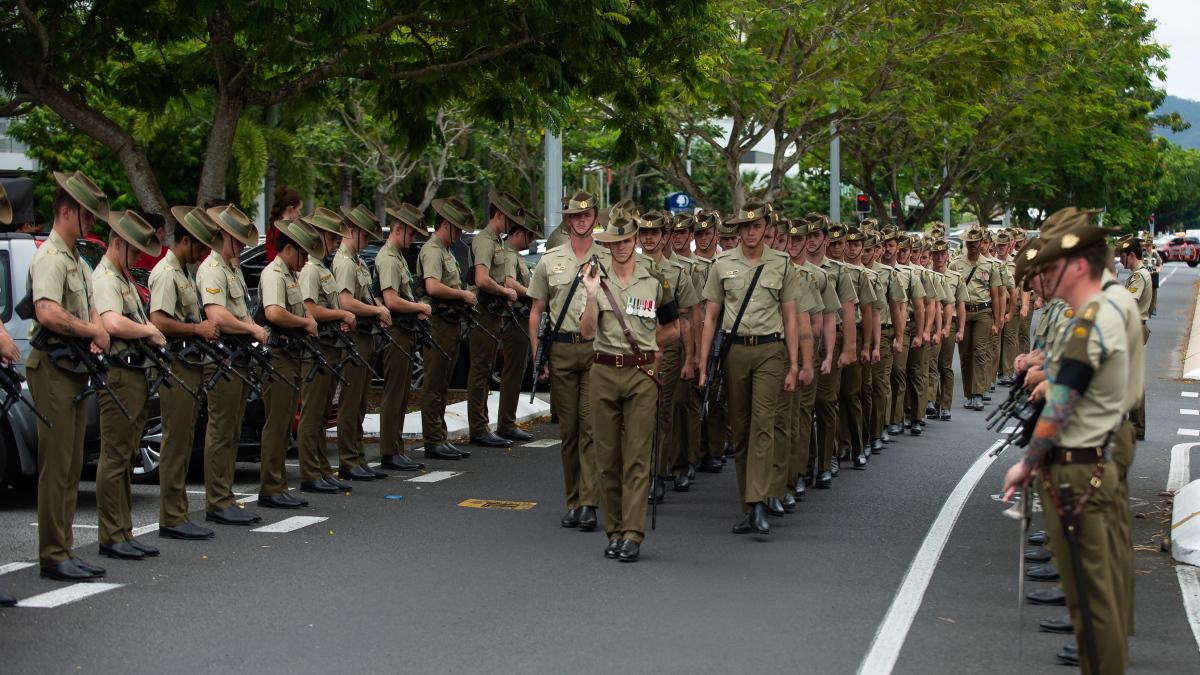
As Australians pause to reflect on the service and sacrifice of those who served, some soldiers of the 51st Battalion, Far North Queensland Regiment (51FNQR), continue a unique connection to the past, serving in the same unit lineage as family members who fought in some of World War II’s most challenging campaigns.
For 51FNQR operations officer MAJ Cameron Shilton, the connection is deeply personal.
His grandfather, CAPT Alwyn ‘Blue’ Shilton, served with the 31st/51st Battalion during the Bougainville campaign, survived the infamous landing at Porton Plantation, and was awarded the Military Cross for gallantry during fighting on the Genga River.
More than 80 years later, his grandson serves within the same battalion lineage.
“It became a personal goal of mine to serve with 51FNQR,” MAJ Shilton said.
“After posting to NORFORCE in 2016, I became fascinated with the history of the Regional Force Surveillance Units and started learning more about my grandfather’s wartime service, particularly his time with the 31st/51st Battalion. The more I learned, the stronger that connection became.”
MAJ Shilton is one of several members of 51FNQR with direct family links to soldiers who served in the battalion during World War II.
Among them is SGT Troy Stephens, whose great-uncle, PTE Benjamin ‘Benny’ Stephens, served with the 31st/51st Battalion in Bougainville and was killed during the final barrage on Tsimba Ridge.
The family connection was not something he grew up knowing.
“I always wanted to join the Army, but I had no idea about my family history,” SGT Stephens said.
“It wasn't until I saw Benny’s name on the Second World War honour roll at Porton Barracks and asked my father about it that I learned about his service and sacrifice.”

The discovery transformed his understanding of the unit he had already spent much of his life serving.
Having first joined 51FNQR as a 17-year-old in 1987 before transferring to the regular Army, SGT Stephens returned to the battalion following a decade of full-time service. Today, he serves as the battalion sergeant cook, supporting training and operations across Far North Queensland and northern Australia.
“I am incredibly proud of the role my ancestors played in defending Australia during the war,” he said.
“To know a member of my family served in the same battalion that I now serve in is something very special.”
For MAJ Shilton, military service extends even further through his family history.
His great-grandfather, Lieutenant Charles Garnet Lucas, served with the 4th Light Horse Regiment during World War I and was severely wounded at Gallipoli after being struck by shrapnel.
His grandfather, WGCDR Samuel Henry ‘Harry’ Ramsden, flew Beaufort aircraft with RAAF’s 6 Squadron in World War II, conducting anti-submarine patrols from Milne Bay before eventually taking command of the squadron.
Military service was a familiar part of family life, but it was only after joining the Army that MAJ Shilton came to fully appreciate the significance of his grandfather’s wartime achievements.
“I was fortunate enough that my grandfather lived long enough to see me graduate from Kapooka and be accepted into Duntroon,” he said.
“It wasn’t until I became an officer that I truly understood what he had achieved and the leadership he demonstrated during the war.”
Reminders of that service are in his office at Porton Barracks, where family memorabilia and photographs tell the story of those who came before him. Among them is a portrait of CAPT Shilton that he intends to present to the unit as a lasting tribute to its wartime heritage.

The stories are not simply about family pride. For both soldiers, they represent a responsibility to preserve the memory of those who served and ensure future generations understand the sacrifices that shaped modern Australia.
“Personal memories fade quickly,” MAJ Shilton said.
“Within a couple of generations, many of the people who knew these veterans are gone. That’s why it’s important to keep telling these stories, to understand what they endured and what they sacrificed.”
SGT Stephens agrees.
“It is extremely important to preserve and share the stories of the brave men and women who served our country, especially those who made the ultimate sacrifice,” he said.
“Those stories should be remembered not only on Remembrance Day and Anzac Day, but throughout the year.”
That sense of stewardship is particularly important within 51FNQR.
As one of three Regional Force Surveillance Units within the Regional Force Surveillance Group, 51FNQR provides a unique capability in Australia’s far north. Drawing on deep regional knowledge and longstanding community relationships, the battalion contributes to surveillance and security activities across remote areas while maintaining the ability to support homeland defence, humanitarian assistance and disaster relief operations when required.
The battalion’s wartime heritage remains highly visible at Porton Barracks, named in honour of the Battle of Porton Plantation, one of the most significant actions fought by the battalion’s predecessors during the Bougainville campaign.
For MAJ Shilton, sharing that history with newly posted soldiers is one of the most rewarding aspects of service.
“I am always keen to tell the story of Porton and the soldiers who served before us,” he said.
“It’s easy to walk past a memorial or historical display without stopping to think about the people behind it. When you understand their stories, the history becomes real.”
As Australians gather at memorials across the nation this Remembrance Day, soldiers of 51FNQR will honour those who served before them, not as distant historical figures, but as fathers, grandfathers, uncles and comrades whose legacy continues to shape the battalion.
“We live in an incredibly fortunate country, with freedoms and opportunities previous generations fought to protect,” MAJ Shilton said.
“Remembrance Day is a chance to pause, reflect on what was sacrificed on our behalf, and appreciate how fortunate we are because of those who answered the call to serve.”

Related stories


