Warmth of Timorese people highlight of battlefield tour
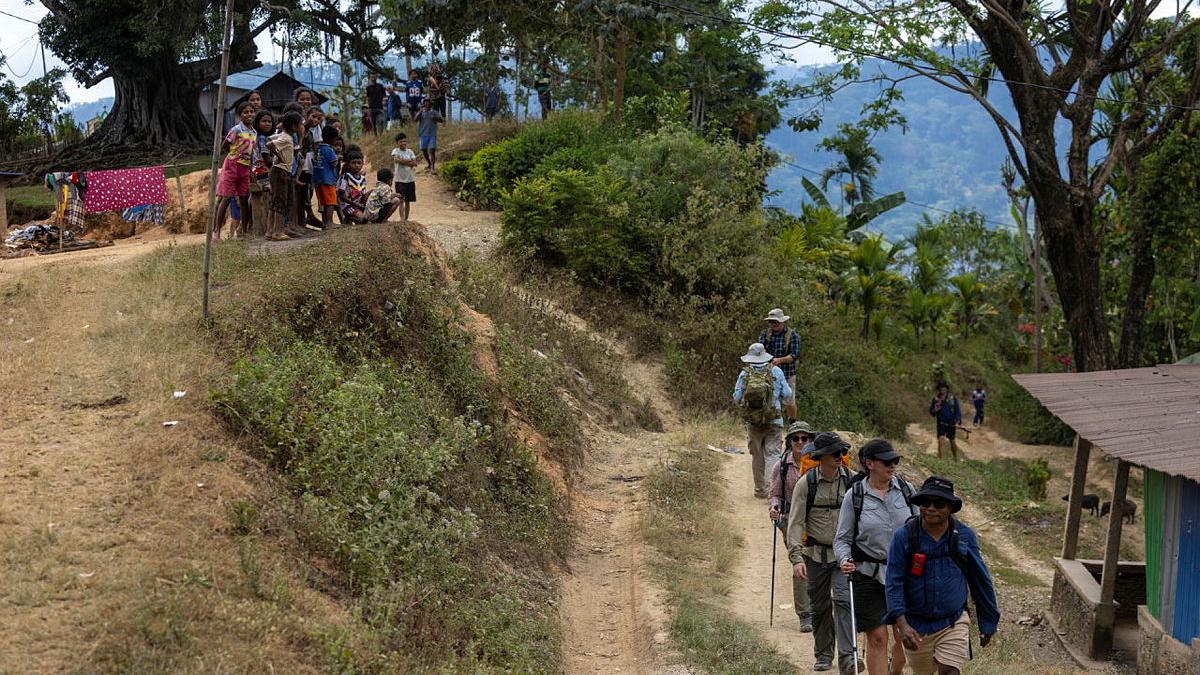
Surrounded by clouds almost 3000 metres above sea level, Cpl Sarah Vella expected reaching the summit of Mount Ramelau to be the highlight of her battlefield study tour in Timor-Leste.
Instead, it was walking through the same mountains as the soldiers of the 2/2 Independent Company in World War II, and experiencing the generosity of the Timorese people who supported them, that left the biggest impression.
From July 26 to August 2, recipients of the Jonathan Church Good Soldiering Award and Chief of Army’s Instructors of the Year retraced the footsteps of the 2/2 Independent Company, bringing to life the history of one of Australia's lesser-known World War II campaigns.
The group completed the 96km La Rende Track. Meaning ‘no surrender’ in Tetum, its name was inspired by the Australian commandos who fought a guerrilla campaign against Japanese forces in Timor from 1942 to 1943.
The La Rende Track links mountain trails and supply routes used by the 2/2 Independent Company as it traversed the country during the campaign.
The tour began in Dili, where participants visited significant Battle of Timor sites, including the former Dili Aerodrome, where the 2/2 Independent Company first engaged invading Japanese forces on February 19, 1942.
The group then moved into the mountains, visiting ambush sites, gun positions and villages where Timorese families supported Australian soldiers throughout the campaign.

For Cpl Sophie Harris, walking the same ground as the commandos created a deeper appreciation of what they endured.
“Every stop, we learned a bit of history. It makes you think about and compare the conditions,” Cpl Harris said.
“Someone’s walked this exact ground carrying 20 kilos of ammo and weapons, with boots falling apart and no proper food, and we’re doing it in hiking boots with poles and day bags.
“It adds a whole other layer and really makes you appreciate the efforts they put in to fight.”
As participants trekked through remote communities, coffee plantations and rugged mountain terrain, they also gained a greater understanding of the enduring relationship between Australia and Timor-Leste.
Cpl Vella said the warmth and generosity of the Timorese people left a lasting impression.
“It was a bit overwhelming. Seeing how the country has bounced back from so much heartache and war over the years, and coming out of it with no malice was pretty breathtaking,” she said.
The connection between the two nations featured throughout the tour, from stories of Timorese civilians who assisted Australian commandos during World War II, to discussions on more recent Australian operations in the country.
'Walking through the villages was probably one of my favourite parts. Every single Timorese was happy to see us, happy to help.'

Sgt Matthew Booth said learning directly from local communities was a highlight.
“It was just great to learn about a different culture I hadn’t read much about prior, especially one that’s so close to the Australian mainland,” Sgt Booth said.
The group stayed in villages, shared traditional meals with local families, and learned about Timorese customs and culture.
“Walking through the villages was probably one of my favourite parts. Every single Timorese was happy to see us, happy to help,” Cpl Harris said.
“There was never an interaction where they didn’t want us there, and the fact that they would welcome us into their homes, it was very special. I’ve never experienced anything like that.”
After completing La Rende, the group travelled to Balibo, where they learned about the 1975 Indonesian invasion, the murder of the Balibo Five and Australian operations conducted in the region between 1999 and 2013.
Regimental Sergeant Major Ceremonial WO1 Matthew Fuery, who deployed to Balibo in 2001, provided a brief from locations where he once operated, offering participants a first-hand perspective on Australia’s more recent history in Timor-Leste.

See more images here.
Related stories


