Award recipients walk in footsteps of WWII heroes
It was just before midnight on February 19, 1942, when the guns began to thunder.
For the men of Australia's 2/2 Independent Company at Dili Aerodrome in then-Portuguese Timor, the Dutch Allied artillery fire brought a dreadful realisation.
What they believed were Portuguese reinforcements was, in fact, a 1500-strong Japanese invasion force.
A brutal firefight erupted. For six hours, 20 men from 2 Section held the airfield with guns, grenades, bayonets and blood. Three never left the battlefield.
At first light, the survivors destroyed the airstrip with 10 tonnes of explosives before withdrawing into the mountains.
Outnumbered, surrounded and alone, the 2/2 Independent Company did not surrender. Its fight had only just begun.
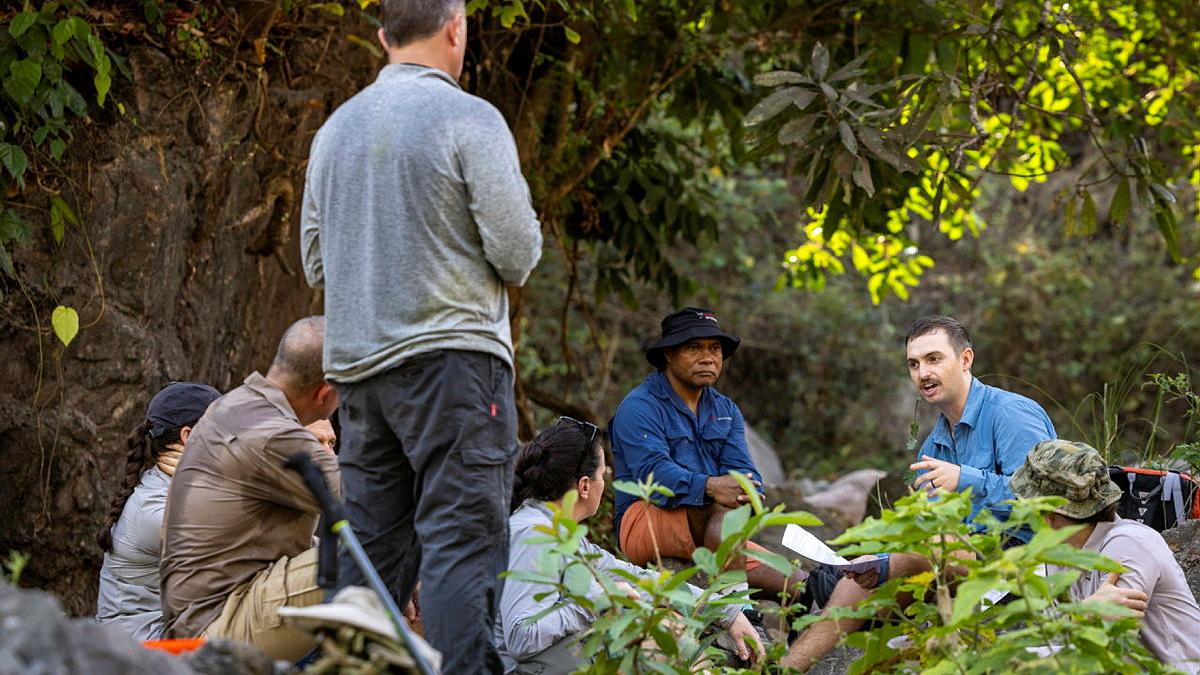
On the site of the Battle of Timor's opening actions, recipients of the 2026 Jonathan Church Good Soldiering Award (JCGSA) and Chief of Army's Instructors of the Year began their battlefield study tour.
They visited key locations from the campaign, including ambush sites, observation posts and gun emplacements, while sharing the stories of the men who fought there.
The 2/2 Independent Company was raised in early 1941, comprising soldiers specially selected for their mental and physical toughness, as well as their ability to live off the land.

Army Instructor of the Year Sgt Matthew Booth told the story of LCpl Mervyn Wheatley, a horse breaker and kangaroo shooter turned sniper.
After losing friends in the infamous ‘ration truck massacre’ on the morning of the Japanese invasion, LCpl Wheatley led ambushes, often choosing better sites than his commanders.
After one successful ambush, he stayed behind to cover his retreating mates, magazines laid neatly next to him as he picked off Japanese soldiers from a concealed position.
His commanders would often ask his advice because of his natural talent with the rifle coupled with his skill at planning attacks.
“He seemed to be a quiet, confident soldier. He shows that you can gently guide even from those lower ranks using your confidence,” Sgt Booth said.
“He was the best at his job and so they deferred to him. He didn't need to be the loudest in the group to have his point heard.”
When the decision was made to withdraw from Dili Aerodrome, Cpl Kevin Curran led the demolition team tasked with destroying the airstrip.
A VFL footballer for Hawthorn before and after the war, Cpl Curran killed five Japanese soldiers with a bayonet and directed Bren gun fire to cover the sappers arming the explosives.
His story was told by JCGSA recipient Cpl Sarah Vella outside the Kevin Curran Gym at the Defence Cooperation Program compound in Dili, near the airstrip demolition site.
“I’ve always been a firm believer that people who play team sports bring values and courage they learn on the field to their work,” Cpl Vella said.
“His story is incredible; a massive team player who led from the front. Like him, we should lead from the front, listen to our soldiers and pivot when you need to.”
'He was the best at his job and so they deferred to him. He didn't need to be the loudest in the group to have his point heard.'
Once the Japanese invasion was confirmed, the company destroyed its radios to prevent them falling into enemy hands in the event of defeat.
The force soon found itself running low on ammunition, food and medicine with no way to call for resupply.
A series of raids on Japanese positions yielded radio components that Sig Max Loveless used to construct a radio, restoring contact with Australia for the first time in two months.
JCGSA recipient Cpl Sophie Harris told the story of Sig Loveless, a radio technician from Hobart who worked for days to build the radio affectionately named ‘Winnie the War Winner’.
“He got the job done with what he had, which wasn't much, and it's just inspiring. So much pressure was put on him, so many people's lives were in his hands, and he was able to do it,” Cpl Harris said.
With resupplies and support from local Timorese, the 2/2 Independent Company sustained a successful guerrilla campaign until its withdrawal in February 1943.
For the award recipients, the battlefields of Timor offered a reminder that today’s soldiers stand on the shoulders of those who fought before them, according to Sgt Booth.
“They were trained for this role and, when the time came, they carried it out with great effect. It took real courage and grit to continue fighting independently,” he said.

See more images here.
Related stories


