Helicopter elevates training standards
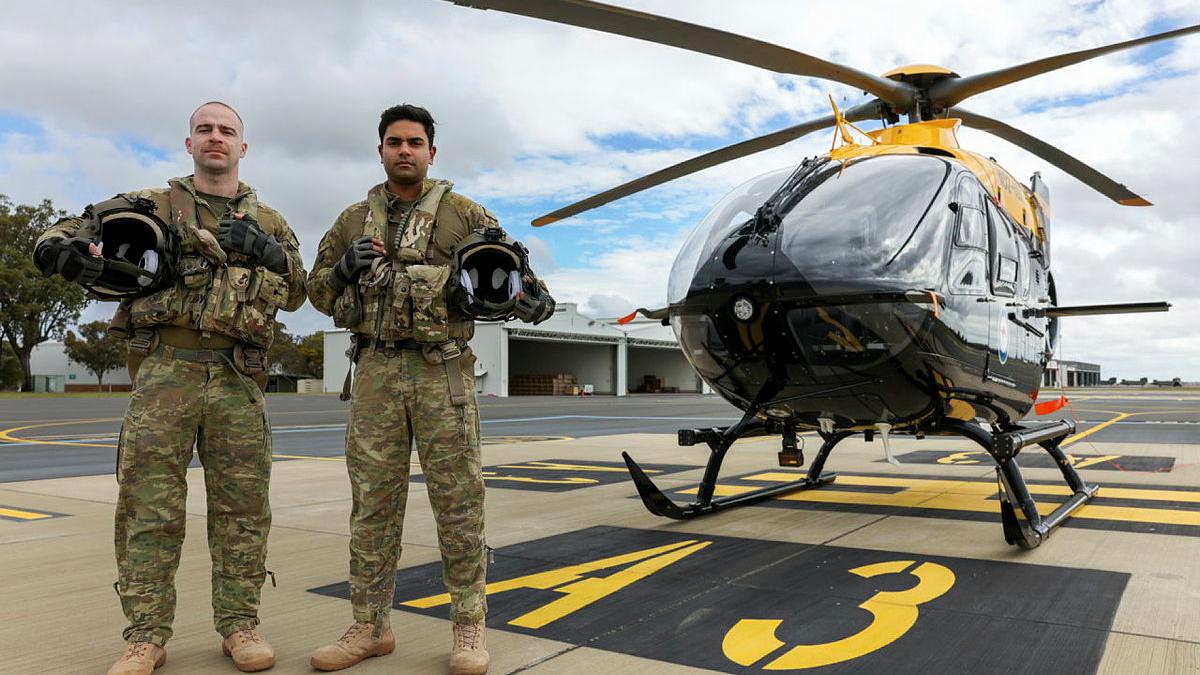
Army Aviation’s transition to the EC135 Juno training system has brought with it not only a new aircraft, but a new generation of instructors shaped by decades of operational experience.
For Maj Andrew Balaam, a senior instructor at Oakey, the shift marked both a professional milestone and a moment to reflect on the pathways that brought them into the cockpit.
Maj Balaam began his career in the United Kingdom before transferring to Australia under a lateral recruitment scheme.
He said the appeal of Army Aviation was the unique blend of soldiering and flying.
“I was always drawn to aviation as a potential career, but also as a soldier,” Maj Balaam said.
“Being an Army aviator gave me the opportunity to combine both interests. It’s the interface of flying and combat operations that attracted me the most.”
After arriving in Australia in 2004, he completed a Kiowa conversion course before moving onto the S‑70 Black Hawk and then the Taipan.
With the introduction of five new EC135 T3 Juno helicopters, instructors undertook conversion training with the Navy on the T2 at Nowra, followed by further training in the civilian sector.
'The aircraft is modern, reliable and well suited to the training role.'
He said the civilian training was important to master the T3 Juno’s subtle differences.
“It’s been a significant shift, but a positive one,” Maj Balaam said.
“The aircraft is modern, reliable and well suited to the training role.”
For trainee pilots, the journey into Army Aviation often begins much earlier.
Lt Aryan Gomez said air shows and Brisbane’s annual Riverfire flypasts sparked his fascination with military aviation.
“Ever since I was a kid, watching Riverfire was a huge motivator,” Lt Gomez said.
He said the T2 simulator at Nowra offered even greater realism, including motion systems and emergency scenario training.
“It prepared us to be proficient in skills to handle the aircraft in emergency situations,” Lt Gomez said.
With reliable performance and a training system built around realistic simulation, the Juno is an aircraft for the next generation of combat aviators.
Maj Balaam said the motivation remained unchanged from the day he first stepped into a cockpit.
“Being prepared to fly in combat is what Army Aviation is all about,” he said.
“And now we’re preparing the next generation to do exactly that.”
Related stories


