From first flight to combat ready
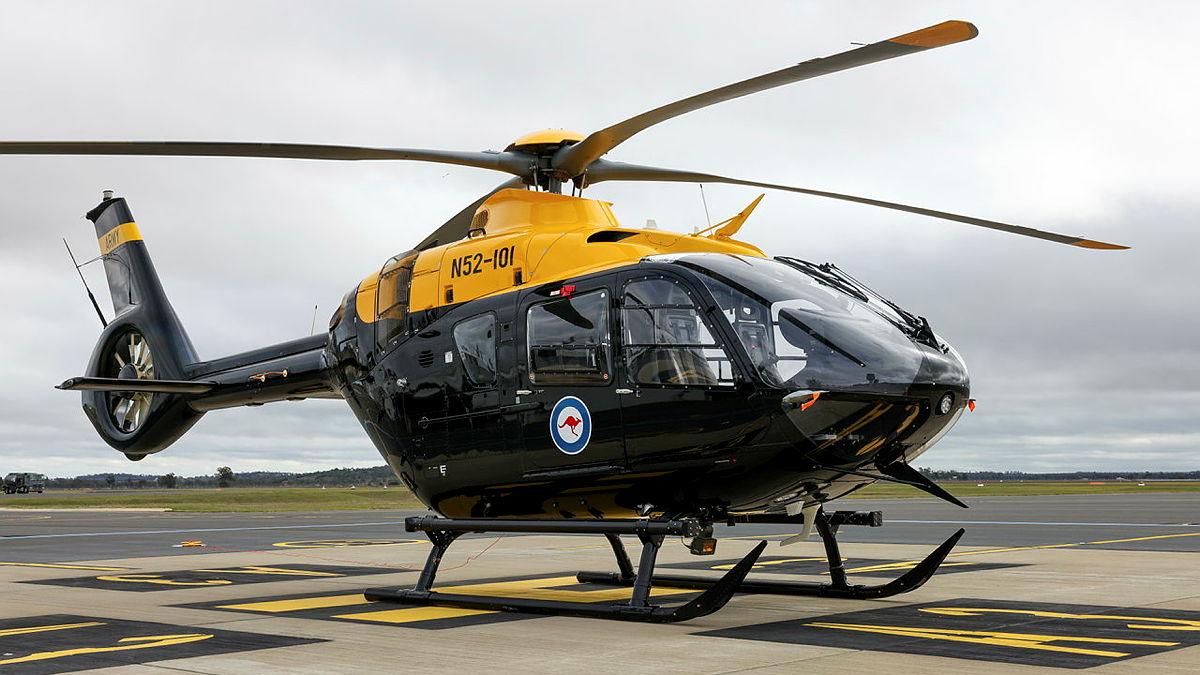
Army aviation training at Oakey is undergoing one of its most significant evolutions in decades, with the EC135 Juno helicopter now firmly embedded as a part of a modernised pilot training system.
As Army introduces advanced platforms such as the AH‑64E Apache, UH‑60M Black Hawk and expanded uncrewed aerial systems, the Juno provides the critical bridge between foundation Army flight skills and the demands of contemporary combat aviation.
Automatic flight control systems, moving maps and sophisticated sensors have made flying more precise and more complex.
At the same time, the rise of crewed and uncrewed teaming and increasingly lethal environments has reshaped how pilots fight and survive.
CO of the SAA Lt-Col James Pidgeon said new technology was reshaping the way helicopter pilots fight.
“Some of it helps us, some of it works against us, but it keeps the job exciting. The battlespace is more lethal and more complex, and our pilots need to be ready for that,” Lt-Col Pidgeon said.
At Oakey, the Juno delivers around 3000 flying hours each year, giving instructors the capacity they need to train new Army aviators with the skills to move on to a combat aircraft.
Lt-Col Pidgeon said low‑level manoeuvring, formation operations, night flying and tactical decision‑making were the core skills that defined Army flying.
“This is where pilots learn to think beyond their own cockpit,” he said.
“It’s the first time they fly missions with more than one aircraft, the first time they start understanding the 3D battlespace. It’s not just about flying safely; it’s about fighting.”
The latest Juno variant, the T3H, brings several improvements over the earlier T2 model.

The aircraft is equipped with a modern glass cockpit featuring a Helionics system, similar to those widely used in contemporary aircraft.
Traditional analogue dials have been replaced with digital flat-panel displays, providing pilots with integrated flight and system information.
This setup allows for greater flexibility, as updates and modifications can often be achieved through software changes rather than physical hardware upgrades.
Moreover, new moving‑map and tactical displays allow instructors to overlay threat symbols and mission data, significantly expanding tactical training options.
Another addition is the engine-training mode, with an inlet barrier filter across the engine modification to stop debris entering the engine.
“It’s a fantastic design feature,” Lt-Col Pidgeon said.
“It gives us huge flexibility to rehearse contingencies without compromising safety. The Juno lets us consolidate the fundamentals, which are the foundations we build everything else on.”
The European Juno is designed as a worldwide aircraft and has various supplementary kits that can be fitted to the aircraft.
He said for those aspiring to join their ranks, the advice was simple.
“Start flying. Early exposure to aviation builds confidence and passion, whether it’s joining a gliding club’s light aircraft or introductory helicopter flights,” Lt-Col Pidgeon said.
“Being an Army aviator is a commitment that is absolutely worth it.”

Related stories


