Health personnel sharpen casualty care skills
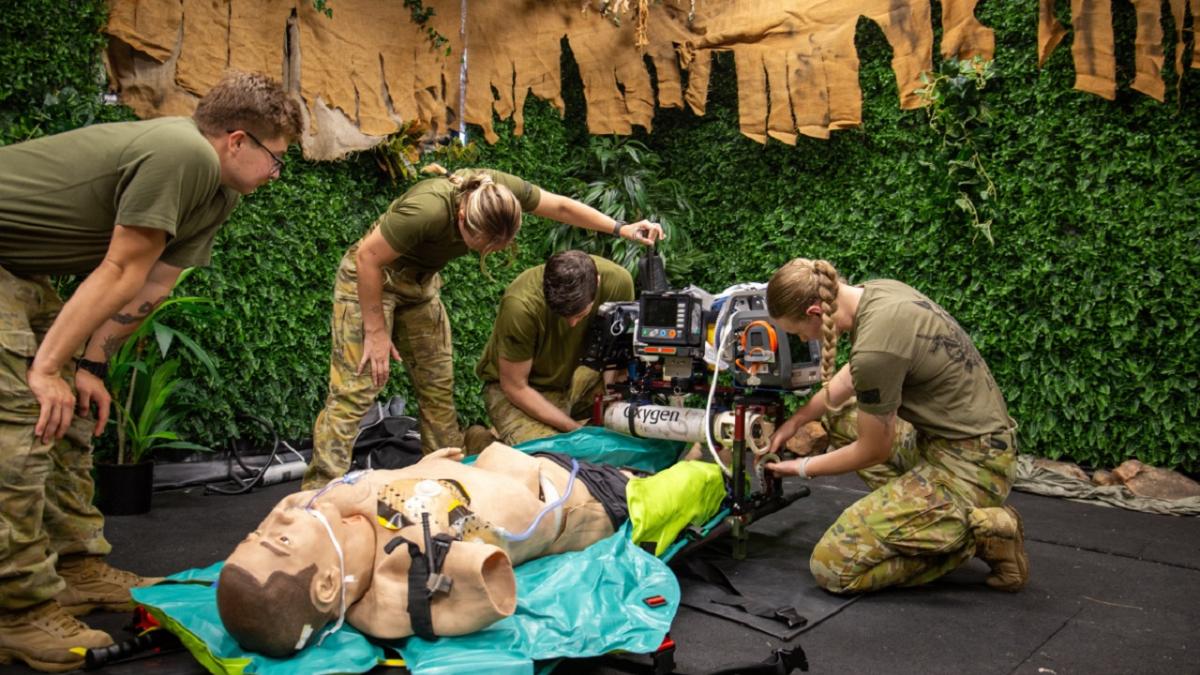
The ability to deliver critical medical care in challenging battlefield conditions can mean the difference between life and death, making realistic training essential for Army’s health personnel.
That was the focus of Exercise Critical Hold at Lavarack Barracks in October, where full-time and Reserve personnel from 4 Health Bn practised their skills managing casualties from the point of injury to evacuation.
RAAF healthcare personnel, civilian paramedics and members of the Malaysian Armed Forces also shared expertise across a range of medical scenarios.
MAJ Peter von Saldern said health personnel needed to be prepared to provide critical medical care in places and environments far removed from their usual clinical settings.
“Bringing reservists and full-time personnel together with our Defence and civilian partners provides an opportunity to share knowledge, develop skills and build confidence in managing a breadth of medical emergencies,” MAJ von Saldern said.
Course instructor BRIG Andrew Higgs, Director General Health Reserves - Army, said opportunities for health personnel to train together were key to developing a capable and adaptable health workforce.
“Army’s health capability draws on the skills and experience of personnel who work across both military and civilian healthcare environments,” BRIG Higgs said.
“Bringing those professionals together to share knowledge and practise their skills strengthens our collective capability and ensures our people are better prepared to deliver care when and where it is needed.”
Thanks to engineers from 3CER, participants practised tactical combat casualty care within a trench system.
Other activities included lower-limb injury assessments, splint application, plaster casting and demonstrations of chest tube insertion procedures.

MAJ Alastair Lyon, from the Health Reserve Advisory Group, said realistic training challenged personnel to think critically and make informed decisions under pressure.
“Putting the pressure on during training means our people learn to think quickly and can confidently make decisions on the battlefield, reducing the risks to our people and the mission,” MAJ Lyon said.
In another activity, supported by 3 Bde, participants extracted casualties from military vehicles, including an M1A2 Abrams tank, ASLAV and AS4 vehicles.
MAJ Lyon said understanding the physical characteristics and limitations of combat platforms was an important part of preparing health personnel to support Army operations.
“Getting a first-hand insight into the confined spaces and physical challenges they may encounter when responding to a combat vehicle incident is invaluable,” he said.
Additional training covered dental emergencies, aeromedical evacuation and spinal injury management.
CO 4 Health Bn, LTCOL Simon O’Regan, said the success of the training reflected the depth of expertise within the battalion.
“By training together and learning from each other’s professional experiences, we strengthen our ability to provide coordinated medical support to Army units, whether during training, domestic operations or deployed activities,” LTCOL O’Regan said.
“For 4th Health Battalion, these skills are essential to delivering timely and effective treatment, protecting lives and supporting Army’s ability to sustain operations and keep our soldiers in the fight."
Related stories


