Testing evolving air assault capability
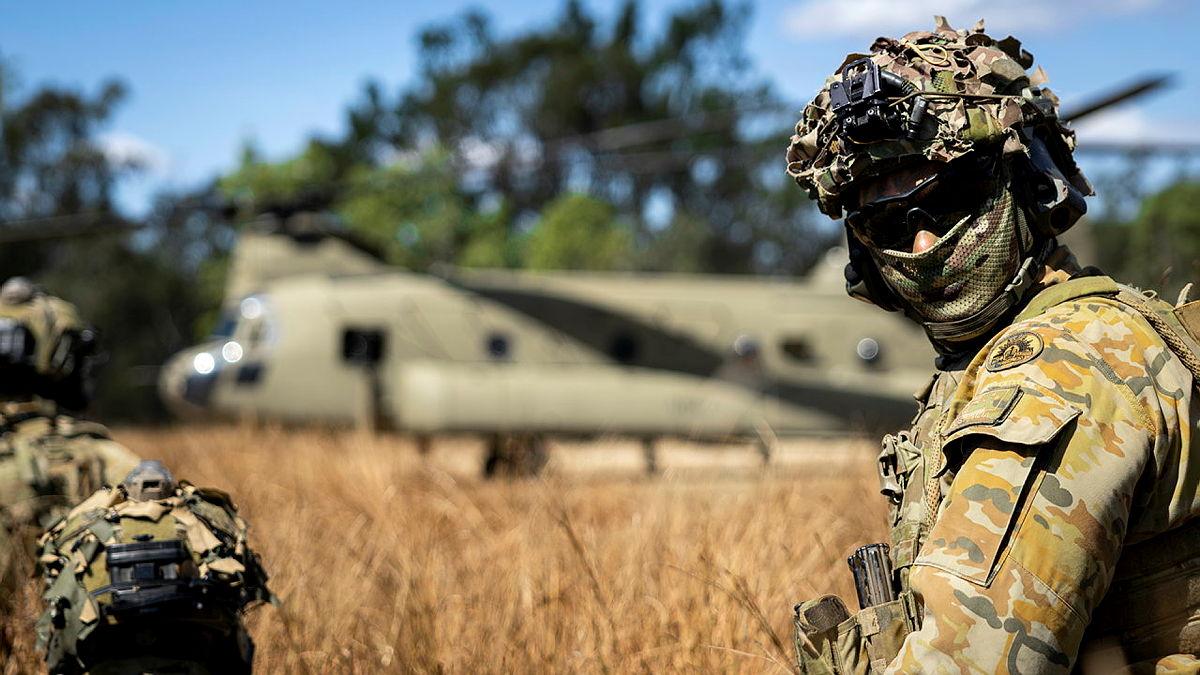
1 RAR soldiers conducted a live-fire activity to test and refine Army’s air assault capability on Exercise Septimus Strike.
Supported by 5 Avn Regt and 3CER, Bravo Coy inserted by helicopter before attacking an enemy position, defending against a counterattack and extracting by air.
OC Bravo Coy Maj Callum Stewart said the recent activity was an important step in the battalion’s air assault training.
“This combat team live-fire exercise was the culmination of our air assault training throughout 2026,” Maj Stewart said.
“It demonstrated our ability to integrate air and ground effects alongside the 5 Avn Regt and 3CER.”
The exercise also tested aerial resupply and casualty evacuation, as well as insertion and extraction of soldiers by day and night.

'It [Exercise Septimus Strike] demonstrated our ability to integrate air and ground effects alongside the 5 Avn Regt and 3CER.'
It formed part of 1 RAR’s work to refine tactics, techniques and procedures for future use across the RAR.
Cpl Kurt Pennell said the exercise demonstrated the battalion’s progression throughout the year.
“The air assault gave our junior soldiers valuable combined-arms experience,” Cpl Pennell said.
“They have progressed from trialling tactics and procedures through the full training continuum to conducting a live-fire activity.”
During the assault, engineers from 3CER breached an obstacle belt to enable the combat team to continue its advance.

Related stories


