The soldiers who fuel combat forces
Long before combat power reaches the battlefield, it must be sustained and protected.
That responsibility rests with the Army’s petroleum operators, who ensure fuel can be delivered wherever the force needs it.
During Exercise Overland Nautical Petros in early August, these soldiers tested the systems, skills and endurance required to keep forces moving.
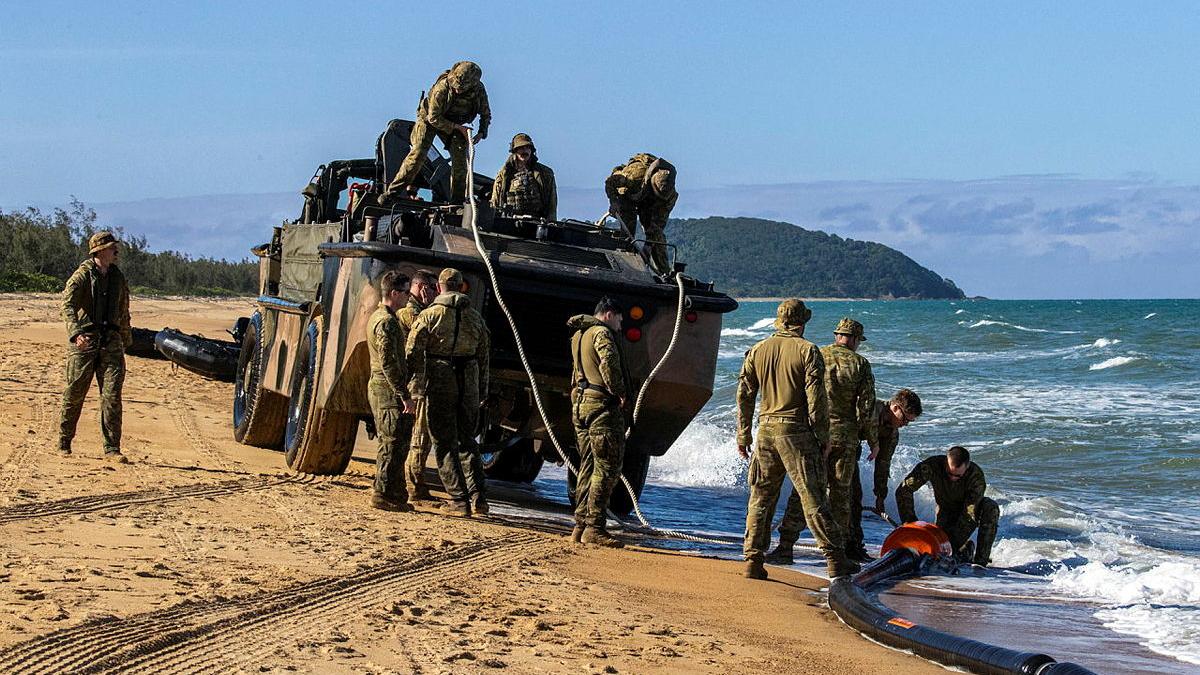
Held at Cowley Beach Training Area in Queensland, the exercise transformed a coastal training area into a functioning fuel network.
Soldiers established bulk fuel installations, tested fuel quality, operated distribution systems and rehearsed the movement of fuel.
The exercise challenged petroleum operators to deliver fuel in conditions where infrastructure may be unavailable.
At the centre of the activity was Army’s towed flexible barge distribution system, one of Defence’s largest marine fuel transfer capabilities.

Designed to provide ship-to-shore fuel transfer, it can move up to 85,000 litres of fuel from maritime platforms into locations where traditional supply chains cannot reach.
OC Maj Joseph Moormann said the exercise demonstrated the importance of petroleum operators enabling sustained operations.
"Our capability can be deployed to any littoral environment, whether it be in peacetime or warlike operations, both kinetic or non-competitive,” Maj Moormann said.
Petroleum operator Cpl Mason Dearing said fuel had to be stored safely, tested accurately and delivered to the right place at the right time.
“This training showcases our unique ability to complete the full logistic cycle for fuel, which includes petroleum over the shore,” Cpl Dearing said.
“Without fuel, soldiers don’t eat, soldiers don’t move and there’s no air support.
“Everything is dependent on fuel.”

See more photos here.
Related stories


