Live-fire certification a first for Fijian soldiers
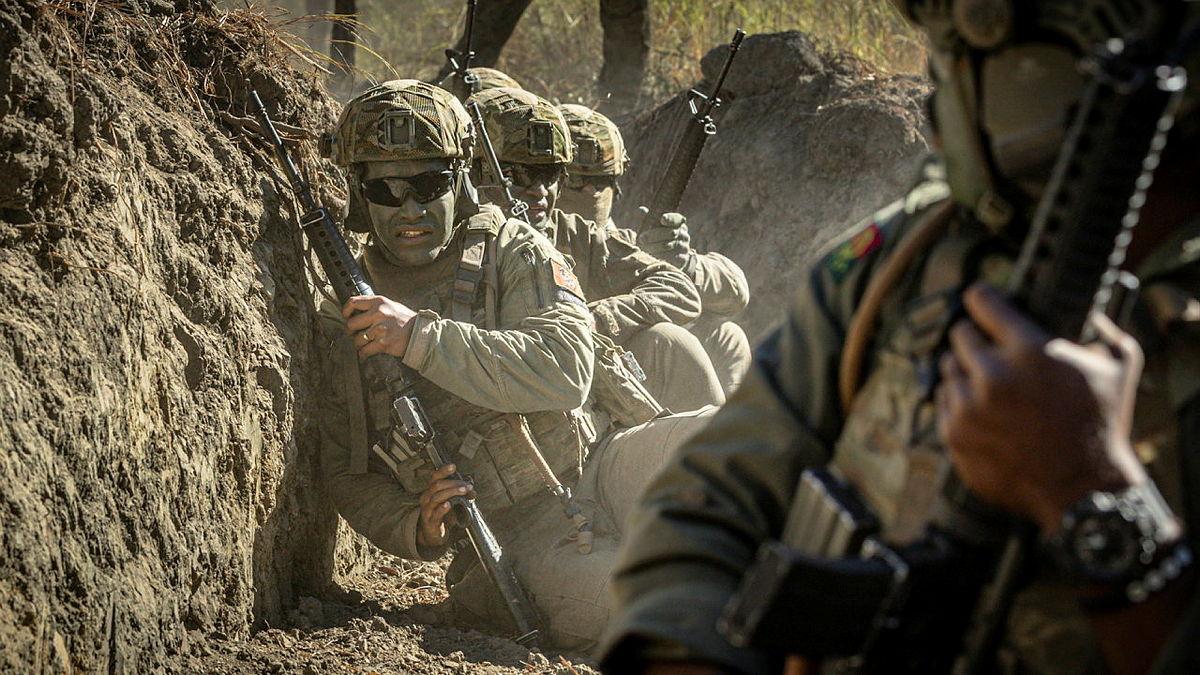
A combat team from the Republic of Fiji Military Forces (RFMF) has completed a training rotation with 7 Bde, becoming the first Fijian force to achieve company-level live-fire certification in Australia.
Arriving on February 15, 130 soldiers from the RFMF 3rd Infantry Regiment, and enablers embedded with 8/9RAR, served as a fourth rifle company within the battalion.
RFMF contingent commander Maj Jeremaia Lakoinavuli said the aim of the rotation was to strengthen interoperability between the RFMF and the Australian Army.
“The training has helped improve our soldiers from basic tactics, such as movement as individuals and in pairs, right up to the major muscle movements, like conducting a combat team live-fire,” he said.
During Diamond Dagger, the Diamani Combat Team took part in a combined-arms live-fire assault and achieved Army Training Level 5, becoming the first Fijian company to do so.
Maj Lakoinavuli said the experience was extraordinary.
“It's a major achievement for us, as the RFMF company, to achieve a combat team live-fire,” he said.
“Most of the troops had not participated in a combat team live-fire exercise with the use of battalion firepower and assets like the artillery with a danger-close serial.”

The Fijian soldiers also integrated with 8/9RAR in everyday battalion life, taking part in dining-in nights, the battalion rugby competition and fight night.
Lt Matthew Veloso, who worked directly with the Fijian contingent as training officer, said the experience was rewarding.
“I learned a lot about how they operated, the standard operating procedures they have and how that aligns with our procedures,” Lt Veloso said.
“They are very physically competent soldiers. They have a never-give-up attitude, so they know when to work hard and they also know when it's time to decompress.”
Lt Veloso worked closely with Major Lakoinavuli to ensure the training met the RFMF commanders’ objectives.
“The biggest highlight for me was conducting a live platoon-level attack because I had conducted training with them from the fire team to the platoon level,” Lt Veloso said.
“Then seeing the whole company conducting a complicated trench system assault using live ammunition, it was very rewarding to see all the hard work they had conducted over the past six months pay off.”
'I learned a lot about how they operated, the standard operating procedures they have and how that aligns with our procedures.'
Maj Lakoinavuli said the training rotation was important in maintaining the strong relationship between the RFMF and the ADF.
“I think it's still growing, with the partnership built on mutual respect, shared regional interest, professional military cooperation and a long-standing partnership,” he said.
“The embedding of a RFMF combat team continues to strengthen both our forces and helps the RFMF transitioning from peacekeeping training into combat training.”
A farewell parade and traditional Fijian kava ceremony were held on July 8 at Gallipoli Barracks to commemorate the contingent's time in Australia.


Related stories


