Teamwork powers F-35 missions
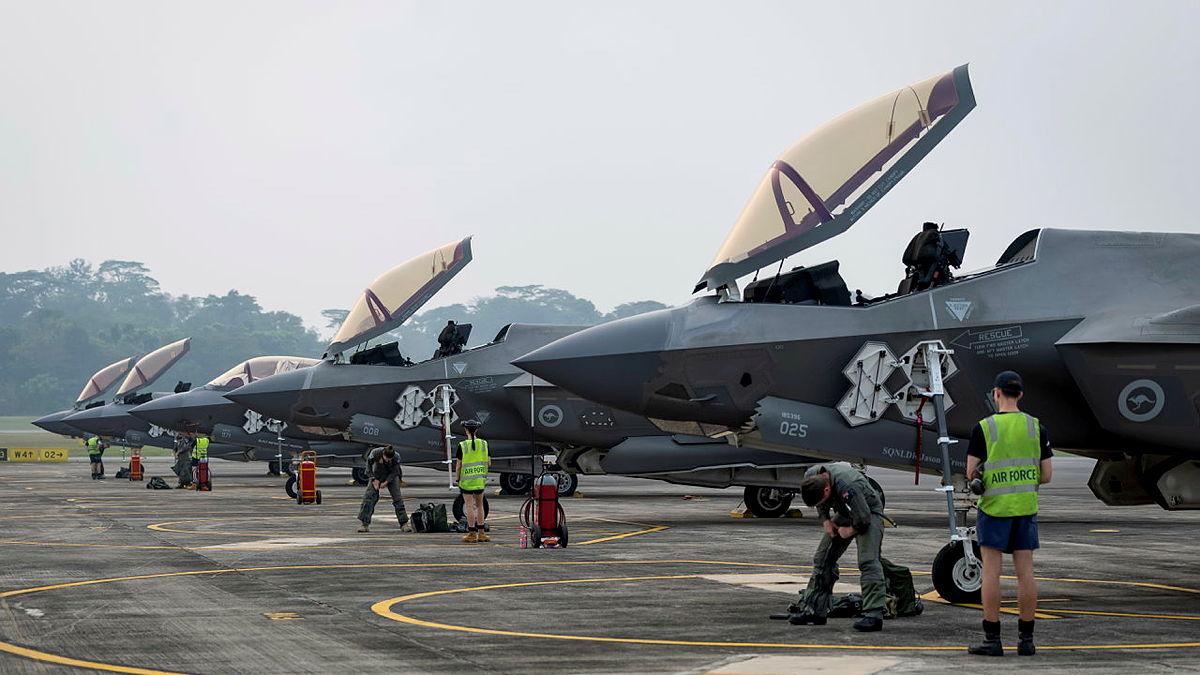
Long before each RAAF F-35A launched into the heavy skies at Paya Lebar Air Base in Singapore, the mission was already in motion.
At Exercise Bersama Lima 26, pilots planned meticulously with their international counterparts, technicians prepared the aircraft, and support personnel helped bring the pieces together to ensure jet and pilot were mission-ready.
Conducted annually under the Five Power Defence Arrangements (FPDA), Bersama Lima brought together personnel from Australia, Malaysia, New Zealand, Singapore and the UK.
For 3SQN pilot FLTLT Max, the exercise put teamwork into practice between the five nations.
“We’ve been flying as part of mixed formations with those jets,” FLTLT Max said of training with Republic of Singapore Air Force (RSAF) F-15SG and F-16C and D fighter aircraft.
“I think it’s really obvious to me that we’re aligned in how we do things, and an exercise like this is just great in increasing that interoperability.”
Taking off from Paya Lebar Air Base in Singapore’s eastern suburbs, 3SQN’s flying program included defensive and offensive counter-air missions with the F-35A and other participants.
The jets also conducted overwater air-to-air refuelling with a RSAF A330 Multi-Role Tanker Transport.
Each Bersama Lima sortie began the day before the mission, with crews conducting planning and rehearsals.
On the mission day, a multinational briefing brought the participating crews together before the RAAF pilots conducted their own briefing and met the maintenance team.
That is where LACW Lillian Aboody Fischer and her fellow technicians came in.
Working on the flightline at Paya Lebar Air Base, LACW Fischer helped prepare aircraft for departure and maintained them upon return.
“We’ll come in an hour or so before the actual flight time, and we’ll remove all the red gear off the aircraft and set it up, turn everything on, make sure it’s fully safe for the pilot to hop in and just help them start up,” LACW Fischer said.

After each mission, the team marshalled the jets into their parking positions, helping the pilots shut down and check the aircraft for damage.
“When the jets get back, we check them over, make sure no damage has happened during flight,” she said.
Working in Singapore also meant adapting to the equatorial heat and operating with the equipment brought across from Australia.
The conditions were not unfamiliar to RAAF 3SQN, which has deployed crews and jets to Singapore over successive generations since 1969.
New members of 3SQN still benefitted from the experience of working in these conditions, and for LACW Fischer, Bersama Lima was her first international task.
“It’s really cool being able to work alongside the Republic of Singapore Air Force,” she said.
FLTLT Max said the work behind each sortie gave pilots confidence in their aircraft and the team supporting them.
“Most people here are working behind the scenes to get the jets and get everything ready, whether it’s maintenance, intelligence, logistics, admin or medical,” he said.
“There [was] lots of people working behind the scenes for hours and hours to get things ready.”
After landing, pilots passed their observations to maintenance before returning to debrief the mission and identify lessons for the next flight.
For FLTLT Max, that process of working together to solve complex problems was what drew him to the role.
“I was always really intrigued by how Air Force and fighters, in particular, work in small teams to solve really complex problems,” he said.
More than 50 years after the FPDA was established, those people-to-people connections remain central to the arrangement's enduring contribution to regional security, enabling the five nations to plan, train and operate together with confidence.

Related stories


