Keen to learn and fly together
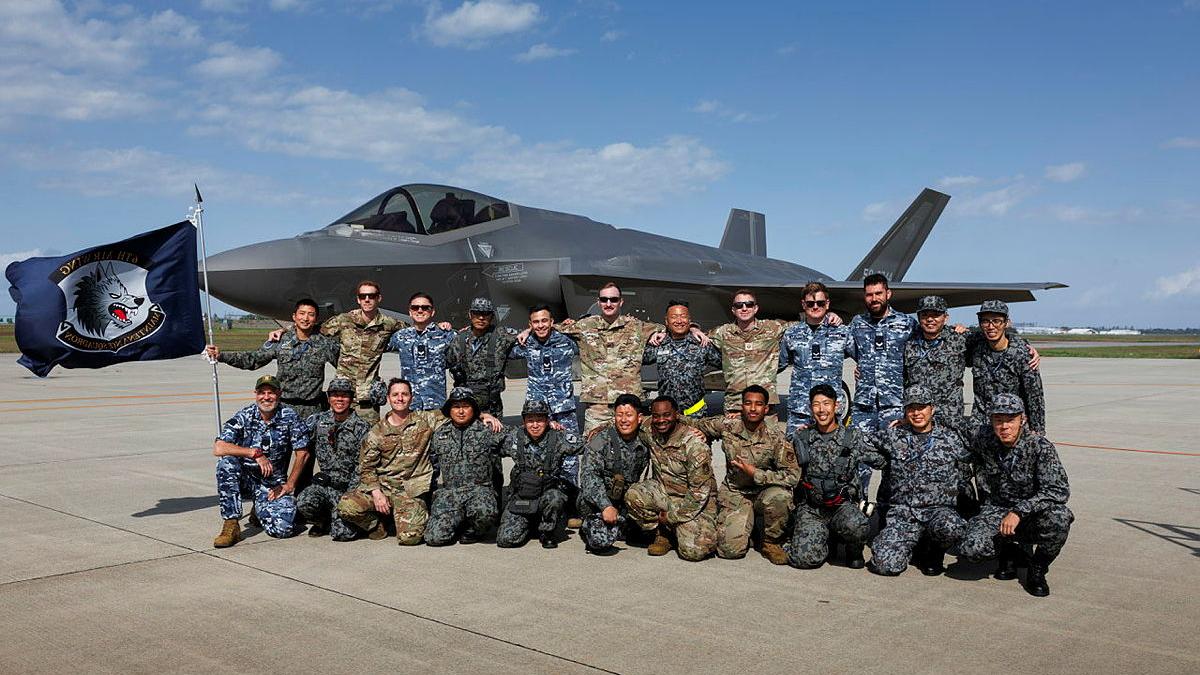
RAAF, United States Air Force (USAF) and Japan Air Self-Defense Force (JASDF) personnel are working side by side at Komatsu Air Base in Japan as part of Exercise Keen Sword 27, strengthening interoperability and sharing expertise on the F-35A Lightning II.
The exercise has brought personnel from the three nations together to exchange knowledge, refine maintenance practices and build the relationships needed to support combined air operations.
Based at Komatsu, home to the JASDF F-35A, Australian personnel from 77SQN, 75SQN and 2OCU joined US and Japanese technicians to conduct aircraft launch and recovery procedures and weapons loading.
CPL Luke Corkery, a 75SQN armament technician, is part of a team of five Australian maintainers supporting F-35 operations at the Japanese air base.
“It has been an amazing experience working alongside both JASDF and USAF technicians,” CPL Corkery said.
“We have been able to share some of the nuances of our procedures, but just as importantly, we have learnt new methods that we can take back to our own units.
“That exchange of knowledge is one of the real benefits of an exercise like Keen Sword. We all operate the same aircraft, but each nation brings its own experience and way of doing things. Working together gives us an opportunity to look at our own practices from a different perspective and identify where we can continue to improve.”

For the Australian contingent, operating from a Japanese air base offered a fresh perspective on established practices in a different environment.
“Although we feel we have become efficient and effective operators of the F-35, Japan’s unique geographical location means our team has been exposed to different working conditions and practices,” CPL Corkery said.
“It has given us a different mindset when it comes to our own practices and procedures.
“Working alongside other F-35 operators challenges you to think about why you do things a certain way. There is enormous value in seeing how another nation approaches the same aircraft and the same maintenance challenges.”
Command Chief Master Sergeant of the United States 5th Air Force, Chief Master Sergeant Andrew Small, said maintainers played a critical role in ensuring aircraft remained serviceable and available to meet operational requirements.
“The maintenance team is the backbone of F-35 operational capability,” Chief Master Sergeant Small said.
“The serviceability and availability of our aircraft is the responsibility of our maintainers in everyday operations, and that becomes even more important when commanders need aircraft ready to support operational requirements.
“Exercises like Keen Sword give us an opportunity to work directly alongside our allies and understand how each nation operates. Building that familiarity now means that when we need to work together, we already have an understanding of each other and a foundation of trust.”

Working across national boundaries also tested communication and coordination, with personnel navigating language barriers and procedural differences through shared technical knowledge, established practices and hand signals.
Chief Master Sergeant Small said the experience demonstrated how quickly maintainers from different nations could find common ground.
“At the end of the day, we’re all doing the same job, just from different parts of the world,” he said.
“Once you start working together on the aircraft, you realise how much you have in common. Everyone has the same focus: doing the job safely, keeping the aircraft serviceable and making sure it is ready when it is needed.
“The relationships we build here are just as important as the technical lessons. Having that trust and familiarity between maintainers makes it much easier for us to work together as a combined team.”
Almost 300 ADF personnel deployed to Japan to enhance readiness and interoperability as part of Exercise Keen Sword.
Established in 1986 between the US and Japan, Exercise Keen Sword is held biennially and involves joint training at locations in Japan and across the region from October 19 to 29.
This year’s exercise involves around 45,000 Japanese and 11,000 US personnel, 40 vessels and 260 aircraft, with Australia invited to participate alongside Canada, France, Germany, New Zealand, the Netherlands and the Philippines.
Related stories


