Focus on maritime strength
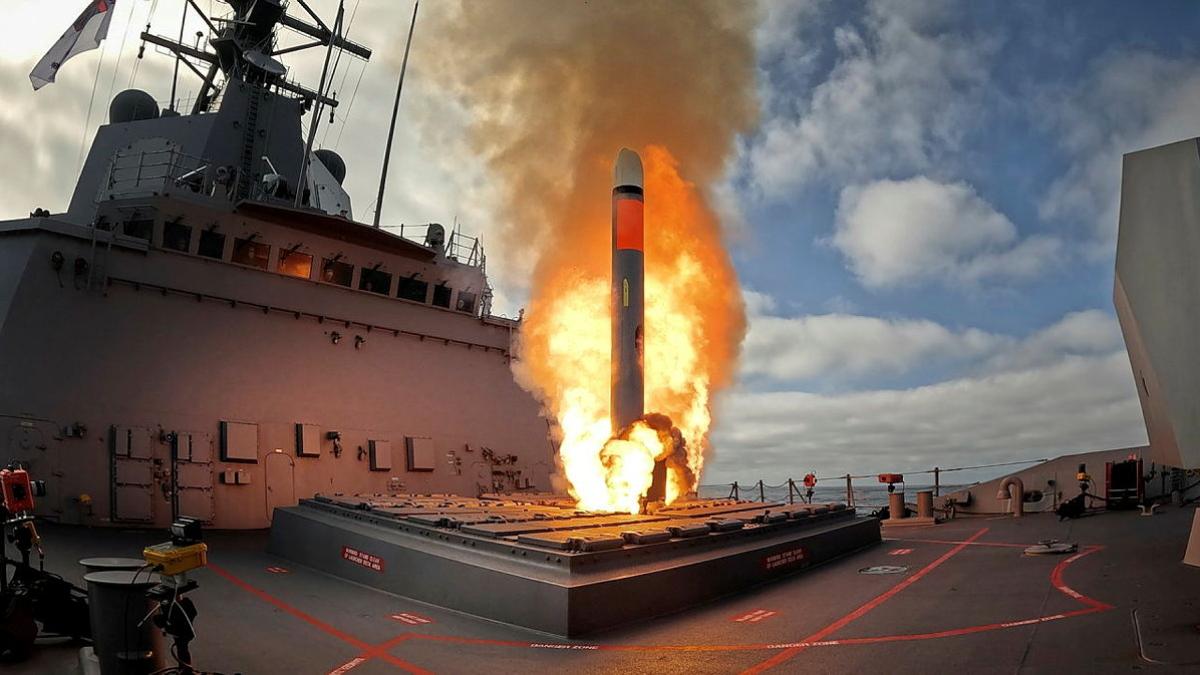
The 2026 National Defence Strategy includes new and continued investment to deliver a larger, more lethal Navy with more surface ships and conventionally-armed, nuclear-powered submarines.
In announcing the strategy, Deputy Prime Minister and Defence Minister Richard Marles said that as an island-trading nation, Australia’s sea lines of communication defined its national security.
“The geography of our national security lies well beyond our coastline or even our immediate waters,” Mr Marles said.
“We therefore need a defence force that can be out there: that can engage in impactful projection.”
Since the release of the 2024 National Defence Strategy, Defence has delivered credible military capabilities that have strengthened Australia’s capacity to deter potential adversaries.
The 2026 National Defence Strategy continues to build on this foundation by:
- Increasing efforts to develop greater self-reliance;
- Prioritising capability acquisition and sustainment plans, drawing on lessons learned from the war in Ukraine and conflicts in the Middle East;
- Strengthening the resilience of Australia’s sovereign defence industrial base and building stronger, more diverse international industrial partnerships;
- Improving national civil preparedness and resilience to help Australia manage and recover from regional or global disruption; and
- Increasing coordination with regional partners to strengthen and preserve the global rules based order.
The strategy sets out how it will strengthen Australia’s capacity to protect and defend Australia and its interests in a more dangerous and uncertain world.
“[The 2026 National Defence Strategy] builds on the foundations laid in the 2024 strategy,” Mr Marles said.
“It is not a departure in direction, but a strengthening of resolve with an increased focus on self-reliance.”
That resolve is reinforced by the 2026 Integrated Investment Program, which outlines $425 billion allocated to capability investment priorities over the coming decade.
'It is not a departure in direction, but a strengthening of resolve with an increased focus on self-reliance.'
These investments, including an additional $53 billion in new funding, will also strengthen the resilience of the sovereign defence industrial base while delivering the integrated, focused force.
The Government is investing up to $130 billion in undersea warfare to support the AUKUS submarine program and uncrewed maritime systems, and up to $77 billion in frigates and destroyers to support localised sea control.
These investments will deliver a Navy with enhanced strike capability, including:
- Conventionally-armed, nuclear-powered submarines – which are harder to detect, have longer range and endurance and have more lethal and versatile weapon systems and sensors than the ADF’s existing Collins-class submarines;
- Development and introduction of uncrewed underwater and surface vessels to complement Navy’s enhanced lethality surface combatant fleet and fleet of conventionally-armed, nuclear-powered submarines;
- An enhanced lethality surface combatant fleet through the integration of the Tomahawk weapon system, the Naval Strike Missile and the Standard Missile 6 long-range air defence missile – which can strike land, maritime and air targets at longer range;
- Enhancements to the undersea warfare capability of Navy’s surface combatant fleet, including through six new Hunter-class frigates; and
- Enhancements to the broader lethality of the surface fleet with the introduction of 11 new general purpose frigates of the upgraded Japanese Mogami-class design, new large optionally crewed surface vessels, upgrades to the Hobart-class destroyers and, with the Australian Border Force, a combined 25 minor war vessels.
Related stories


