The legacy of our longest war
Twenty-five years since the start of the campaign in Afghanistan, to which the RAN contributed intervention and monitoring operations, we look back at the lessons learnt.
Australia’s war in Afghanistan began in 2001 with 150 special forces personnel and ended two decades later with a RAAF C-17A Globemaster III taking off from Hamid Karzai International Airport in Kabul.
Between that time more than 35,000 ADF personnel served in Afghanistan, 263 were wounded and 41 killed in action.
Following the September 11 terrorist attacks, Australia invoked the ANZUS Treaty and joined the United States-led coalition to deny terrorists a haven in Afghanistan.
Special forces conducted high-risk raids, targeting high-value Taliban commanders and disrupting their networks.
Combined arms battle groups cleared insurgent-held valleys, then held the ground from combat outposts and forward operating bases (FOBs).
Much of this was achieved alongside the Afghan National Army, with Australians mentoring Afghan soldiers on patrol and in combat, and training the next generation of leaders at establishments such as the Afghan National Army Officer Academy.
The ADF helped construct schools, medical facilities and bridges, providing infrastructure that had been neglected or absent under the Taliban’s previous rule.
Under Operations Slipper and Highroad, the mission drew on all three services.
The RAAF provided critical logistics and sustainment support, transporting personnel, equipment and supplies in and out of the country.
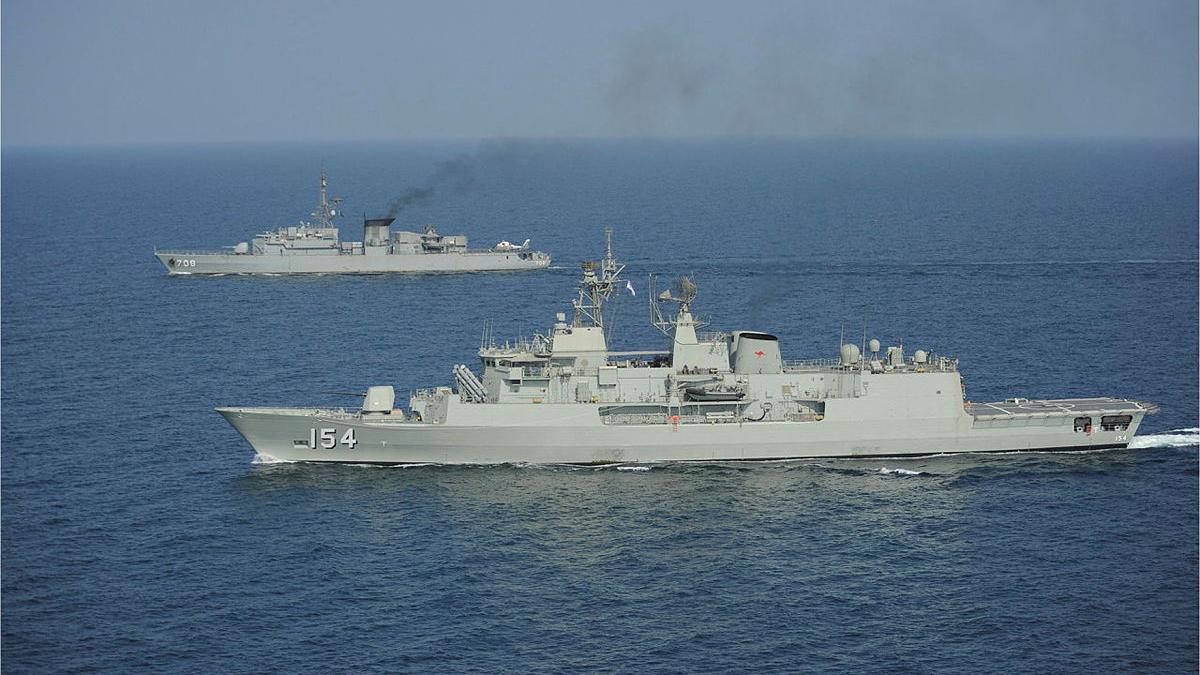
The RAN maintained a continuous maritime contribution, with almost the entire fleet undertaking one or more deployments for intervention and monitoring operations in and around the Persian Gulf.
On the ground, Navy and Air Force contributed to Army’s efforts with explosive ordnance disposal technicians, imagery specialists, headquarters staff and other support roles.

Chief of Army LTGEN Susan Coyle said that, before the coalition removed the Taliban from power, the view of Afghanistan’s capital from the night sky was of a city with few lights. Power and running water were scarce.
By the end of the war, much of that had changed.
“That is the type of thing I think of when I consider the impacts we made while we were over there,” LTGEN Coyle said.
LTGEN Coyle held several senior command appointments in Afghanistan and the Middle East, including Commander JTF 633.
Coalition efforts also helped create opportunities for Afghan women, including within the country’s military.
“One of my favourite memories was going to an Afghan National Army officer graduation parade and giving an honour to the top cadet, who was a female intelligence officer,” LTGEN Coyle said.
“That would never have happened in the past, and unfortunately, it’s not going to happen now. But for about 20 years, we gave them hope.”
Senior Enlisted Adviser to CDF, WO Jae Robinson, said Afghanistan moved the ADF away from the Vietnam-era way of warfighting and heralded an age of what he called “FOB-centric warfare”.
“It changed our equipment, our tactics and our vehicles, which were optimised to counter predominantly explosive threats,” WO Robinson said.
WO Robinson was the Regimental Sergeant Major of Australian Forces in Afghanistan in 2015.
He said personnel generally operated from hardened bases with containerised accommodation and established mess facilities, supported by total air superiority, electromagnetic spectrum dominance and extensive intelligence, surveillance and reconnaissance capabilities.
He said these were fully aligned to the threat environment at that time but those advantages could not be assumed for the next war.

One enduring legacy, according to LTGEN Coyle, is the operational experience accumulated by the ADF over two decades.
“This makes us a stronger, better and more formidable organisation,” she said.
On August 15, 2021, the Taliban seized Kabul, bringing an end to two decades of efforts to establish a stable Afghan government.
According to WO Robinson, the outcome left scars for many who served.
“I think, holistically looking at our time there, we did a great job. We gave the Afghans a choice. It was always going to be up to them which way they went,” he said.
For LTGEN Coyle, one of the most challenging moments was watching footage of an American C-17 Globemaster departing Kabul with Afghans clinging to its landing gear.
“There was nothing to think about other than sadness,” she said.
While the outcome was not what anyone wanted, she said the ADF could learn from the experience and continue supporting those affected by the conflict.
Australia has since provided refuge to many Afghans who worked alongside coalition forces, some of whom have joined the ADF.
LTGEN Coyle said the outcome should not overshadow the contribution and sacrifices of Australian personnel.
“You can’t just think it’s all for naught, because it’s not. Otherwise, the lives and memories of our fallen would be in vain, and they’ll never be in vain. Their service will never be forgotten,” she said.
Related stories


