Protecting Australia’s maritime lifelines
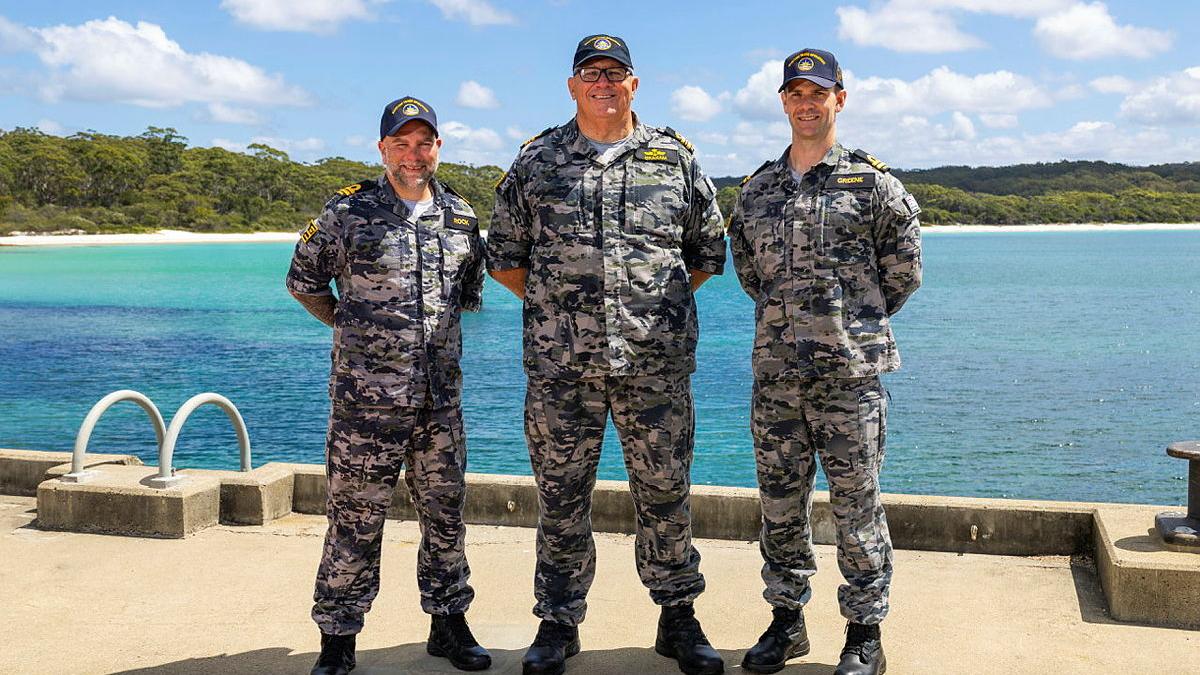
Australia’s economic prosperity depends on the sea. As a three-ocean island trading nation with the world's third-largest exclusive economic zone, the country relies on open and secure maritime trade routes.
Maritime Trade Operations (MTO) officer LCDR Robert Graham said Australia has a responsibility to help keep those sea lanes open.
“Australia relies on maritime trade for our prosperity,” LCDR Graham said.
“Being an island nation provides a great degree of security, but if we don’t have the lifelines of maritime supplies coming into Australia, the nation stops.”
LCDR Graham said Australia’s security was increasingly linked to the resilience of global supply chains and uninterrupted access to maritime trade.
Since civilisation began, nations have been dependent on the sea for their survival. This is especially true of Australia, where 99 per cent of international trade is carried by sea.
“You saw how important maritime trade is during the last pandemic,” LCDR Graham said.
“The last thing people were thinking about when COVID commenced was how severely it would impact supply chains, yet that became the primary and longest-lasting impact.”
'Being an island nation provides a great degree of security, but if we don’t have the lifelines of maritime supplies coming into Australia, the nation stops.'
There has long been a symbiotic relationship between the Navy and the merchant shipping industry, with both relying on each other to thrive. There is no better example of this union than the RAN’s MTO cell, which is made up exclusively of Reserve officers.
“The MTO cell includes such a diverse group of people,” LCDR Graham said.
“We have harbour masters, water police, border force, ship masters, stevedores, the list of maritime-related sector people are endless within our trade.”
Defence draws expertise from Australia’s maritime sector because contemporary commercial shipping knowledge cannot be replicated through traditional military training alone.
“Our members’ contemporary maritime industry skills are maintained by their civilian employers, which is a great benefit,” LCDR Graham said.
MTOs have recently been deployed on Exercise Dugong, a biennial RAN, Royal New Zealand Navy and US Navy exercise, enhancing the collective ability to operate in complex maritime environments, developing a range of mine warfare skills, tactics, techniques and procedures in company with allies and industry partners.
Exercise Director CAPT Scott Craig said their inclusion was an integral capability when conducting underwater clearance operations.
“The primary focus of exercises like Dugong is perfecting our unified maritime capability to rapidly neutralise underwater threats, keep sea lines of communication open and protect freedom of navigation,” CAPT Craig said.
“In real-world scenarios, our hardworking and dedicated MTOs will be the vital link between naval operations and the civilian shipping industry to ensure the safe, efficient and uninterrupted flow of global maritime commerce.”
Related stories


